An Acura ZDX that won’t start is usually a dead 12-volt battery. The 400-volt Ultium pack can still show a healthy charge. A week in a Reagan National garage can flatten that small battery. The cabin goes dark, the fob quits, and the car looks failed.
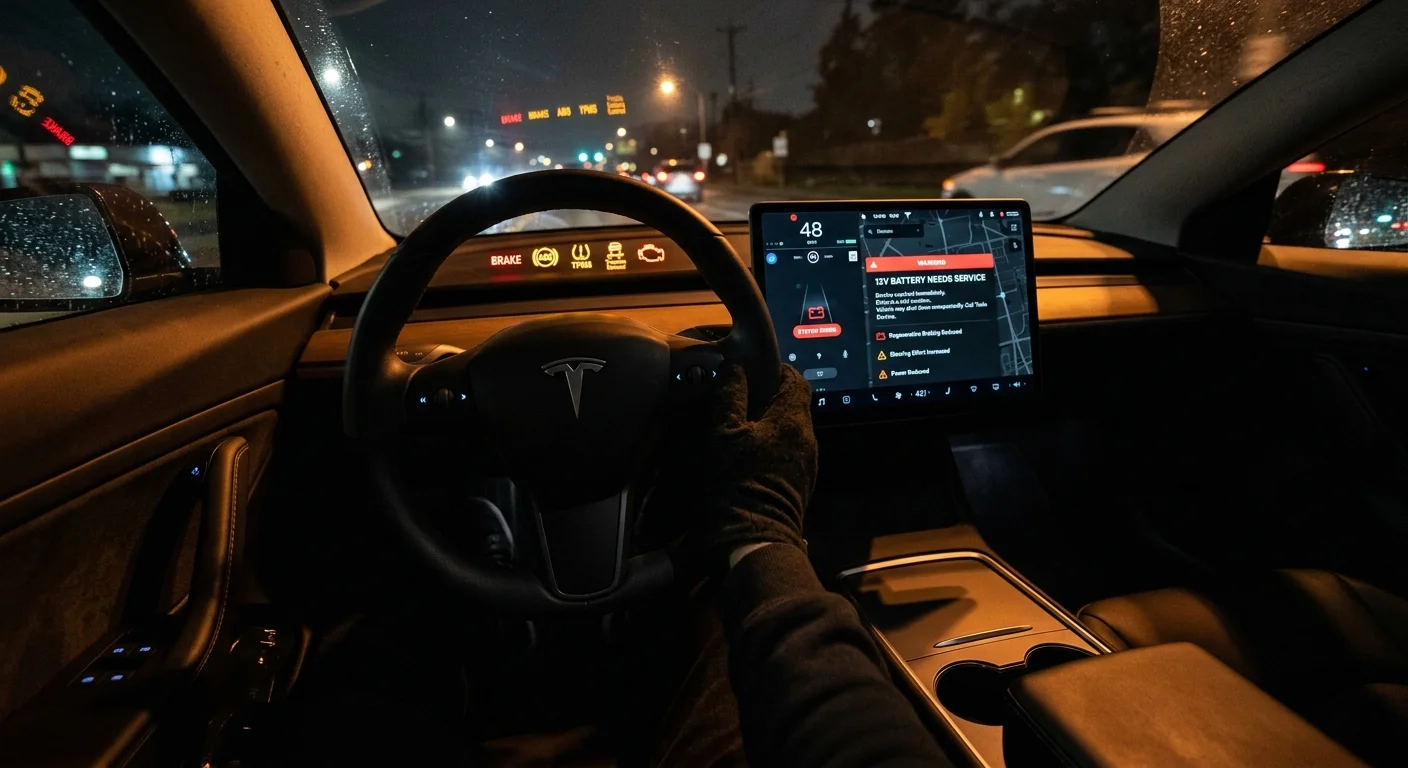
A full pack still needs the small battery to boot
The traction pack moves the wheels. It doesn’t boot the car by itself. A small 12-volt battery powers the modules that close the high-voltage contactors. When that battery is flat, those contactors never close. The ZDX never reaches Ready. It may not unlock. It may refuse a charge cable too.
That’s why a charged car can still look dead. New EV owners read the range figure and assume the pack failed. Around this metro, the usual story is a car that sat. Reagan National puts complimentary Level 1 charging on Level 1 of Garages 1 and 2. Those stalls are first-come and limited. Plenty of returning travelers never plugged in. They walk out to a silent ZDX that still has range.
Union Station’s garage produces the same week-long sit. So do WMATA park-and-ride decks across the metro. After enough idle days, the 12-volt can’t wake the car.
The ZDX is an Ultium car with an Acura badge
Acura built the ZDX with General Motors. It sits on the Ultium BEV3 architecture. The Honda Prologue, Chevy Blazer EV, Chevy Equinox EV, and Cadillac Lyriq share that platform. The Prologue is the closest twin. A 12-volt no-start on those models looks the same on a ZDX. The Prologue 12-volt write-up covers the same failure. The Lyriq no-start checks follow the same order.
Trim and wheels don’t change the accessory system. Every ZDX still needs that 12-volt to come alive.
What to look at before you call anyone
Start with the cabin, not the charge app.
- Dash, dome lights, and the screen are dim or fully dark
- The fob stopped working from a few steps away
- The car sat more than a couple of weeks without a drive
- The brake pedal brings no click from the relays
If the dash is on and range reads near zero, this isn’t a no-start. The pack needs miles. That’s a non-Tesla EV rescue, not a jump. If a high-voltage warning stays after the dash looks healthy, stop guessing. That one needs a dealer diagnostic scan.
A weak 12-volt can also fake a plug-in fault. Rule the accessory battery out before you blame the Ultium side.
Jump the labeled 12-volt posts, not the orange cables
The 12-volt lives under the hood, with marked jump terminals nearby. You’re feeding the accessory battery, the same idea as a gas Acura. Connect a lithium jump pack to the labeled positive and negative points. Never touch the orange high-voltage cables. Give the modules a minute or two to recover. Then press start.
If the car is fully dark, the interior hood release may do nothing. Check the owner’s manual for emergency hood access on your model year. Don’t pry on covers you can’t identify.
A step-by-step EV 12-volt jump walks through the connections. Many roadside plans will jump a 12-volt. They often won’t bring a 240-volt source if the pack is empty.
Where a ZDX 12-volt actually dies around here
Most calls are a car that sat, not a car that ran empty.
Reagan National is the cleanest example. You park in Garage 1 or 2 for a trip. Charging exists on Level 1 of those garages. It’s complimentary for parking customers, first-come, and limited. Leave it a week on another level and the 12-volt can still be dead. Dulles Economy parking is the longer-stay version of the same sit. People fly, leave the car, and come back to a fob that does nothing. That’s the trip 12-volt story, ZDX or not.
Apartment and condo drivers get a slower drain. Arlington, Alexandria, the District, and Silver Spring still have a lot of pre-1980 housing. Wheaton, Hyattsville, and Annandale sit in that older stock too. A dedicated home charger is uncommon in those buildings. A ZDX on a 120-volt outlet can sit in the garage all week. The 12-volt keeps sipping power in the background. Takoma Park has some of the oldest housing in the metro. That idle-garage pattern is ordinary there.
An empty pack is a different problem. I-66 inside the Beltway can drain you in HVAC while you barely move. So can a crawl on the 495 Express Lanes. Recurrent Auto studied more than 30,000 EVs for winter range. A typical EV keeps about 80% of range at freezing, 32F. It keeps about 70% at 20F. Most lose 20 to 35% in real cold. Dulles runs colder and snowier than Reagan National. That still isn’t a 12-volt failure. The dash would show range, and the fob would still work.
If you stall on the 495 Express Lanes, pull to the left shoulder. Those lanes sit in the median. Express Assist can help with minor issues and can call a tow. It doesn’t charge an EV. VDOT’s Safety Service Patrol covers Virginia interstates, including I-66. Published pages describe incident clearance and short-term traffic control. They don’t describe EV charging. On Maryland primary roads, CHART lists jump starts among the help you request on #77. CHART doesn’t describe charging a stranded EV. We couldn’t confirm a DDOT motorist-assistance patrol in the District. DC drivers use MPD, a private plan, or US Park Police on the parkways. A disabled vehicle on an NPS parkway goes to US Park Police at 202-610-7500. Those parkways ban commercial vehicles and trucks over 10,000 lb.
Pepco serves the District, Montgomery County, and Prince George’s County. Dominion Energy Virginia serves most of Northern Virginia. None of the utility EV pages we reviewed will charge a stranded car.
Jump, replace, or add enough miles to move
Tell the operator what the cabin is doing. If it’s dark, they come to jump or replace the 12-volt on site. If the dash is up and range is gone, they bring Level 2. The ZDX takes a CCS or J1772 adapter on that visit. Charging typically adds 10 to 20 miles of range in 15 to 30 minutes. That’s charging time, never an arrival time.
Charge Pro DC is a referral line. We match stranded EV drivers with independent local mobile rescue operators. We don’t perform the work, own trucks, or employ technicians. The operator quotes you before starting and bills you directly. The pros we connect you with are licensed and insured. They handle Tesla and every major EV brand.
If a correct 12-volt jump still leaves the car dead, stop. A module or high-voltage fault needs a dealer scan. Once you’re moving, a tired 12-volt is a replacement conversation. Signs the 12-volt is failing often show up before a full lockout.
We serve the District of Columbia, Maryland, and Virginia. Tell them whether the cabin is dark, and where the car sat. That keeps the visit matched to a jump or a charge.
Frequently asked questions
Why won’t my Acura ZDX start if the pack is charged?
The main pack doesn’t close its own contactors. The 12-volt powers the modules that authorize that handshake. When the accessory battery is dead, the ZDX stays dark even with a full pack. A jump on the labeled under-hood posts is the first fix.
Can I jump a ZDX like a gas Acura?
You’re only jumping the 12-volt. Use the labeled posts under the hood and a jump pack. Never clip onto orange high-voltage cables. If the hood won’t release, use the manual’s emergency steps. Then wait a minute before you hit start.
What if the jump doesn’t wake the ZDX?
A persistent service warning after a solid jump points past the accessory battery. That’s a dealer scan, not another roadside cycle. If range is the problem, you need miles, not another jump.
If the ZDX is dark anywhere we serve, call (202) 629-0844. Tell the operator what the lights are doing.