That amber alert just popped on your Tesla’s screen. Your stomach dropped. You are not imagining it. The car is telling you the 12 volt accessory battery is running low, and it means business. Here is what is actually happening, how serious it is right now, and what to do in the next few minutes.
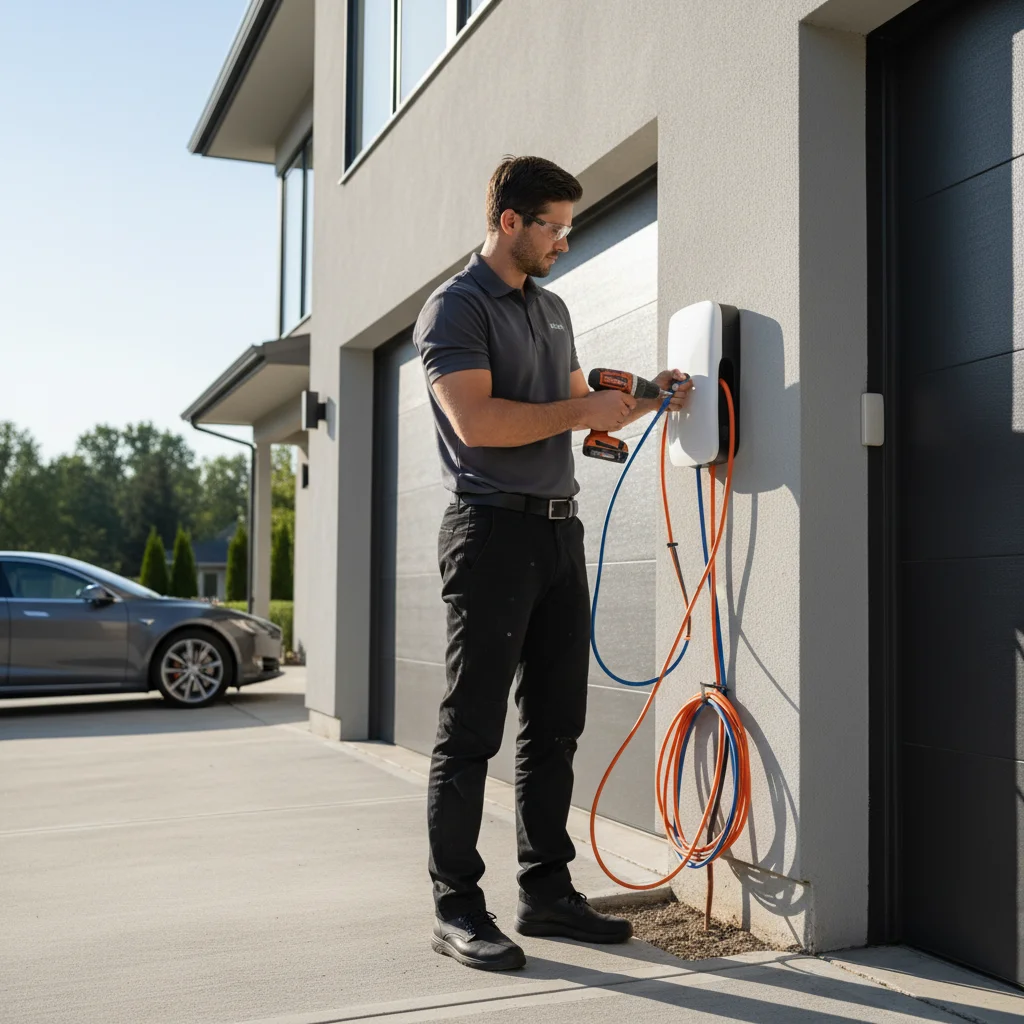
What the low voltage warning actually signals
Your Tesla runs on two separate electrical systems. The big lithium traction pack moves the car. A small 12 volt accessory battery, tucked in the frunk or under the hood depending on your model, powers everything else: door locks, windows, the touchscreen, cabin controls, and even the relay that lets the main battery feed the drivetrain.
When Tesla throws a low voltage warning, it is specifically about that 12 volt battery, not your main charge level. The exact message varies by software version but usually reads something like “Schedule Service: 12V battery low” or “Accessory battery low, car may not start.” Some versions drop it in the notification bar quietly. Others are louder.
The 12 volt battery in a Tesla does not charge from a wall outlet. It charges off the main traction pack through a DC-DC converter while the car is on or plugged in. If the converter has a fault, or if the 12 volt battery is simply old and failing, the warning fires.
One important thing: this is not the same as your traction pack running low on range. A car can show 200 miles of range and still be minutes from a 12 volt-related shutdown. If you have noticed other Tesla 12 volt failure symptoms recently, sluggish touchscreen, odd door behavior, phantom warnings, this alert is the system telling you the situation has crossed a threshold.
How long you have before it strands you
There is no honest single answer. Tesla’s warning system is conservative by design, which is a good thing. Some drivers report the alert appearing and then driving another several days before anything got worse. Others have had the car shut down within an hour.
What determines that gap is the actual state of the 12 volt. If it is reading low because of a temporary sag, a cold morning, long time sitting unplugged, or a software glitch in the DC-DC converter, it may recover once you are driving and the converter tops it back up. If the battery’s cells are genuinely degraded, the voltage will not recover and the window is short.
Watch for these signs that the window is closing fast:
- Touchscreen dims, lags, or reboots on its own
- Climate controls become unresponsive
- The car hesitates to shift into drive or reverse
- You hear relay clicking from under the dash
Any of those means the 12 volt is dropping below the threshold needed to keep the control systems alive. Do not assume you can make it home or to a service center. Pull somewhere safe and deal with it now.
A typical EV keeps about 80 percent of range at freezing and about 70 percent at 20F. Cold overnight garage sits in Bethesda, Silver Spring, and the Dulles corridor draw the 12 volt down faster than warm months do. A weak 12 volt with limited charging current can dip below safe levels faster in those conditions.
Steps to take before the car shuts down
Move fast but do not panic. Here is the order of operations.
Get off the road or out of traffic
If you are on the Beltway, I-66, I-95, or anywhere in moving traffic, your first job is to exit or pull to a safe shoulder. A Tesla that loses 12 volt power mid-drive will not lose propulsion instantly, but control systems can drop out.
Plug in if you are near a charger
Connecting to any Tesla charger, Level 1, Level 2, or Supercharger, wakes the DC-DC converter and may stabilize the 12 volt while you figure out next steps. This buys time. It does not fix the underlying battery if it has truly failed.
Reduce 12 volt load
Turn off the cabin fan, heated seats, and any features you do not need. It is a small gain, but small gains matter when you are managing a failing battery.
Do not turn the car off unless you are somewhere safe
A Tesla with a dead 12 volt may not restart. Once you power down, you could be locked out of the car entirely. If you need to stop, leave the car in park with the hazards on and keep the 12 volt powered as long as possible.
Call for a 12 volt jump
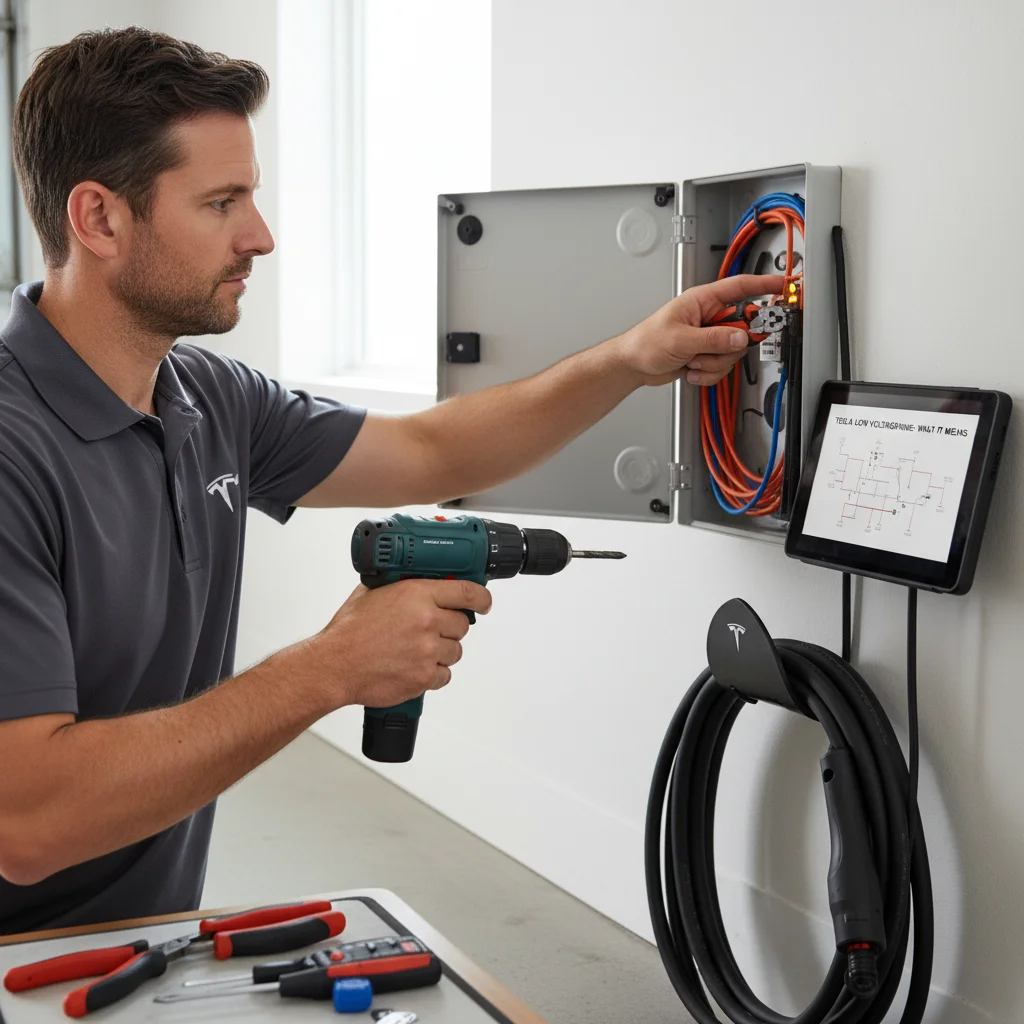
If the car is not recovering and you are not close to a Tesla Service Center, a mobile 12 volt jump is the fastest fix. A jump restores enough voltage for the car to restart and get the DC-DC converter cycling again. From there you can drive to service for a battery replacement. Our Tesla 12 volt battery jump service is built for this scenario.
Why garage sits trigger this warning so often
Long-dwell lots dominate the warning pattern in this metro. The District’s Union Station garage, the Bethesda Row and Pike & Rose decks, the NIH and Walter Reed staff lots, the Dulles Economy Lot, and the Metro end-of-line garages in Greenbelt and Branch Avenue all hold cars for days. The traction pack stays at high state of charge. The 12 volt quietly drains from Sentry Mode, cabin preconditioning, and normal parasitic draw.
Reagan National publishes charging on Level 1 of Parking Garages 1 and 2, first-come, first-served. Dulles publishes Level 2 in Garage 1 and Garage 2. The Economy Lot has no EV charging. A week at Dulles Economy, or a long weekend in Reagan’s garages, is how a 12 volt dies in this metro.
A typical apartment dweller in Takoma Park, Columbia Heights, or the District’s quadrant garages faces the same pattern. Cars that sit outside through a cold night, especially older 12 volt units, can fail at start the next morning.
For more on how the climate affects batteries here, our EV battery care in heat and ice on the Beltway post walks through the regional pattern. For background on 12 volt replacement timing, our EV 12 volt battery replacement guide covers the parts and variables.
When to call a local operator
If your Tesla is already pulled over, the car will not restart, or the screen has gone dark, stop troubleshooting and call. That is the moment for mobile help, not forum threads.
A few specific situations where calling beats waiting:
- You are parked somewhere you cannot leave the car overnight, like an airport lot, a metered garage, or a tow-away zone
- You have a road trip, flight, or commitment you cannot miss
- The car locked itself and you cannot get back in
- You tried plugging in and the 12 volt still is not recovering
Bethesda, Silver Spring, Rockville, and Annandale drivers have local coverage pages at Bethesda EV roadside assistance, Silver Spring EV roadside assistance, and the Annandale EV roadside assistance page.
Charge Pro DC covers the District, Maryland, and Virginia. We connect you with independent operators. For a quote before work starts, call (202) 629-0844.
Frequently asked questions
Is the low voltage warning about the traction pack or the 12 volt?
It is about the 12 volt accessory battery, not the traction pack. The traction pack is the big battery that moves the car. The 12 volt wakes the car up, runs the touchscreen, and feeds the relay that lets the high-voltage pack reach the motors. A low voltage warning means the 12 volt has dropped below threshold and needs attention soon.
Can I keep driving after the warning appears?
Sometimes, but not always. Some drivers see the alert and drive for days before anything gets worse. Others have the car shut down within an hour. Watch for signs that the window is closing: touchscreen reboots, climate controls unresponsive, hesitation shifting, relay clicking from under the dash. If any of those appear, pull somewhere safe and call.
Will plugging in fix the warning?
It may stabilize the 12 volt for a while by waking the DC-DC converter. It does not fix a 12 volt that has truly failed. If the warning stays after you plug in and drive, the battery itself is the problem and needs replacement. The matched operator can confirm whether a jump is enough or whether a replacement is the right call.
What does the operator do when they arrive?
The operator locates the Tesla’s jump posts for the specific model, applies temporary 12 volt power to wake the low-voltage system, and then jumps or replaces the 12 volt battery as needed. A successful jump gets most cars moving again under their own power. A battery that will not hold a charge after the jump gets replaced in the stall. The operator quotes the work in writing before starting.