When a Polestar 2 won’t start, check the 12 volt battery first. The big drive pack is rarely the problem. In Arlington apartments the car often sits unplugged all night. Background systems keep sipping power while you sleep. By morning the dash is dark and the doors ignore the key. Range can still look healthy from the last time you looked. That figure comes from the pack, not the battery that wakes the car.
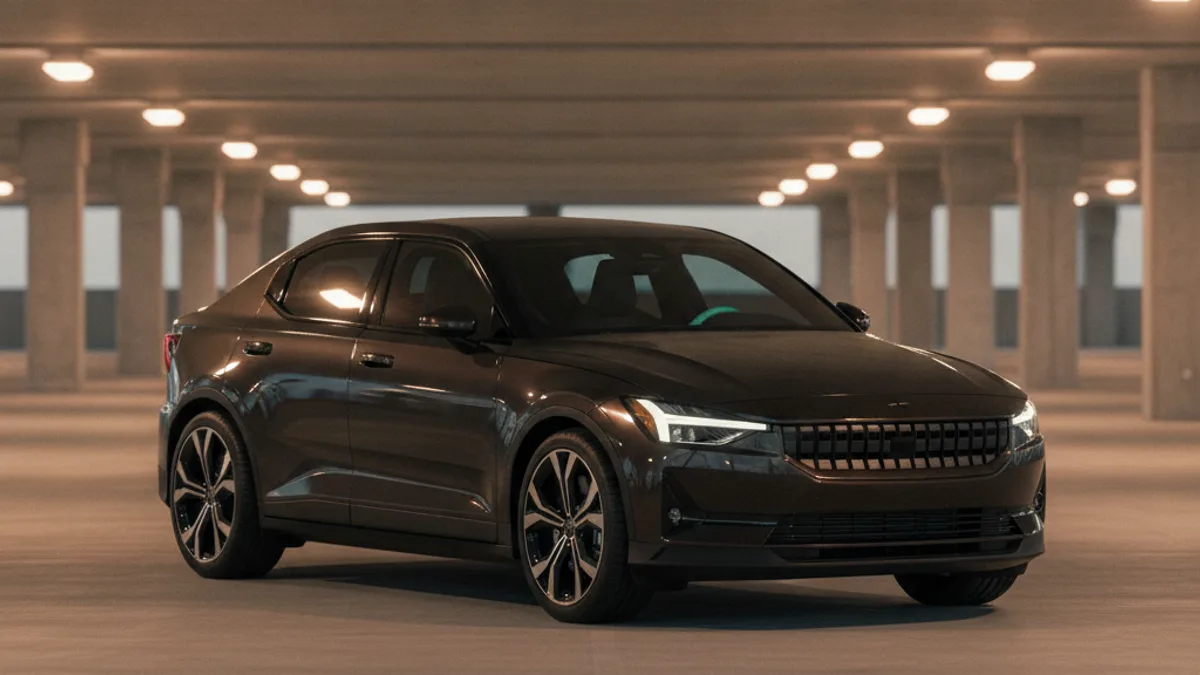
A dark Polestar 2 is usually a 12 volt problem
The 12 volt system runs the computers, locks, and contactors. Those contactors have to close before the drive pack can do any work. A gas car uses an alternator to keep that small battery charged. A Polestar 2 doesn’t. It tops up the 12 volt through a DC-DC converter while you drive. Park it long enough and the converter never gets a chance. The 12 volt then drains on its own.
Two settings speed that drain more than most owners expect. Always-on connectivity keeps the app, remote climate, and diagnostics reachable in the background. The digital phone key uses Bluetooth to notice when you’re nearby. In a busy Arlington apartment garage, people walk past all evening. Each pass can poke the car awake instead of letting it sleep. A healthy 12 volt shrugs that off. An aging one doesn’t.
This isn’t a software defect you need to hunt. It’s a background draw. Fresh batteries handle it. Tired ones fail after short trips that never let the converter catch up.
Where this shows up around the metro
Apartment living is the common thread. Arlington is a county, not an incorporated city. A lot of its housing is stacked parking. Alexandria and the District look the same at night: cars in garages that never see a cord. Silver Spring, Wheaton, Hyattsville, and Annandale show the same overnight sit. Calls about cars that sit unplugged overnight show up most in those places. The car is still a daily driver. It just sits unplugged from evening to morning.
That’s different from stalling on the road at zero. If you made it home from I-66, start with the 12 volt. A dark car at 7 a.m. in the garage is the overnight drain. If you never made it home and range was already gone, that’s a pack problem. Don’t drag a dead, locked car across a garage looking for a public stall. The charge port won’t help if the computers never boot.
Office and transit garages add a daytime version. A Polestar 2 can sit all day under Tysons Corner Center. WMATA park-and-ride lots see the same long sit. The converter only works when the car is in use. A long sit with the phone key still hunting for you can flatten a weak 12 volt. Mobile EV charging when you live in Arlington without a plug is the path if the pack is low. A 12 volt jump is the path if the car won’t wake at all.
Airport parking is the week-long version. Reagan National has complimentary EV charging on Level 1 of Parking Garages 1 and 2. Those spaces are first come first served for parking customers. Garages 1 and 2 connect to the terminal. Dulles has Level 2 charging in Garage 1 and Garage 2. Plenty of drivers still use the Economy Lot because it’s the largest on-airport option. The shuttle runs from Curb 2F. Leave a Polestar 2 there for a week of travel and you come back to whatever the 12 volt has left. Union Station’s garage is the same long-dwell pattern inside the District.
Cold makes a marginal battery fail faster on the western side of the metro. Dulles runs colder and snowier than Reagan National. Loudoun, upper Montgomery, and Prince William see harder freezes than the inner core. A typical EV keeps about 80 percent of range at freezing, per Recurrent Auto’s winter study of 30,000-plus cars. At 20F that figure is about 70 percent. Cabin heat is the main drain on the pack. The 12 volt feels the cold too. A battery that survived a mild Arlington night can fail after a freeze in Ashburn or Leesburg.
Sitting still with climate on is its own drain. Beltway gridlock and an I-95 standstill burn charge without covering miles. That hits the pack first. It still leaves a weak 12 volt with less help from the converter if you never get moving. The January 2022 I-95 shutdown south of this metro is the region’s reminder. Heat on, car still, hours passing. Don’t idle climate overnight in a garage to keep it ready. That’s how a tired 12 volt finishes the night empty.
What the black screen is trying to tell you
The center screen going black is an early tell. It may reboot on its own. It may flash an energy-saving note, then go quiet. The Android Automotive system shares the same low-voltage feed as the locks and computers. When voltage sags under load, the screen is often first to complain.
A one-time glitch can be a true infotainment freeze. Hold the bar at the bottom of the screen for about 20 seconds. That soft reset clears a one-off crash. If the screen keeps dying, stop treating it as an app bug. Driving on a fading 12 volt for weeks is how owners end up locked out in a garage aisle.
Other tells line up the same way. The key fob feels ignored. The Polestar app can’t reach the car. Door handles stay flush. The frunk won’t pop. You still remember a high range number from yesterday. That combination is a 12 volt story until a test proves otherwise.
Don’t start at the battery itself
The 12 volt pack sits in the front trunk, under the main storage tub. You lift the liner to see it. That’s useful when the car already has power and the frunk opens. It’s the wrong first move when the car is dead. You often can’t get the frunk open in that state.
Polestar put the jump points somewhere else on purpose. They sit at the front of the car, low under the hood on the left. A plastic cover hides them. Five push-pin plugs hold that cover on. You jump there, not on the battery posts. Knowing that before you’re crouched in a garage saves the guessing.
How to jump a Polestar 2 from the hood panel
Press the locking pin in the center of each plug. A screwdriver or a pen works. Lift the cover away. You’ll see two charging points side by side. Use the one closer to the center of the car for positive.
Connect cables in this order:
- Red cable to the jump pack’s positive terminal first.
- Red cable to the Polestar’s positive point, the inner one.
- Black cable to the jump pack’s negative terminal.
- Black cable to a bare metal ground bolt on the chassis, not the panel.
Wait about a minute. Then try to start. Pull the cables off in reverse, black first, then red. Polestar is clear that these points are only for jumping this car. They’re not meant to power another vehicle. Doing that can blow a fuse. For the safety steps that apply across brands, see our guide to jumping an EV 12 volt.
If you’ve jumped it more than once in a few weeks, stop repeating the same trick. A 12 volt that won’t hold a charge needs a test and likely a replacement. Our EV 12 volt replacement guide covers the signs and the next step.
When the frunk and hood won’t cooperate
Sometimes the 12 volt is so far gone that the hood release doesn’t answer. Polestar added a fallback for that. A small access port sits under the car, near the front left wheel. It lets you feed power into the 12 volt circuit from outside.
One hard rule applies. Never clip a second 12 volt battery straight to that port. The terminal is fused at a low amperage, documented around 30 amps. Too much current blows the fuse for good. That’s a bigger repair than a dead battery. Use a proper jump pack, not another car. Follow the positive and negative marks exactly. This is last-resort access. Use the hood panel whenever you can reach it.
If you’re not set up for either procedure, that’s a reason to call. Independent operators we connect you with carry jump packs built for this kind of lockout. They know both Polestar access points. That’s the hood panel for a normal jump, and the under-car port when the car is fully dark.
Symptom and likely cause
| Symptom | Likely cause |
|---|---|
| Dash fully dark, key and app ignored | 12 volt fully discharged |
| Center screen blacks out or reboots | 12 volt sagging under load |
| Doors and frunk dead, range still looks fine | 12 volt too weak to run low-voltage systems |
| Car wakes, then goes dark again | 12 volt can’t hold the load once awake |
| Another no-start days after a jump | 12 volt has failed and needs replacement |
None of those rows point at an empty drive pack as the first guess. Prove the 12 volt first. Then worry about range.
What a local operator can do that a patrol can’t
Charge Pro DC is a referral line. We match you with independent mobile rescue operators in the District, Maryland, and Virginia. We don’t own trucks. We don’t employ technicians. We don’t set prices or arrival times. The operator quotes you before work starts and bills you directly.
What those operators do is specific. They can jump or replace a dead 12 volt on site. They can bring a 240V Level 2 source to the car if the pack is the real problem. They use a native NACS plug, or a CCS or J1772 adapter for non-Tesla EVs. A typical top-up adds about 10 to 20 miles of range in 15 to 30 minutes of charging. That’s charge time on the car, never a promise of when someone arrives. Polestar 2s sit in the non-Tesla EV rescue mix, along with the rest of the major brands.
Don’t wait on a utility truck for this. Pepco serves the District, Montgomery County, and Prince George’s County. Dominion Energy Virginia serves most of Northern Virginia, including much of Arlington County. Confirm the serving utility by your address. None of the utility EV pages we reviewed offer a service that charges a stranded car.
Free patrols have the same limit. VDOT Safety Service Patrol covers Virginia interstates including I-66, through Virginia 511. It doesn’t describe EV charging. CHART can jump a conventional 12 volt on Maryland primary roads. Dial #77 on I-495 or I-270. The District has no DDOT motorist-assistance patrol in the material we reviewed. DC drivers lean on MPD, private plans, and US Park Police on the parkways.
If you stall in the 495 Express Lanes, pull to the left shoulder. Those lanes sit in the median. Stay in the car. Express Assist doesn’t charge an EV. Read what Polestar roadside assistance covers, then keep a local operator as backup.
For a no-start in Arlington itself, EV roadside assistance in Arlington walks the local version. The same 12 volt pattern hits stacked parking in Alexandria and the District. It also hits long sits in Tysons, Reston Silver Line lots, and McLean driveways after a cold night.
After it starts, don’t assume you’re done
A successful jump only proves the computers can boot again. It doesn’t prove the 12 volt will hold overnight. If the car dies again in the same apartment stall, treat it as a failed battery. Get it tested. Plan on replacement rather than a third jump.
While you wait on a shop appointment, cut the background drain. Turn off always-on connectivity if you can live without remote climate for a few days. Don’t leave the phone key next to the car all night. Drive it. The DC-DC converter needs running time to top the 12 volt back up. Sitting in the garage with climate on does the opposite.
If the pack is low as well, that’s a different job. Operators can still come to the stall with Level 2. They don’t need your building’s equipment. They quote first. You decide.
Frequently asked questions
Why won’t my Polestar 2 start when the range still looks fine?
Range comes from the high-voltage drive battery. The 12 volt system is what actually boots the car. If that small battery is dead, the wake-up sequence never finishes. The car stays dark no matter what the pack still holds. A 12 volt jump usually brings it back.
Where is the 12 volt battery, and where do you jump it?
The battery itself sits in the front trunk under the storage tub liner. You don’t jump on those posts. Polestar’s jump panel is at the front, low on the left under the hood, behind a five-plug cover. Positive is the point closer to the center of the car. Ground goes to a bare chassis bolt.
Can a Polestar 2’s 12 volt die overnight in an apartment lot?
Yes. Always-on connectivity and the digital key’s Bluetooth sensing draw power while the car sits. In a busy Arlington garage that draw adds up because the car keeps waking as people walk by. A tired 12 volt can finish the night empty even if you drove it yesterday.
Call Charge Pro DC at (202) 629-0844 if the car is still dark. We’ll connect you with a local operator who quotes before any work. They handle the hood panel and the under-car port, so you’re not guessing at push pins in a garage aisle.