A Tesla that will not wake is usually a dead 12-volt. That holds in a Metro garage and at Dulles. A Tesla 12v battery replacement is the lasting fix. If the car is dark, jump it on site first. The operators we send can replace the unit there too. They quote before they start, then they bill you.
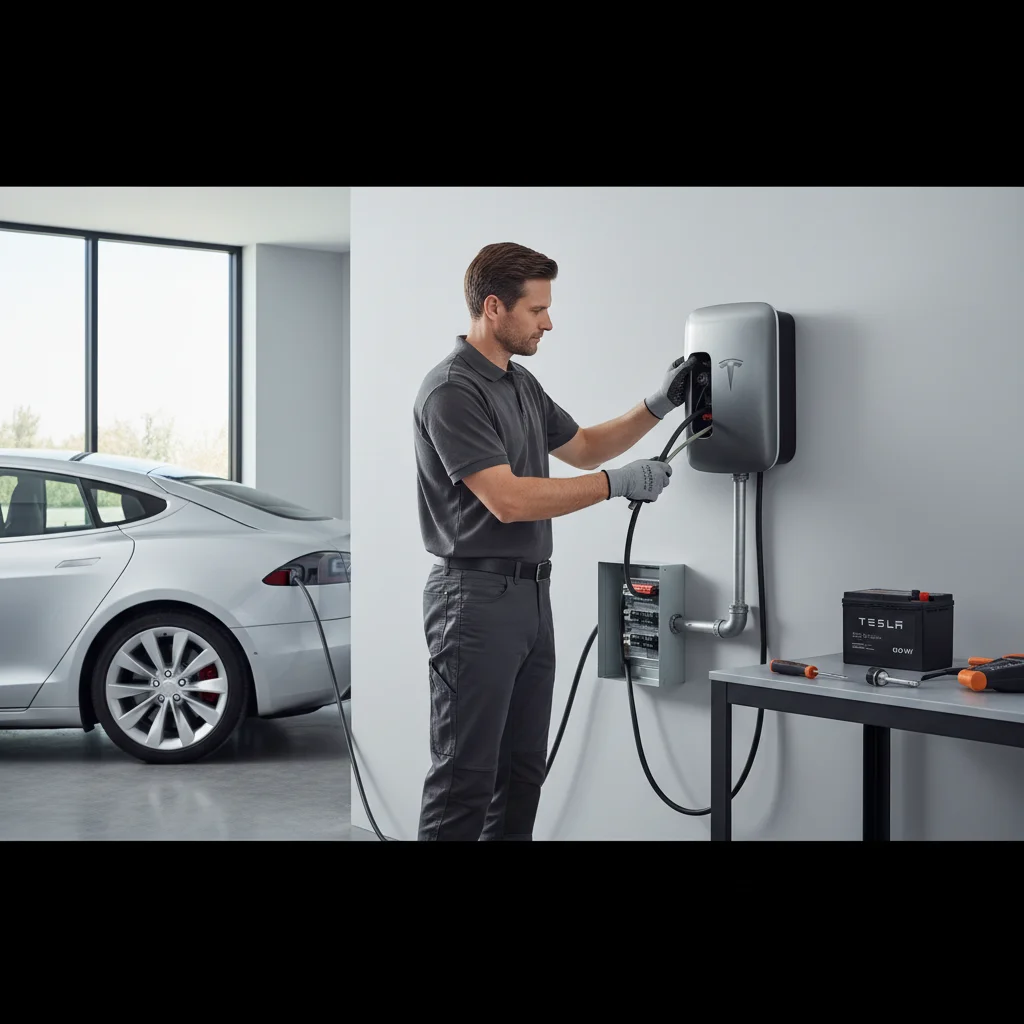
Jump first if the car will not wake
The 12-volt runs the computers, locks, and contactors. The traction pack can still hold plenty of range. That is why the app can look fine. The handles still will not pop. The screen stays dark.
A jump restores enough low-voltage power to open the frunk. Then you can drive, or you can swap the unit. A shop only helps once the car will move. Towing a sealed Tesla is a worse first move.
If the touchscreen is black, start with a Tesla 12-volt jump. Replacement is the second step, not the first. Forcing doors or the charge port helps no one.
Why cars here flatten a Tesla 12-volt
The local pattern is sitting, not a long empty highway. Commuter Teslas spend nights and weekends in garages. Airport trips leave them for a week. Street parking in older neighborhoods adds more idle days.
A return to the Dulles Economy Lot is a classic stall. MWAA publishes Level 2 charging in Garage 1 and Garage 2. The Economy Lot is not on that list. You come back to whatever the 12-volt still holds.
Reagan National is a different layout. Complimentary EV charging sits on Level 1 of Parking Garages 1 and 2. Those spaces are first come, first served. A car in those garages still sits for days. Sitting drains the small battery even near a plug.
WMATA park-and-ride garages follow the same week-long sit. Reston Silver Line lots, Arlington, and District garages fill with weekday Teslas. Union Station parking is another long-dwell box. The pack may still show range. The 12-volt is what dies.
Older housing is the other drain. Takoma Park, Annandale, Wheaton, and much of Washington predate home charging. Many cars live on the street or in an unplugged garage. Arlington and Alexandria apartments follow the same unplugged pattern. The 12-volt sags slowly, then it fails on a Monday morning.
Summer heat along the Beltway cooks a lead-acid unit in a closed garage. Tysons Corner Center and office decks in North Bethesda get that oven effect. Winter hits the western and northern suburbs harder. Dulles runs colder and snowier than Reagan National. Loudoun, upper Montgomery, and Prince William see the sharper freezes.
Cabin heat on a stalled I-270 crawl pulls from the pack. The 12-volt still has to keep the computers alive. The January 2022 I-95 shutdown south of this metro is the local reminder. Drivers sat overnight with the heat on. A tired 12-volt does not like that sit.
How you tell a jump from a replacement
A jump gets you moving. It does not rebuild a worn battery. Use the jump as a test, not as the whole repair.
Replace it when the car dies again after a recent jump. A healthy 12-volt does not keep going flat. See what to do if it dies again after a jump. Repeated mornings with a dark screen are the same signal.
Check rest voltage if you have a meter. After a jump, a sound 12-volt should sit near 12.6 to 12.8 volts. That reading is at rest, not while charging. If it falls under 12.0 volts in a few hours, the cells will not hold.
Persistent low-voltage alerts in the Tesla app also point to a swap. The car may wake, then nag you the next morning. Recurring Schedule Service notices after a jump mean the same thing. Do not keep clearing them and hoping.
If you are not sure, start with the jump. How the car recovers tells you a lot. A clean wake that holds can reach a shop. A wake that fades by evening is a replacement job. Our guide to a dead Tesla 12-volt walks through those checks.
Do not confuse a dead 12-volt with an empty pack. An empty pack still usually lets the car wake. A dead 12-volt will not. If both are tired, jump first so the contactors can close. Range help is a separate 240-volt job after the car is awake.
Lead-acid or lithium, by model
The chemistry changes the part and the access. It does not change the first move in a lockout. Match the unit to the year before anyone starts.
Older Model S and Model X
Pre-2021 Model S and Model X cars use a lead-acid 12-volt. It is the same chemistry as a gas car, in a Tesla tray. Access is in the front trunk, with more trim in the way. DIY is possible if the frunk already opens. It is the wrong first move if the car is dark.
Model 3 and Model Y from 2021 on
Tesla moved these to a proprietary lithium-ion 12-volt. It is lighter and charges off the main pack faster. The connector is keyed. Forcing it cracks the housing. If you swap your own, go slow. Match the chemistry to the year, not to a generic parts-store battery.
Confirm the unit before work starts
Ask what they are installing. A lead-acid pack in a lithium car is the wrong part. A lithium unit in an older S or X is an upgrade, not a casual drop-in. Our model-by-model 12-volt guide is the sheet to have open.
Tesla’s published Basic Vehicle Limited Warranty is four years or 50,000 miles. Whether your 12-volt is covered is a Tesla account question. Check tesla.com/support and the app before you pay a service center. Active extended service agreements need the same check. Do not assume coverage from a blog post.
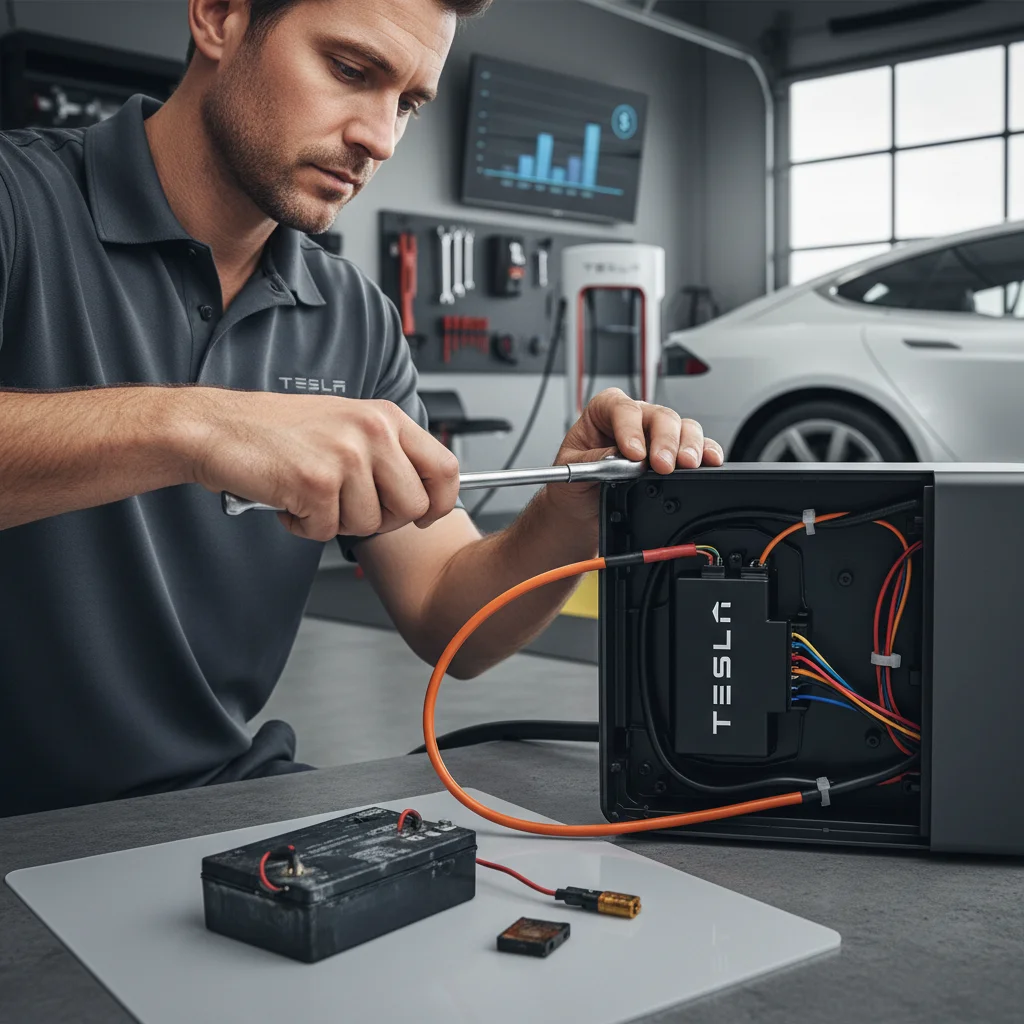
On site, a Tesla center, or your driveway
You have three paths once the car is awake. None of them should start with a surprise bill. The operators we connect you with quote before they start. They bill you directly. Charge Pro DC matches you with them. We do not own the truck, and we do not do the work.
On-site jump and swap
This is the path when the car is in a garage, a driveway, or a lot. It will not wake. The operator restores 12-volt power first. Then they can replace the unit if it will not hold. You hear the quote first. You decide.
That is the useful split versus a shop. A shop cannot start if the car will not roll. A Tesla mobile visit is a Tesla scheduling question. Independent operators in this metro already do 12-volt work at the car. They handle Tesla and the other major EV brands.
If the pack is also low after the jump, say so. The same visit can include a 240-volt top-up. That is charging time at the car, typically 10 to 20 miles in 15 to 30 minutes. It is not an arrival promise. Native NACS is the Tesla plug. CCS or J1772 adapters cover other EVs. Keep the 12-volt job and the range job straight on the quote.
Tesla service when the car can still move
If the car wakes and holds, a Tesla service center is the OEM path. You get the Tesla part and Tesla labor. You also wait on their calendar. Bring the failure notes from the app. A diagnostic visit that is not a 12-volt problem is still Tesla’s bill. Know what you walked in with.
Tesla service makes sense for warranty work you have already confirmed. It also makes sense when you want the OEM lithium unit on a newer 3 or Y. It is a poor first call when the car is locked in Economy parking at Dulles.
DIY only after the car unlocks
Some owners swap their own 12-volt. That job does not void the high-voltage pack warranty by itself. The rumor still circulates. You need the correct battery, a 10mm socket, a Torx bit, and a trim tool. A meter helps you confirm the new unit is seating. First-timers should give it a quiet hour, not a rush before a flight.
The hard stop is a dead lockout. If you cannot open the frunk, you cannot reach the battery. Jump first, or you are standing next to a sealed car. Lithium connectors crack when they are forced. Watch a teardown for your exact year before you pull anything. If the screen is black, DIY is not step one. See locked out with a dead 12-volt.
Where the stall actually happens
The Capital Beltway and I-270 are the commute drains. The car is not always empty. It is often a 12-volt that gave up after a long sit. Rockville office decks, Tysons garages, and Arlington lots see that pattern. Fairfax City garages and Falls Church street parking do too. Fairfax County and the City of Fairfax are separate places. Say which one when you call.
On the 495 Express Lanes, pull to the left shoulder. Those lanes sit in the median. Stay in the car until help is with you. On the 95 and 395 Express Lanes, pull to the nearest shoulder. Express Assist helps with minor issues and will call a tow. Published Express Assist material does not describe a Tesla 12-volt replacement.
The American Legion Bridge and the Woodrow Wilson Bridge are high, windy spans. Shoulders are thin. A dark Tesla there is a traffic problem first. Get the car awake if you can do it safely. Do not stand in the lane.
NPS parkways are a different rule set. The Baltimore-Washington Parkway, the George Washington Memorial Parkway, Clara Barton, Rock Creek, and Suitland Parkway ban commercial vehicles and trucks over 10,000 lb. A disabled car on the Baltimore-Washington Parkway is reported to US Park Police at 202-610-7500. Shoulders are narrow or missing. Plan the call around that, not around a shop appointment.
VDOT Safety Service Patrol covers Virginia interstates, including the I-66 corridor. Reach them through Virginia 511. Published VDOT material describes debris, incidents, and short-term control. It does not describe EV charging or a Tesla 12-volt swap.
In Maryland, CHART Emergency Traffic Patrol works the state primary roads. Dial #77 on I-495, I-270, US-50, and MD-295. CHART techs change tires, jump-start, and add a little gas or water. Their published pages do not describe charging a stranded EV. They also do not describe replacing a Tesla 12-volt.
The District has no DDOT motorist-assistance patrol that we could confirm. Drivers there use MPD, a private roadside plan, or Park Police on the parkways. Disabled-vehicle rules in DC, Maryland, and Virginia treat an EV like any other car. None of the three codes we reviewed adds a special out-of-charge rule.
Pepco serves the District, Montgomery County, and Prince George’s County. Dominion Energy Virginia serves most of Northern Virginia. NOVEC covers parts of Loudoun and Prince William. None of the utility EV pages we reviewed offer a stranded-car charge. A 12-volt stall is not a Pepco or Dominion call. Pepco EVsmart and Dominion’s Schedule 1EV are home-charging programs. They do not wake a Tesla in a garage.
What to do in the lot, right now
Stay with the car if you are on a freeway or a parkway. Hazard lights on. On the 495 Express Lanes, that means the left shoulder. On I-66 or I-95, use the nearest safe shoulder. Do not walk the lane to look for a charger.
Do not keep tapping the app until the 12-volt is fully dead. One or two wake attempts is enough data. Then stop. Note the last alert you saw.
If you are in a garage at Dulles, Reagan National, or a Metro lot, note the level and the row. The operator needs that. “I’m at the airport” is not an address. Economy Lot versus Garage 1 at Dulles changes the job.
Decide jump versus swap after the car is awake. If it holds, you can drive to Tesla. You can also finish a DIY swap at home. If it sags, replace it where it sits. A second jump next week is not a plan.
For a Tesla that is out of traction charge instead of 12-volt power, that is a different call. A 240-volt top-up adds range at the car. A dead 12-volt needs a jump first, or the pack cannot even connect. Reston drivers in Silver Line lots hit both problems after a long sit. Sort which one you have before anyone rolls.
Frequently asked questions
Do I jump the 12-volt, or drive to a shop?
Jump first if the car will not wake, unlock, or show a screen. A shop visit only works once the car can move. After a successful jump, watch whether voltage holds. Repeat failures mean replacement, not another jump.
Can a Tesla 12v battery replacement happen at the car?
Yes. Independent operators in this metro jump and can replace the 12-volt on site. They quote before they start. Tesla service is the OEM path when the car already runs. DIY is only realistic after the frunk opens.
What if I am locked out in a garage or airport lot?
Treat it as a 12-volt lockout until proven otherwise. Do not force doors. Call for a jump so the car can wake. Then choose a replacement at the car or a drive to a shop. If you are on an NPS parkway, report the stall to US Park Police as well.
If the Tesla is dark right now, call (202) 629-0844. We’ll connect you with a local operator who can jump or replace the 12-volt at the car, quote first, and bill you directly.