You stall on US-50 through Bowie with an empty pack. A tow is the long way around that problem. You need a mobile 240-volt operator at the car. Charge Pro DC connects Bowie drivers with independent local pros. Those operators bring Level 2 power to the shoulder so you can drive off.
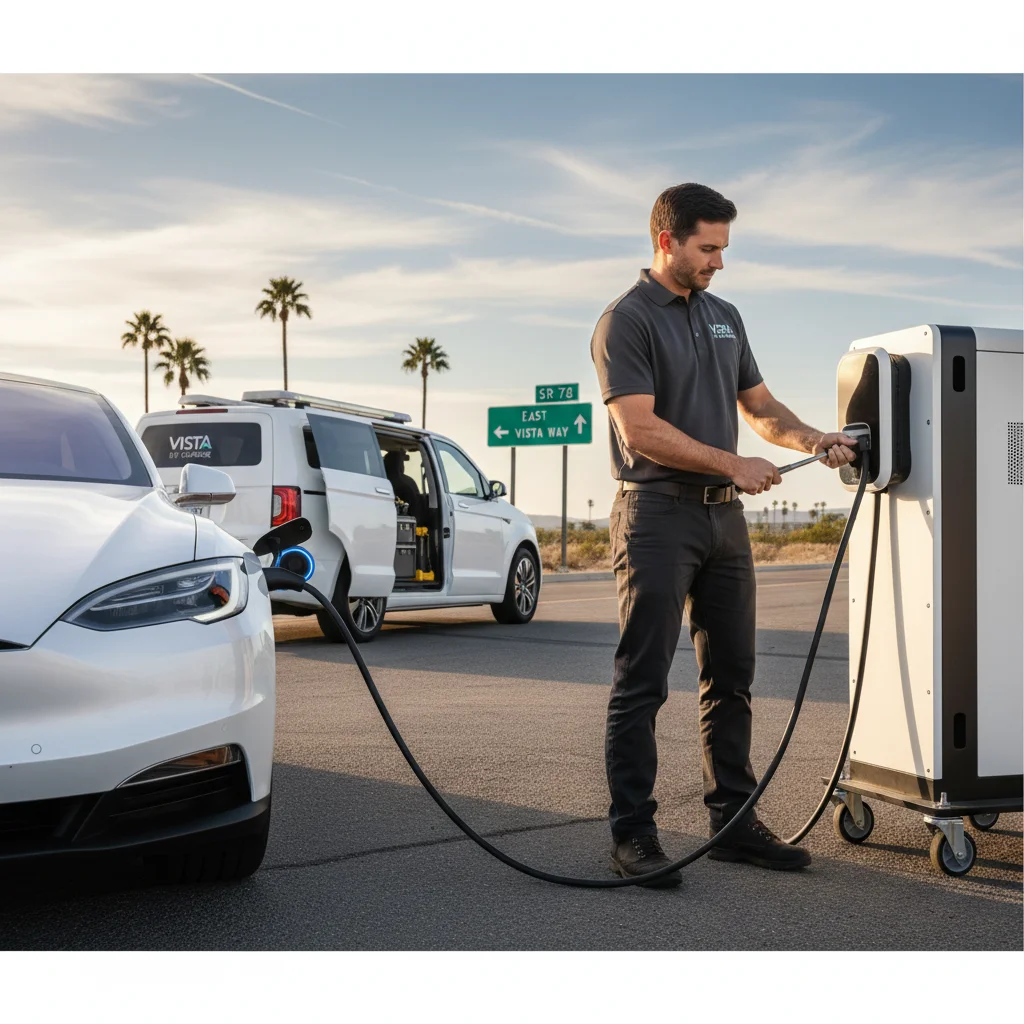
Why a Bowie stall on US-50 is a charge call
Bowie’s the largest city in Prince George’s County. It’s a bedroom community along US-50, the John Hanson Highway. That road runs between the Capital Beltway and Annapolis. The commute’s fast, and the stretches are long. Shoulders stay limited on much of that highway. An empty EV here sits exposed in high-speed traffic.
This isn’t a slow crawl between city blocks. Highway speed toward Annapolis and the Eastern Shore crossing burns range. Summer in Bowie is hot and humid, so cabin AC pulls from the pack. Winter brings occasional heavy snow and cabin heat from the same battery. Recurrent Auto studied 30,000-plus EVs in winter. A typical car keeps about 80% of range at 32F. It keeps about 70% at 20F. Cabin heat’s the reason, not the motor. Sitting still with climate on drains miles you never drove.
Home charging’s common in Bowie’s newer subdivisions. Most homes here have driveways and a plug. That’s why many Bowie calls are road strandings, not garage surprises. Drivers leave charged, then run short on US-50. MD-197, MD-3, and MD-450 see the same pattern.
On the shoulder, you want EV roadside assistance. That’s the service that matches this stall.
US-50 and the roads that feed it
US-50’s the spine of a Bowie commute. People use it to reach jobs inside the Beltway. They also use it east toward Annapolis. MD-197, Collington Road, dumps neighborhood traffic onto that highway. MD-3, the Robert Crain Highway, does the same from another approach. MD-450, Annapolis Road, cuts across town on the older alignment.
Bowie doesn’t need a mountain to empty a pack. The city sits on former farmland east of the Beltway. The land stays relatively flat, so speed and distance do the damage. You leave a charged driveway in a newer subdivision. Then the estimate drops on a long, fast run you cut too close.
If the car still rolls, get fully out of the travel lane. Stay with the vehicle when that’s the safer choice. Maryland’s disabled-vehicle rules live in Transportation Article Title 21. They treat an empty EV like any other stalled car. Maryland, Virginia, and District codes we reviewed don’t add an EV-specific stall rule.
When you call, say you’re in Bowie on US-50 and which way you face. Eastbound runs toward Annapolis. Westbound runs toward the Beltway. If you left the highway on Collington Road or Annapolis Road, say that too.
CHART can help, and it still can’t charge the pack
MDOT SHA’s CHART Emergency Traffic Patrol covers US-50. Dial #77 from a breakdown on a state primary roadway. That list includes I-495, I-270, and US-50. CHART’s published help includes tire changes and jump starts. It also lists about a gallon of gas and radiator water. Those materials don’t describe EV charging, so an empty traction pack isn’t their job. A jump might wake a 12-volt system. It won’t put miles back in the high-voltage pack.
Pepco powers the house, not the shoulder
Pepco serves most of Bowie, and BGE touches some eastern edges. Confirm the serving utility by address before you assume which one you have. Pepco’s EVsmart program is about home and multifamily chargers. In Maryland it publishes a residential Level 2 smart-charger rebate for Prince George’s addresses. Confirm the current amount with Pepco before you count on it. No Pepco EV page we reviewed offers a charge for a stranded car. The utility doesn’t roll a truck to US-50 for you.
When the pack is empty, you want a Level 2 boost. Mobile EV charging is what the operators we send actually do.
Town Center, Bowie State, and a 12-volt that dies first
Not every Bowie stop’s an empty traction pack. Cars sit for hours at Bowie Town Center. They sit at Bowie State University lots during class. They sit at Allen Pond Park too. Prince George’s Stadium, home of the Bowie Baysox, is another long sit. A long sit can kill the 12-volt while the main pack still holds energy. The car won’t unlock, wake, or go into drive. Owners often think they’re out of charge, and they’re not.
Census ACS 2019-2023 puts Bowie’s population at 57,771. About 47.9% of housing here was built before 1980. The rest’s newer subdivision stock. In older pockets, a house may predate a wall charger. In newer streets, overnight Level 2’s the normal routine. When the home plug worked, the US-50 failure is usually range.
Bowie’s mix isn’t the apartment-heavy pattern you get in older inner suburbs. Takoma Park housing is about 90% pre-1980. That’s a no-home-plug problem more often than a highway stall. Here, almost half the stock predates 1980, and the rest is newer driveway country. The stall that defines Bowie is still US-50 at highway speed.
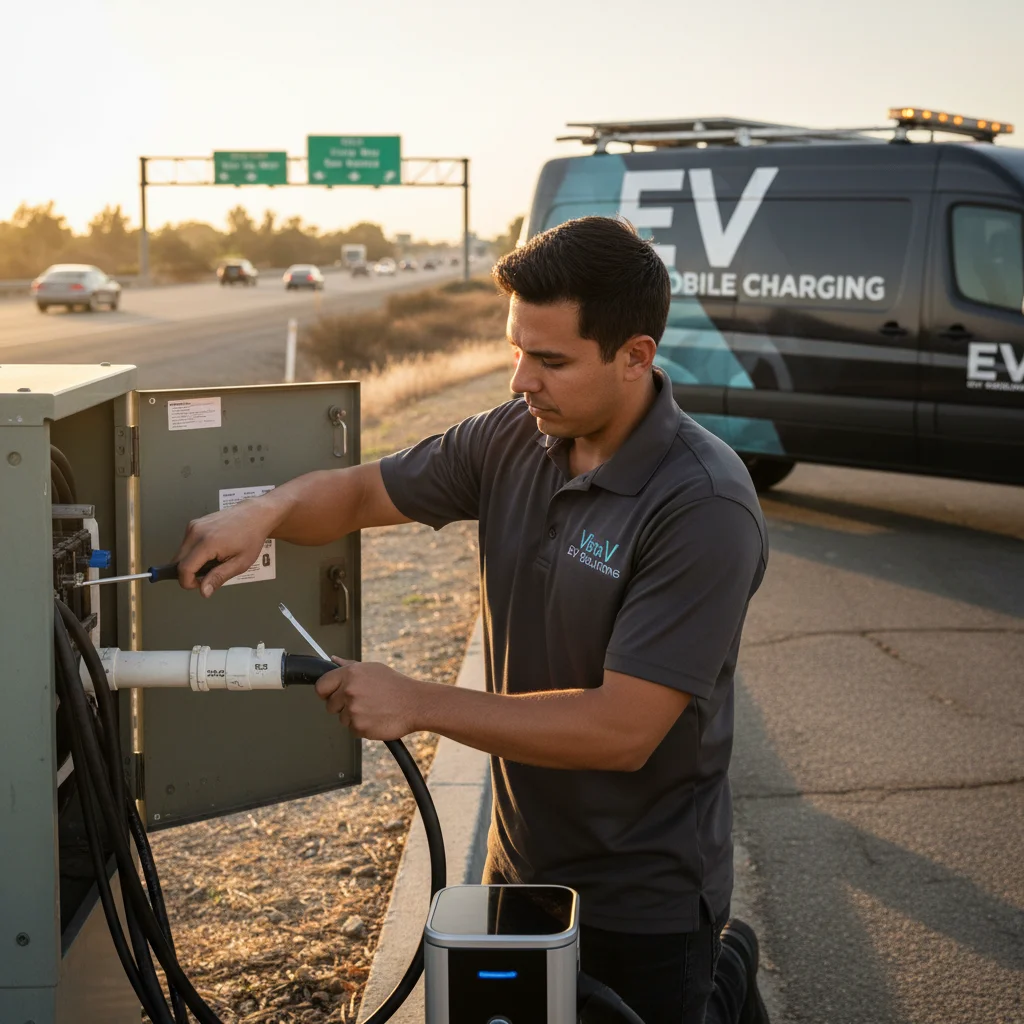
Operators we connect you with handle Tesla and every major EV brand. They bring a 240-volt Level 2 source to the bumper. Teslas take a native NACS plug. Other EVs use a CCS or J1772 adapter. A typical session adds 10 to 20 miles of range. That takes 15 to 30 minutes of charging. That’s charging time at the car, never an arrival window.
They can also jump or replace a dead 12-volt on site. If you’re weighing a boost against a flatbed, read mobile EV charging or a tow. The operator quotes you before work starts and bills you directly. Charge Pro DC doesn’t set that price.
What a 240-volt visit does that a tow doesn’t
A tow from a US-50 shoulder still leaves extra steps. You’re hunting a plug after the hook. You wait for the wrecker, then you wait at a charger. You still need enough range to finish the trip. A mobile Level 2 visit is one stop. The pro charges at the car, and you drive.
It isn’t the right call every time. A pack that won’t accept charge needs a shop, not a roadside session. A charge-port fault can block the boost too. The pro on scene should say so first. Don’t pay for work that can’t move you.
The wider metro has the same rescue pattern. Read EV roadside assistance for drivers in DC, Maryland and Virginia. Greenbelt, Largo, and Laurel sit next to Bowie. You’ll see similar corridor stalls there. Bowie’s own pattern is still the John Hanson Highway run. You charge at home in a subdivision. Then you stall at speed on an exposed shoulder.
The same empty-pack problem shows up on other metro roads. Out of charge on a DC-area freeway covers that next step.
Who to call from a Bowie shoulder
Call when the pack is empty on US-50 or a Bowie arterial. Call when the car won’t wake in a Town Center or campus lot. Call when a 12-volt warning showed up before the systems went dark. Those are rescue jobs, not a shop visit first.
Charge Pro DC is a referral line. We match you with independent local mobile rescue operators. We don’t own trucks, and we don’t employ technicians. We don’t hold a trade license, and we don’t quote an arrival time. The pros we connect you with are licensed and insured. They do the work at your bumper.
Our Bowie EV charging page covers the city pattern. A driveway Level 2 session and a shoulder top-up share a voltage class. They’re not the same job. Home 240-volt charging vs a roadside top-up spells out that split.
We serve Bowie and the rest of Prince George’s County. We also serve the District, Maryland, and Virginia cities in our coverage.
Call (202) 629-0844 when you’re stranded. We’ll connect you with a local operator. Ask for the quote before any cable goes in.