Most McLean EV charging happens overnight on a 240-volt circuit in a private garage. The real question is the trip after that plug. A thin pack still dies on the American Legion Bridge. It also dies on the Capital Beltway and the George Washington Memorial Parkway. Estate lots in this Fairfax County community usually have a wall unit. The trip can still end on a high span with limited shoulder.
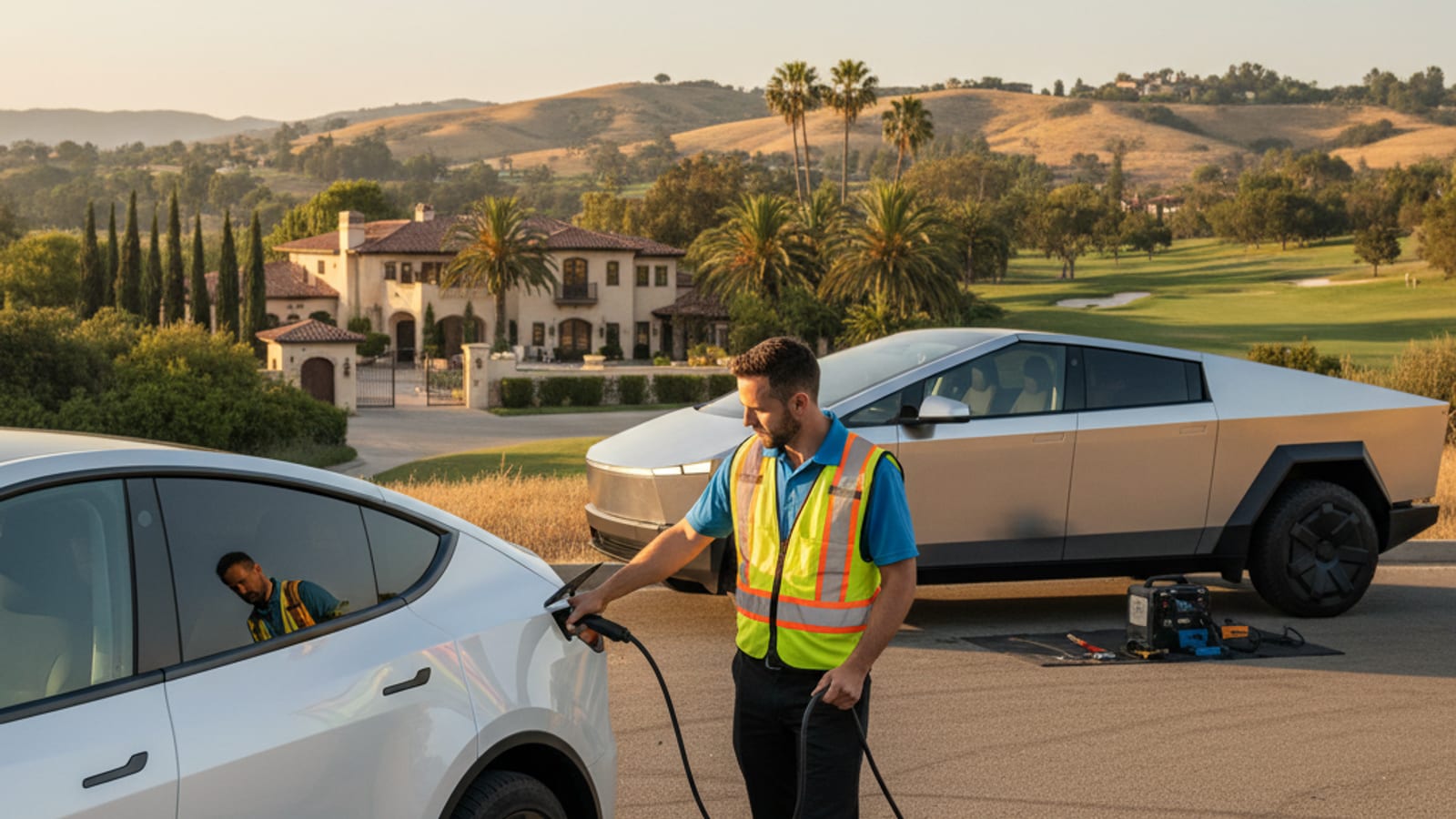
McLean driving is short on a map and long on the river
McLean is an unincorporated community in Fairfax County, Virginia. It’s not an incorporated city. About 50,232 people live here. The land covers about 24.8 square miles of wooded hills above the Potomac gorge. Inner Fairfax looks compact until you add the Beltway, the parkway, and Georgetown Pike.
Dolley Madison Boulevard is VA-123. It’s the spine toward Tysons. Tysons Galleria sits on the McLean side of that commercial edge. Capital One Center is another long-dwell stop in the same cluster. The CIA headquarters area is close on the map. Access is restricted, so it’s not a fallback pull-off.
Georgetown Pike is VA-193. It winds toward Great Falls Park on the Virginia side. The George Washington Memorial Parkway follows the river. Shoulders are narrow. National Park Service rules apply along that stretch. I-495, the Capital Beltway, runs the north edge. The American Legion Bridge carries that Beltway across the Potomac into Montgomery County, Maryland.
That mix is why EV charging in McLean isn’t only a garage story. It’s a corridor story. You leave a large lot after a night on a wall charger. Then you join traffic that doesn’t care how much range you saved.
The driveway plug covers the night, not the last miles
Most homes here charge on-site. That’s the local pattern. High EV ownership on large lots means the wall unit is the daily plan. Dominion Energy is the electric utility. Owners plug in after dinner. They leave in the morning with a comfortable buffer.
The buffer shrinks on the wrong road. A loop to Great Falls and back isn’t a downtown hop. It’s climbing wooded hills, then crawling. Cabin climate control runs the whole time. You can start a Tysons errand with plenty of indicated miles. Then you watch the estimate fall on the bridge.
This is the estate version of range trouble. You didn’t skip a home charger. You left with a thin margin. Then you met Beltway idle, parkway curves, and summer humidity or winter ice.
For the Beltway case, read what to do when you’re out of charge on the Capital Beltway.
Level 1 at an estate is a maintenance trickle
Every EV ships with a portable Level 1 cord. It uses a standard 120-volt outlet. It adds only a few miles of range per hour. On a large luxury pack, that trickle can take days to rebuild a deep discharge. A McLean owner already drives Dolley Madison, the Pike, and the Beltway. For that driver, Level 1 is a backup, not a plan.
If the only outlet you have is 120-volt, use it while you sort a 240-volt circuit. Don’t treat it as enough after a late return from Arlington or Tysons.
Level 2 is the estate default, and it still isn’t a rescue
A Level 2 unit needs a 240-volt circuit. That’s the same class of feed as a dryer. At home it can add tens of miles per hour. It can refill most packs overnight. That’s why McLean owners put one in a garage, a detached bay, or a covered motor court.
Placement is a property question. Run length, panel space, and Fairfax County permitting are electrician questions. Charge Pro DC doesn’t install chargers. We don’t hold a contractor license. We don’t pull permits. Licensed local electricians do that work.
Level 2 at home answers the overnight question. It doesn’t answer a stall on Georgetown Pike. It doesn’t reach a car already on the GW Parkway. Compare the two jobs in home 240-volt charging versus a roadside top-up.
Operators we connect you with bring 240-volt charging to the car. Typical plug time is 15 to 30 minutes for about 10 to 20 miles. That’s charging time, never an arrival time.
Dominion sets the home rate. It doesn’t charge a stranded car.
McLean addresses sit on Dominion Energy Virginia. Dominion publishes a residential EV rate called Schedule 1EV. It also publishes a voluntary Off-Peak Plan time-of-use rate. That plan needs a smart meter. There’s an EV Charger Rewards demand-response incentive as well. Confirm current program rules on Dominion’s EV pages before you change a rate or buy equipment. Programs move.
None of the utility EV pages reviewed for this metro offer a service that charges a stranded car. Dominion can price the kilowatt-hours in your garage. It can’t roll a 240-volt source onto the American Legion Bridge. That’s an absence of a utility rescue product. It isn’t a claim about public stations.
Older McLean houses can stall the install, not the car
About 57.6 percent of housing here was built before 1980. That figure is from Census ACS 2019-2023 table B25034. Pre-1980 stock is a proxy for panels never sized for a 240-volt EV circuit. Plenty of McLean estates have been added onto. Plenty still have an original garage feed. That feed trips when a charger shares a dryer or a well pump.
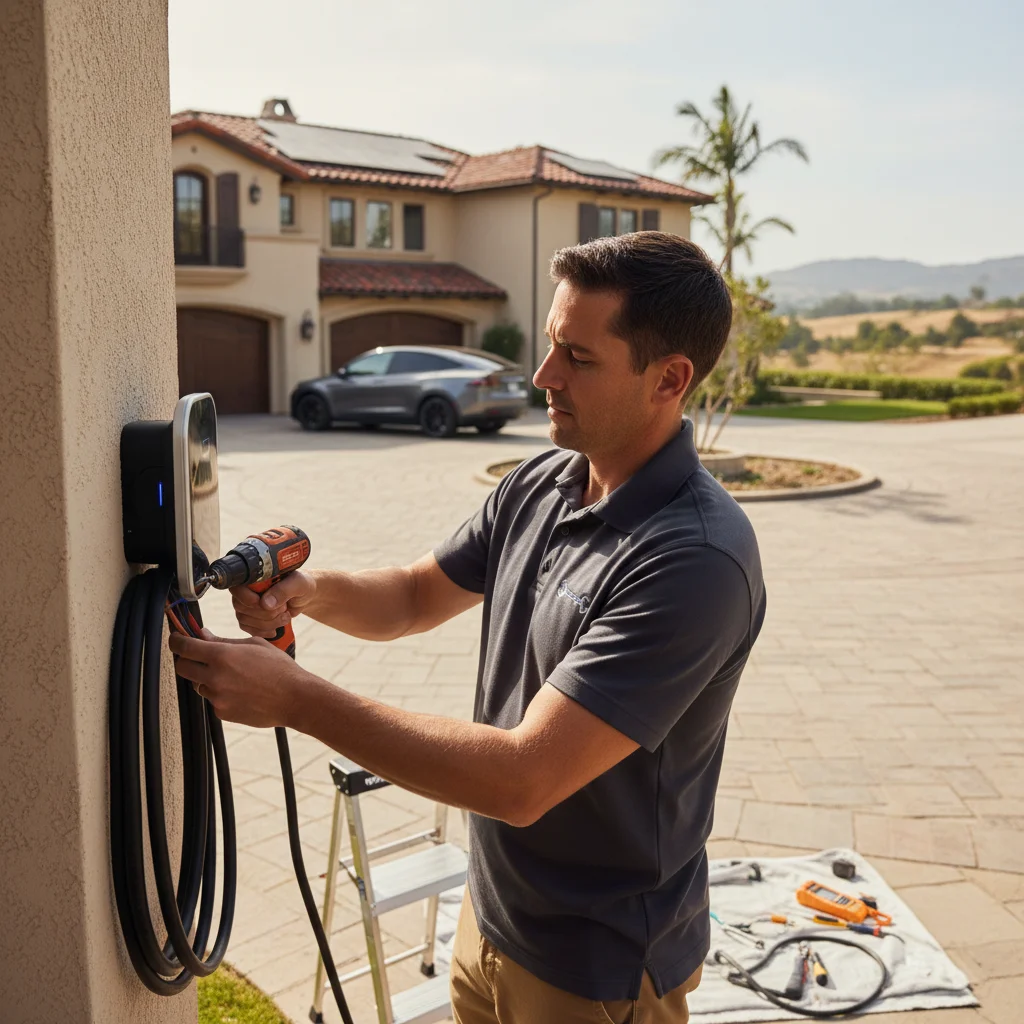
A panel upgrade is a licensed-electrician job. It isn’t a roadside job. If the wall unit is dark and you need to move the car today, that’s a mobile 240-volt visit. It isn’t a permit. The two problems get mixed up. Both feel like charging. They aren’t the same.
The four corridors that actually eat a McLean pack
McLean’s trouble calls cluster on four named roads. They aren’t mysterious. They’re the ones you already drive.
I-495 and the American Legion Bridge
The Beltway general lanes are free. They aren’t free in time. Idle with heat or AC running drains charge without covering distance. That’s the gridlock pattern. It isn’t a mileage pattern.
The American Legion Bridge carries I-495 across the Potomac. One end is McLean. The other is Montgomery County, Maryland. The span is high and wind-exposed. The shoulder is limited. If the pack is already low when you merge, you don’t have a clean place to sit and think.
If you’re in the 495 Express Lanes, the published safety rule is specific. Those lanes sit in the median. Pull over to the left shoulder. Stay in the car until help arrives. Transurban runs Express Assist on the lanes with VDOT. That patrol helps with minor mechanical issues. It will call a tow. It doesn’t charge an EV. For the left-shoulder case, see dead EV in the 495 Express Lanes.
The George Washington Memorial Parkway
The GW Parkway is a limited-access scenic road. Shoulders are narrow or missing. National Park Service rules apply along the river. Commercial vehicles and trucks over 10,000 pounds are banned on NPS parkways. A disabled vehicle on these roads is a Park Police matter. US Park Police can be reached at 202-610-7500. That number is for reporting a disabled vehicle. It isn’t a charging dispatch.
If you’re already on the parkway with a dying pack, get to a legal, visible stop. Then call. Stalled on the George Washington Parkway covers why a pull-off is so hard here.
Georgetown Pike toward Great Falls
VA-193 is beautiful and unforgiving. It winds along the river approach to Great Falls Park on the Virginia side. Winter ice on those curves is a local fact. Humid summers load the climate control. There are few wide shoulders. A low pack on the Pike is a two-part stall. You’re short on energy. You’re also short on a place to sit without blocking a blind bend.
Don’t hunt a private driveway that isn’t yours. Get the car as far off the travel lane as you can. Lights on. Then call.
Dolley Madison into Tysons
VA-123 looks like the easy road. Tysons Galleria on the McLean side and the decks around Capital One Center are long-dwell parking. Long sits are how 12-volt batteries die even after a full home charge. The traction pack can be fine. The small battery still leaves the car dark.
Heat, ice, and sitting still
McLean spreads across wooded hills above the gorge. Summers are humid. Winters swing between mild days and sudden ice. Parkway and Pike curves take that ice first. Cabin heating and cooling come from the traction pack.
A typical EV, in a Recurrent Auto study of more than 30,000 cars, keeps about 80 percent of range at freezing. That’s 32°F. It keeps about 70 percent at 20°F. Cars with a heat pump average about 83 percent retained. Cars without average about 75 percent. Don’t treat those figures as a Tesla-only number. They’re fleet averages from that study.
Sitting still is the other drain. Beltway traffic and a stopped parkway do the same thing. Heat on. Miles not moving. Pack falling. The January 2022 I-95 shutdown near Fredericksburg is the region’s reference for that night. Drivers sat with the heat on and no miles gained. Fredericksburg is south of McLean. The lesson still applies on I-495. Don’t idle a low EV just to wait it out.
Who shows up on Virginia pavement, and who doesn’t charge you
VDOT Safety Service Patrol covers Virginia interstates. In Northern Virginia that includes the I-66 corridor. Drivers reach help through Virginia 511. Published material describes incident and debris clearance and short-term traffic control. It doesn’t describe EV charging.
There’s no DDOT motorist-assistance patrol in the District. Maryland’s CHART patrol covers the Maryland side of I-495. It doesn’t publish EV charging. On NPS parkways you’re in Park Police territory. None of those agencies publish a product that charges a stranded EV.
A tow on a parkway or a bridge is slow and jurisdictional. An EV that needs a flatbed doesn’t like a short hook. Virginia private-property tow rules sit under Va. Code § 46.2-1231 and related sections. Confirm current Fairfax County ordinance limits with the county. Disabled-vehicle rules in Virginia, Maryland, and DC apply to an EV the same as any car. None of the three codes reviewed has a special out-of-charge statute.
Charge Pro DC is a referral line. We match stranded EV drivers with independent local mobile rescue operators. We don’t perform the work. We don’t own trucks or equipment. We don’t employ technicians. We don’t set prices. We don’t promise an arrival time. We don’t publish business hours. We hold no license. The operator quotes you before starting. The operator bills you directly.
What those operators do is specific. They bring a 240-volt Level 2 source to the car. They use a native NACS plug. They carry a CCS or J1772 adapter for non-Tesla EVs. They typically add 10 to 20 miles of range in 15 to 30 minutes of charging. They can jump or replace a dead 12-volt battery on site. They handle Tesla and every major EV brand. That’s mobile EV charging at the bumper. It isn’t a tow to a garage.
For McLean roadside specifics on the bridge and 495, see McLean EV roadside assistance on the American Legion Bridge and 495.
12-volt death looks like an empty pack
EVs still use a 12-volt battery to wake computers, lock doors, and close contactors. If that battery is dead, the traction pack can be full. The car still sits dark. A week in a garage after a trip will do it. So will a long sit at Capital One Center or a Tysons dinner. Cold makes it worse.
Don’t assume you ran out of miles. Check whether the screens boot. Check whether the charge port opens. Check whether the app still talks to the car. A 12-volt jump on site is often the whole fix. A high-voltage pack that’s actually empty needs a 240-volt top-up. Then you drive to the charger you already planned. Mixing those two calls wastes a flatbed.
Nearby communities share river weather, not the same roads
Tysons, Vienna, Arlington, Falls Church, and Potomac sit next to McLean. The housing and the corridors aren’t identical. Arlington and Falls Church have more apartment density. Potomac sits on larger lots across the same river weather. Tysons is garage and mall dwell time. Vienna is an incorporated town with its own Metro garage pattern.
McLean’s distinctive failure is the estate driver who did charge at home, then ran the Parkway, the Pike, or the bridge on a thin margin. Don’t call McLean a city. Don’t treat Fairfax County and the City of Fairfax as the same jurisdiction.
If the estimate is already falling, do this
Turn off extra climate load if you can stand it. Drop speed. Use the nearest legal shoulder. On the 495 Express Lanes, that shoulder is the left one. On the GW Parkway, take whatever NPS-legal space you can find. Don’t walk into traffic. Hazards on. Stay with the car.
Then decide what failed. Empty traction pack means you need a mobile 240-volt charge. A gas can won’t help. Dead 12-volt means you need a proper EV jump. A random booster pack on the wrong posts can make it worse. Skip a highway-speed tow if a charge or a jump will move the car.
Charge Pro DC can connect you with an independent operator who quotes the work first. If you already know it’s an empty pack, say so. If the car won’t wake, say that too.
Frequently asked questions
Can a McLean home charger cover Beltway and parkway days?
A 240-volt Level 2 unit covers overnight refill for almost every estate commute. It can’t rescue a car that already left thin. It can’t reach the American Legion Bridge, Georgetown Pike, or the GW Parkway. Leave with a real margin on river roads. When you didn’t, a mobile 240-volt visit is the on-site option.
What do I do if I stall on the American Legion Bridge or the GW Parkway?
Get out of the travel lane if you can. On the 495 Express Lanes, pull left. On the parkway, stay visible. Call US Park Police at 202-610-7500 to report a disabled vehicle. Then call for a quoted mobile charge or 12-volt jump. VDOT and Park Police clear hazards. They don’t refill an EV pack.
Do the operators only help Teslas?
No. Operators we connect you with bring a native NACS plug for Tesla. They also bring CCS or J1772 adapters for other brands. Tesla and every major EV brand are in scope. The operator confirms the inlet before the quote.
When the driveway did its job and the road did not
McLean EV ownership is built around a garage plug and Dominion power. Inner Fairfax miles look short until the river roads start. The American Legion Bridge, the Beltway, the GW Parkway, and Georgetown Pike are where that plan breaks. Charge Pro DC doesn’t roll a truck. We connect you with a local operator. That operator brings 240-volt charging or a 12-volt jump to the bumper. The operator quotes first and bills you directly.
If you’re already sitting on a McLean shoulder with a warning on the dash, call (202) 629-0844. Stay with the car. Tell the operator whether the screens are dead or the pack is empty.