Tesla’s 2026 roadside language hardens the line between warranty work and driver behavior. The policy wording does not put a 240 volt truck on your shoulder in the District, Maryland, or Virginia. A driver here still calls a quoted local operator when the pack empties on I-66 or the Beltway sits still through Silver Spring.
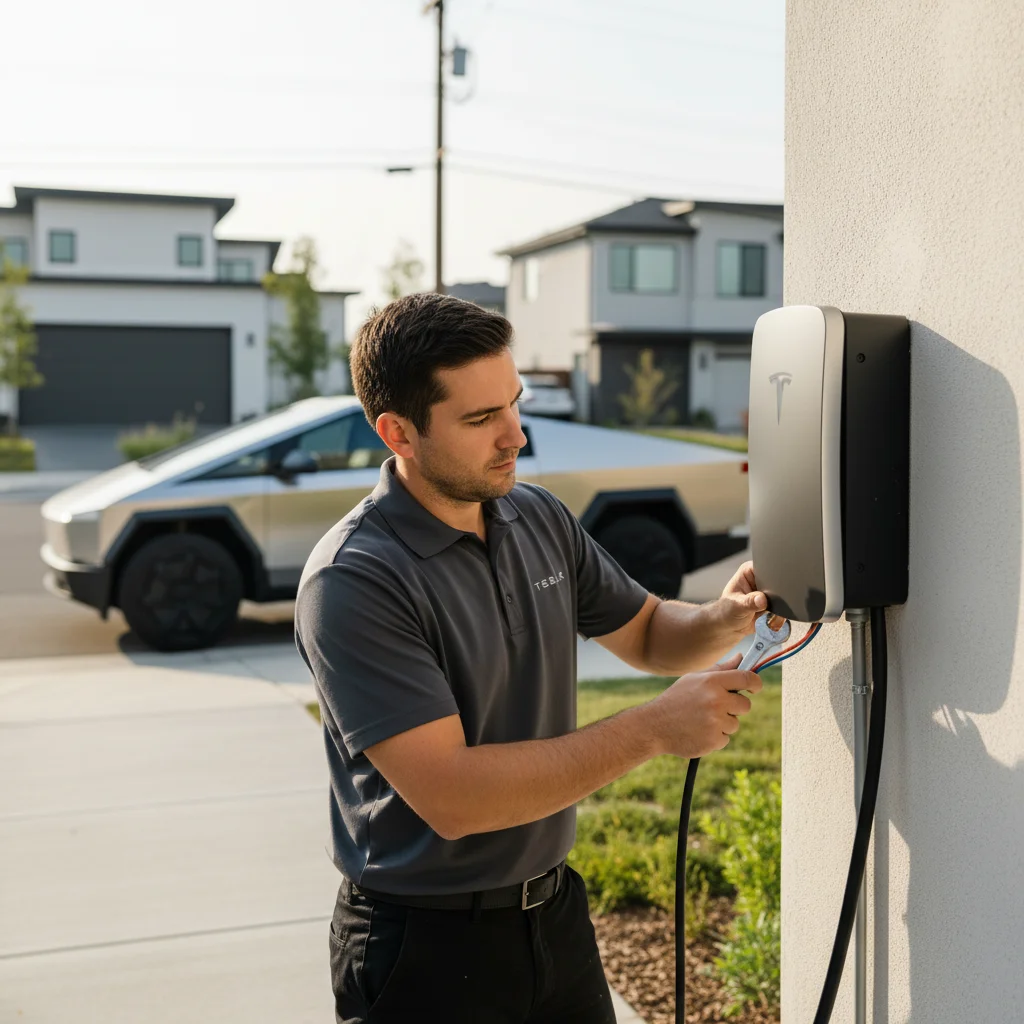
What the 2026 policy language tightens
Tesla’s current published path draws a sharper line between New Vehicle Limited Warranty issues and driver-behavior events. An empty pack on the Beltway isn’t a powertrain defect. A misjudged cold morning that costs you 30 percent of range isn’t a warranty fault. Tesla’s published roadside page still says out-of-range assistance may be available. It also says Tesla doesn’t cover that help financially.
Tesla also moved more of the dispatch through the in-app request flow rather than a live phone agent. The app assigns a response, either a Tesla Ranger, a contracted provider, or a loaner arrangement, depending on the situation and vehicle status. That doesn’t change what an operator physically brings. A contractor with a flatbed is still what shows up, not a charging truck.
What stays free and what gets billed
The free path under warranty covers towing to a Tesla Service Center when the cause is a covered powertrain or software fault, Ranger visits where applicable, and winching for a covered mechanical failure. Out-of-charge tows have always been billable, and the 2026 language makes that more explicit. The same wording pushes flat tire assistance beyond the loaner wheel kit, towing after the warranty has expired, and any incident where Tesla decides driver error caused the stall toward your card on file.
A dead 12-volt is still treated as a roadside event, but the coverage depends on whether the failure is tied to a covered component. Age-related 12-volt death, which is what most cars that sat too long in a garage experience, is typically the owner’s cost.
Tesla’s Extended Service Agreement can offset some of those billed items. If you carry one, read it for the roadside section before the stall. Our breakdown on what Tesla roadside covers versus a local quote goes deeper on that comparison.
The Beltway doesn’t read your warranty card
The 495 Express Lanes run in the median. On those lanes, Transurban says to pull to the left shoulder. On the 95 and 395 Express Lanes, pull to the nearest shoulder. Transurban’s Express Assist runs on those lanes for minor mechanical issues and will call a tow. It doesn’t tow and it doesn’t charge an EV.
A stall on the Woodrow Wilson Bridge sits at the meeting point of Alexandria, Oxon Hill, and the District. The American Legion Bridge is the same pinch between McLean and Montgomery County. The Beltway between Bethesda and Silver Spring is a stationary range problem in morning rush, not a distance problem. I-66 inside the Beltway crawls in peak hours, and so does the Dulles Toll Road. Dulles Airport runs colder and snowier than Reagan National, which is the regional reminder that the January 2022 I-95 shutdown south of this metro still applies.
None of the public patrol pages describe a 240 volt top-up for a stranded EV. Maryland’s CHART technicians jump a 12-volt and change a tire. VDOT’s Safety Service Patrol covers Virginia interstates and reaches you through Virginia 511. CHART runs around the clock in the Baltimore/Washington metropolitan area. None of those is a charge call.
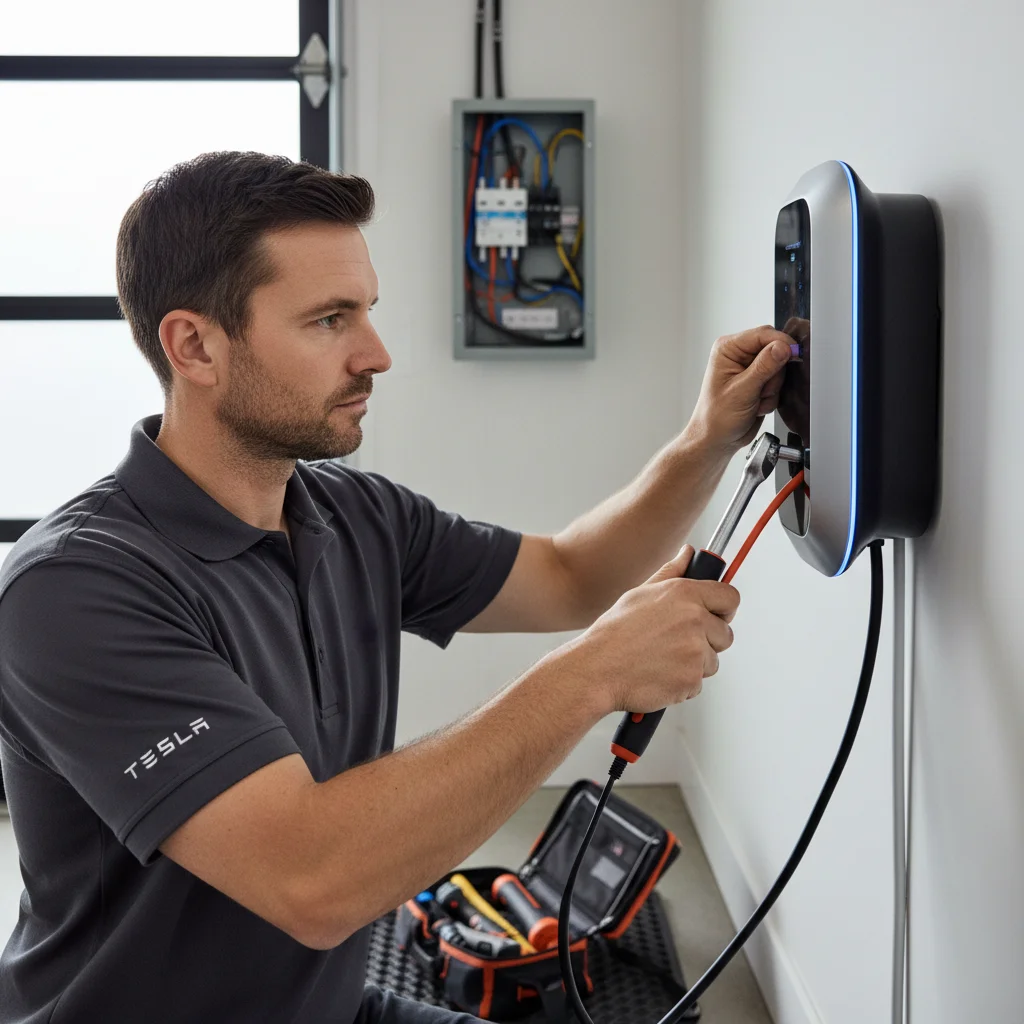
What a local operator still does that policy does not
The pros we connect you with are licensed and insured. They typically add 10 to 20 miles of range in 15 to 30 minutes of charging. That’s charging time, never an arrival time. They handle Tesla and every major EV brand. They bring a native NACS plug, plus CCS or J1772 adapters for non-Tesla cars.
A 12-volt jump or replacement is also part of that visit. The operator quotes you before starting and bills you directly. Confirm whether the quote covers the work you accepted. If a tow is on the table, confirm the destination before the truck rolls.
Charge Pro DC is a referral line. We match stranded drivers with independent local operators. We don’t own trucks, employ technicians, set prices, or hold a trade license. We don’t promise an arrival time. The operator you reach decides whether the work fits the truck and the spot.
Where this matters in this metro
Older apartment stock across the inner ring is the common stall pattern. Census ACS figures put pre-1980 housing at 70.3 percent in Washington, 90.0 percent in Takoma Park, 79.8 percent in Annandale, 73.1 percent in Wheaton, 61.2 percent in Bethesda, and 69.1 percent in Silver Spring. Many of those blocks don’t have a dedicated home charger circuit, so renters charge in public between sessions. When the math falls short, the car sits where it died.
A Tesla that won’t wake after sitting at the Bethesda Row garage all day usually has a dead 12-volt, not an empty pack. A jump gets most of those cars moving. A battery that won’t hold needs replacing on site. The operator prices both and quotes you before starting. You drive out of the garage under your own power.
For the I-66 stall at peak hours, a Beltway stall at rush, and a cold morning in Gaithersburg, the pros we connect you with are the path the policy does not cover. The pros we connect you with bring a 240-volt Level 2 source to the car. The operator quotes you before starting and bills you directly.
When to call Tesla and when to call Charge Pro DC
Call Tesla first when you’re inside the warranty Tesla lists for your VIN. Open the app and tap Roadside, then read the conditions before you tap submit. If Tesla cannot send anyone, or the dispatch ETA has stretched past what the shoulder allows, call us for a quoted local operator. We confirm whether the work fits the truck and the spot. If the work is a jump or a 12-volt replacement, the operator prices both options before starting.
For more on the call flow, see our how to find mobile EV charging near you in DC, Maryland, and Virginia guide and the Capital Beltway out-of-charge checklist.
When to call Charge Pro DC
Call us when Tesla’s dispatch has stretched past what the shoulder allows, or when you need a 240-volt top-up at the car. Have model, pin, charge display, and warning text ready. Call (202) 629-0844 and we’ll connect you with a local EV rescue operator.