Moving a Tesla Model S that has no power starts with identifying the exact car and its condition. Before a local operator rolls, share the model year, what still responds, the location, the access limits, and the intended destination. The DC area adds layers a normal tow does not have, because the jurisdictions (DC, Maryland, Virginia) each set their own tow rules, and several scenic parkways ban commercial tow vehicles outright.
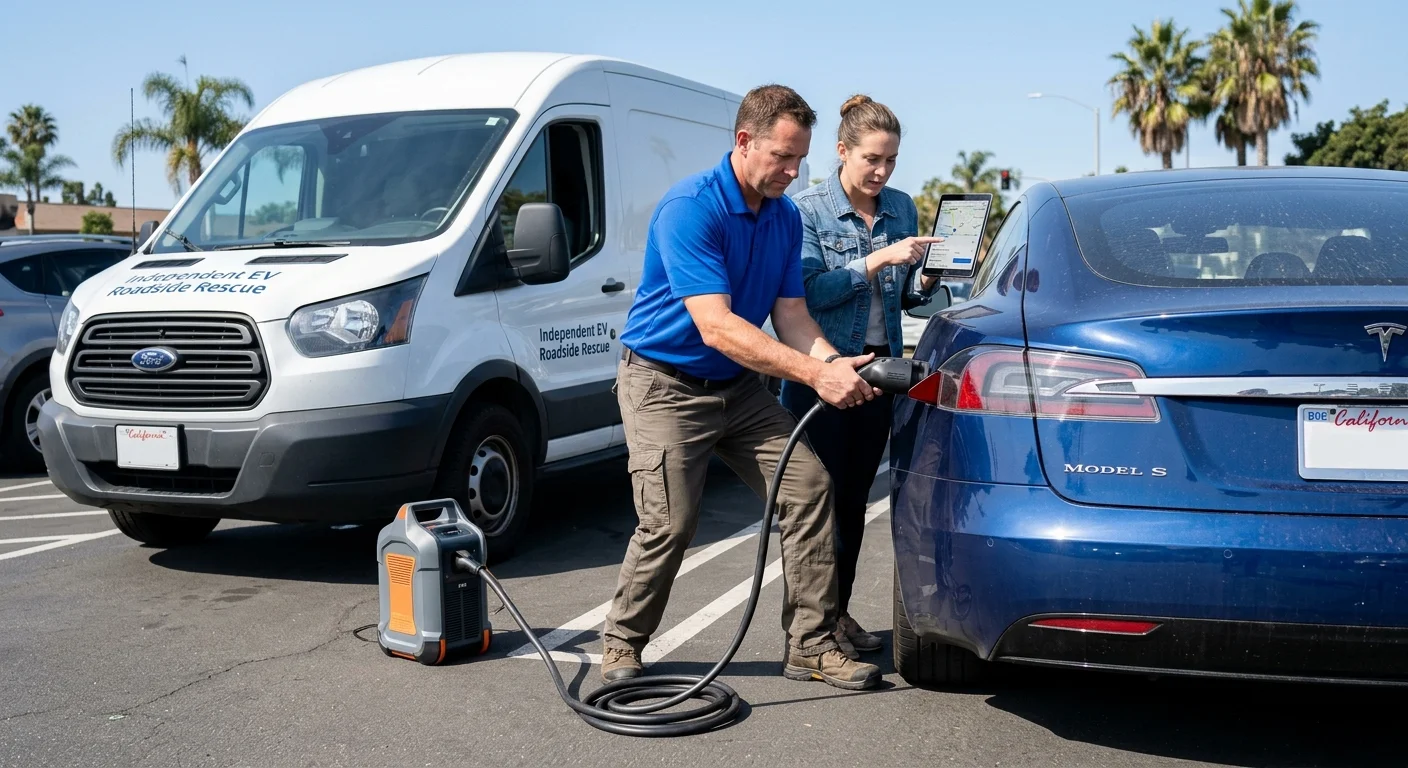
Confirm the Model S and the model year
Start by confirming the vehicle is a Tesla Model S. Get the model year from your paperwork, your Tesla app, or a record you trust. Do not guess from the wheels or the body shape.
Give the operator the full model description and the vehicle identification number if you can read it. The model year matters because transport instructions differ between the classic Model S, the 2021 refresh, and any mid-cycle software changes. The operator needs the year to pull the right loading and access steps. Do not share the VIN publicly. Send it through the operator’s secure channel.
Tell the operator whether the car appears modified. Aftermarket wheels, a lowered suspension, or a non-OEM tow eye change how the car is loaded. Describe what you can see and let the operator decide what matters.
Also explain why you think the car needs help. A blank screen before the shutdown, a low traction pack, collision damage, a tire problem, and an unexplained no-start are all different handoffs. State what you observed, not what you have diagnosed. For help sorting the symptom, our Model S 12 volt guide walks through the most common reasons a Model S will not wake.
Identify whether any 12 volt power is available
Describe what still responds without opening panels or improvising a power connection. The goal is to give the operator a clean report.
Use only the controls you would normally use. Tell the operator whether the doors respond, the center display lights, or any warning message shows. Note whether the exterior lights respond. If nothing responds, say that plainly.
Sample descriptions
- The center screen is on and shows a message.
- The doors unlock but the car will not move.
- The Tesla app connects but the car does not respond.
- There is no visible response from the car.
- I cannot access the cabin.
Copy any displayed message exactly. A photo helps preserve the wording if you can take it safely from outside the travel lane. Do not translate the message into a self-diagnosis. “No visible power” is more useful than claiming a specific battery has failed.
Also report whether the charge port responds through the controls you normally use. Do not force the port door. Tell the operator if a charging cable is still attached and who owns that cable. If the car is at a public charger, describe the location and any message you can read on the dispenser.
Check Tesla’s current transport instructions for your year
Before moving a Model S, the operator should check Tesla’s current transport instructions for the exact vehicle. Charge Pro DC’s approved claims ledger does not publish verified Model S transport-mode or loading procedures, so we do not recreate them from memory.
Use Tesla’s current owner information tied to your car. Search by the confirmed model and model year. If the screen or the app is still partially responsive, look for the official steps there. Ask the operator which official instructions they are reviewing before loading starts.
Do not use an old forum reply or video as the final authority. Send the operator the official page you found along with the model year. Do not claim the car is already in a particular transport setting unless the vehicle confirms it. Instead, report what you can see. If you cannot locate instructions for the right year, say so. Ask the operator to confirm the source they intend to follow before the truck rolls.
For broader planning, our tow a Tesla with no power in DC, Maryland, and Virginia page gives an overview of how the three jurisdictions shape a no-power tow.
Share road, garage, and destination details
A precise location helps the operator understand the handoff. Send a dropped map pin when possible, then add a plain description. Include the street, travel direction, the nearest exit, the parking level, or a recognizable entrance.
Location detail by jurisdiction
DC locations need the quadrant (NW, NE, SE, SW) because street addresses repeat across the District. A garage stop needs the garage name, the level, the entrance street, and the posted clearance. Northern Virginia locations should name the jurisdiction (Arlington, Fairfax, Prince William, Loudoun) and the nearest cross street. Maryland stops should name the county (Montgomery, Prince George’s, Frederick, Charles) and the road or interchange.
The DC area also has parkways with truck restrictions that affect which operator can roll. The Baltimore-Washington Parkway, the George Washington Memorial Parkway, the Suitland Parkway, the Clara Barton Parkway, and the Rock Creek and Potomac Parkway are NPS roads. Commercial vehicles and trucks over 10,000 pounds are banned on these. A flatbed tow needs a smaller operator vehicle or a meet at a ramp. Mention any of these parkways explicitly.
Mention anything between the operator and the car:
- A gate, a locked entrance, or a parking attendant
- A narrow driveway or a sharp turn on a Woodbridge or Olney side street
- A steep ramp or a low ceiling at a Bethesda Row garage
- A reserved space or a shared charging stall at a Tyson Corner Center deck
- A wheel positioned against a curb
- Visible collision or tire damage
- A charging cable still attached
Describe these conditions without prescribing equipment. Charge Pro DC does not claim every operator carries the same tools. The operator decides whether the location and the car fit their setup.
Choose the destination before transport begins. Give its exact address. Confirm access, acceptance, and current hours with the destination directly. We do not publish unverified facility hours or promise a particular location will accept the vehicle.
Decide whether mobile charging or transport fits
A powerless Model S does not automatically tell you which service to request. Give the operator the facts and ask which fits.
Mobile charging may fit when the main concern is a depleted traction pack. Tell the operator what the vehicle displayed before it stopped, whether the charge port responds, and whether the car is positioned where charging can be considered. The operator must decide whether charging is appropriate at that location. Our mobile EV charging service explains the dispatch path for that call.
Transport may fit when the vehicle will not accept charging, access remains unavailable, damage is visible, or the destination needs the car moved. These observations are still not a diagnosis. They are details for the operator and destination to assess.
If you are unsure, ask direct questions:
- Are you evaluating mobile charging, transport, or both?
- Have you confirmed my Model S year?
- Which current Tesla instructions will guide the transport?
- Does the location create an access concern?
- What information do you need about available 12 volt power?
- Should I confirm anything with the destination first?
For a depleted battery situation, our out-of-charge recovery service explains how we connect drivers with local operators. Charge Pro DC performs no charging or towing itself. We do not own roadside equipment, set operator prices, or provide a service warranty. Ask the matched operator directly about pricing, payment, scope, and any warranty before agreeing to service. Those terms belong to the independent operator.
When to call Charge Pro DC
Call when your Tesla Model S has no power and you need help deciding whether mobile charging or transport fits. Share the model year, power status, exact location, access details, and destination. Tell us if the stop is on an NPS parkway so the operator brings a vehicle that is allowed on that road.
Need a Model S no-power rescue in DC, Maryland, or Virginia, call (202) 629-0844. We match you with a local operator who knows the parkway truck rules and the three-jurisdiction tow setup. They quote you before starting and bill you directly.