A Tesla Model S that will not wake in the DC area is almost always a dead 12 volt. The center screen stays black, the door handles stay flush, and the Tesla app shows the car offline. That combination points to the low-voltage battery nine times out of ten on the Model S calls we hear about across the District, Montgomery County, and Northern Virginia. The main traction pack can still be at half charge and the car will not wake, because nothing on a Tesla powers up until the 12 volt does first.
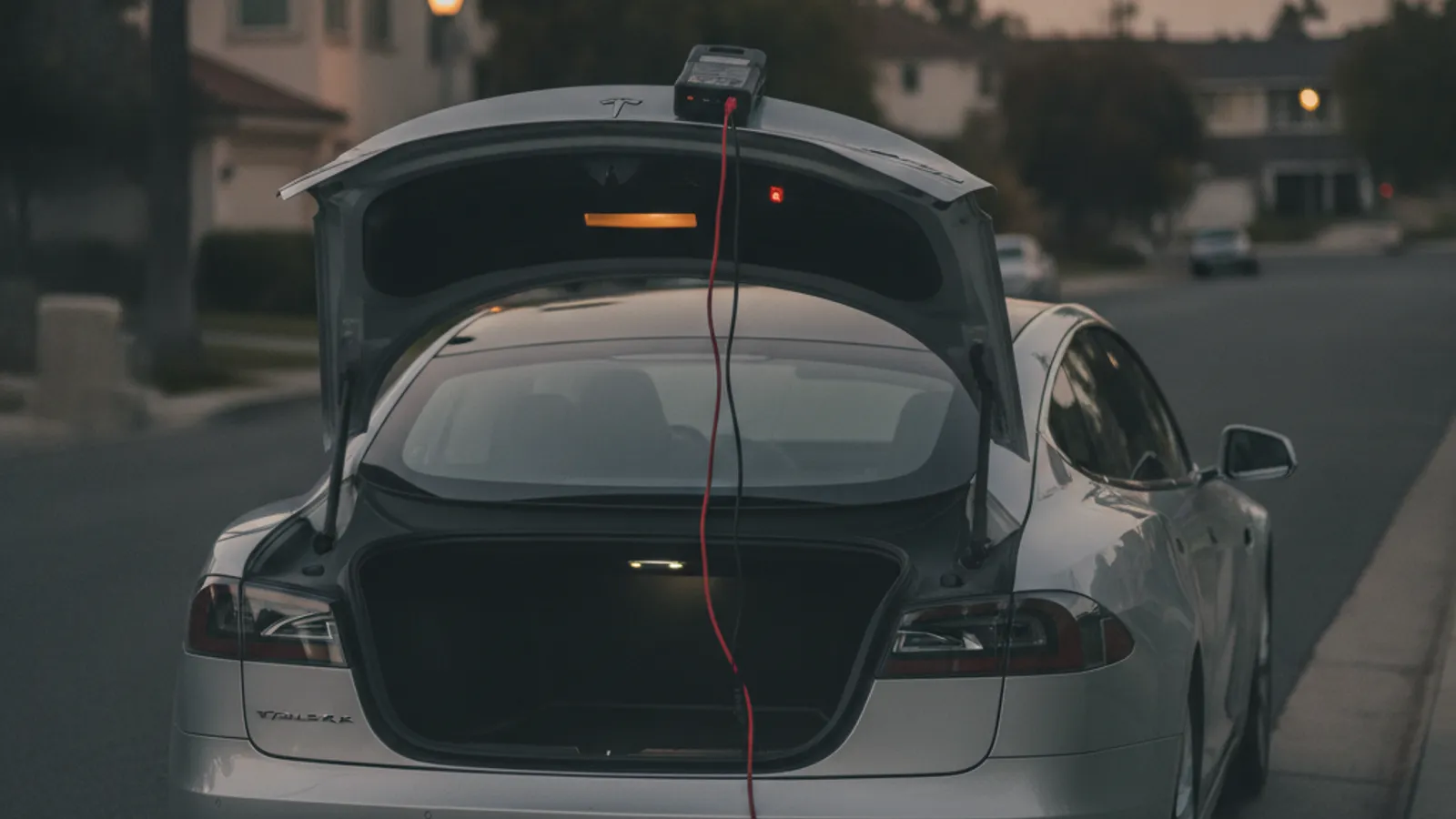
Why the Model S no-start is usually a 12 volt, not the traction pack
A Tesla has two batteries. The big traction pack runs the motors and accepts a charge. A small 12 volt unit runs the cabin computers, the door handles, the charge port, and the contactors that connect the traction pack. If the 12 volt is dead, the contactors stay open and the traction pack cannot deliver power to the wheels.
The Model S is the generation that set the pattern
The Model S was the first mass-market Tesla, and it stayed in production through several hardware revisions. The 12 volt went through the same set of changes as the rest of the car. Newer Model S years behave differently from older ones when the 12 volt dies.
The classic Model S built from 2012 through 2020 used a lead-acid AGM 12 volt battery in the front trunk. Hot garages shortened its life. A car that sat through a Virginia summer in a Vienna garage or a Bethesda underground deck often came back to a dead AGM. The refresh Model S from 2021 onward moved to a lithium-ion low-voltage battery that sits a little higher in voltage. It lasts longer, but when it fails it also fails suddenly.
Flush handles and the no-power lockout
The classic Model S has auto-presenting handles. The refresh has touch-to-open handles. Both depend on the 12 volt. When the low-voltage battery dies completely, the handles will not present, and the driver ends up locked out of a car they were just standing next to. That is not a broken handle. It is a symptom. A Model S that has no power needs external 12 volts fed to the car before any handle will move.
Where the Model S 12 volt lives and how to reach it
The 12 volt location moved when the car moved to the refresh. On a classic Model S, the AGM battery sits in the front trunk, under the floor liner near the firewall. On a refresh Model S, the lithium low-voltage battery is in a different spot and the wiring is different.
Tell the operator your model year first
The classic and the refresh use different jump points. The pros we send carry both types of low-amp lithium packs on the truck. They confirm the year with the VIN or your paperwork before they connect anything.
No-power access on a Model S
With no 12 volt, the frunk latch and the door handles are both asleep. You usually need external 12 volts fed to the car before either will respond. The exact spot differs by year, and prying at trim is the wrong move. The pros we send handle the wake-up and the door release without damaging the body panels.
How the pros we send bring a Model S back
The procedure is the same across every Model S year. The truck carries a low-amp lithium jump pack that delivers clean 12 volts. It does not use a gas-car booster or another running vehicle.
Why a Tesla should never see a gas-car jump
Connecting a running combustion vehicle to a Tesla low-voltage system can send a voltage spike through the gateway module and other controllers. The repair can dwarf the original no-start. A low-amp lithium pack delivers a steady, controlled voltage that the Tesla’s BMS and contactors accept.
What happens after the wake-up
Once the car wakes, the operator waits about a minute before touching the screen. The cabin comes on, the center display reloads, and the dash shows the live state of charge. The operator then checks the 12 volt health under the Service menu. If the 12 volt is just flat from a long sit, a drive or a charger session tops it back up. If the battery itself has failed, the pros we send carry replacement 12 volts on the truck for the common Model S years.
A jump gets the car moving, but on a classic Model S with an old AGM battery, a jump is a bandage. The next cold morning in a Rockville or Olney driveway will reproduce the failure. For cars that fail repeatedly, a replacement 12 volt on site is the clean fix.
DC-area scenarios where Model S no-starts cluster
Reagan National and Dulles long-term parking
Cars parked in DCA or IAD long-term decks for a week or more drain the 12 volt flat. Sentry mode, cabin overheat protection, and routine telemetry all run on the 12 volt. A Model S that flies out of DCA and lands ten days later often sits silent in the deck when the owner returns.
Inner Fairfax and Arlington office garages
A Model S that commutes into Tyson Corner, Ballston, or Crystal City sits in an underground garage all day. The 12 volt drains slowly in the dark. After a long week, the next push-to-start fails. The pros we send cover those structures and meet the driver at the stall.
Cold snaps across the DC exurbs
January cold snaps drop the effective voltage of every 12 volt battery. A marginal AGM in a Manassas Park or Germantown driveway will fail on the first really cold morning. Cabin heat runs on the traction pack, but the contactors and the BMS still need clean 12 volts.
Potomac and Great Falls long driveways
A Model S parked on a long private driveway off River Road or Falls Road sits through cold nights without a charger nearby. The first sign of trouble is a flat 12 volt in the morning, not an empty traction pack.
What to rule out before you assume the 12 volt is dead
Not every Model S no-start is the low-voltage battery. Run this quick list before you call.
- Empty traction pack. If the screen turns on and reads unable to drive, plug in vehicle, the main pack is at zero. That needs charge, not a jump. Our out-of-charge recovery service brings the charge to you.
- PIN to Drive. A live screen showing a PIN keypad is not a battery issue. Enter your PIN or reset it from the app on another phone.
- Firmware update stuck. A frozen progress bar means a soft reboot first. Hold both scroll wheels for ten seconds.
- Sentry or cabin overheat drain. If the car was fine hours ago, a background feature may have flattened the 12 volt. That still ends in a jump, but it tells you the battery itself may be healthy.
If the screen is black, the handles are flush, and the app shows the car offline, it is a dead 12 volt until proven otherwise. For a walkthrough that covers every Tesla no-start cause, read our Tesla 12 volt dead guide.
Frequently asked questions
Why will my Tesla Model S not start or turn on?
A Model S that will not start is almost always a dead 12 volt battery. When the low-voltage battery dies, the screen stays black, the door handles will not present, and the car shows offline in the app. A low-amp lithium jump pack connected to clean 12 volts brings it back in about a minute.
Where is the 12 volt battery on a Tesla Model S?
On the classic Model S built from 2012 through 2020, the 12 volt is a lead-acid AGM battery in the front trunk under the floor liner near the firewall. On the refreshed Model S from 2021 on, Tesla uses a lithium-ion low-voltage battery in a relocated spot. Both sit around the front of the car, and both need external 12 volts to reach once the pack is fully dead.
Can I jump start a Tesla Model S with another car?
No. Never connect a running gas vehicle to a Tesla low-voltage system. Use a low-amp lithium jump pack that delivers a steady 12 volts instead. Connect it to the correct 12 volt terminals for your model year, wait about a minute, then plug the car into a charger as soon as it wakes so the converter can recharge the 12 volt properly.
Does Charge Pro DC help Model S owners stranded in DC, Maryland, or Virginia?
Yes. We cover DC, Maryland, and Virginia and connect Model S owners with independent operators who respond to dead 12 volt calls, lockouts, and out-of-charge situations. The operator quotes you before starting and bills you directly. Operators carry low-amp lithium jump packs and Tesla-rated NACS cables on every truck.
Stranded right now with a Model S that will not wake in the DC area, call (202) 629-0844. We triage on the phone, confirm whether it is a 12 volt issue, and dispatch an operator who carries the right pack for your model year.