A Cybertruck that will not start is almost always a dead low-voltage battery. Unlike older Teslas that use a 12 volt lead-acid brick, the Cybertruck runs a lithium-based 48 volt low-voltage system. When it dies, the truck is completely unresponsive. The high-voltage traction pack can be fully charged and the truck still will not move.
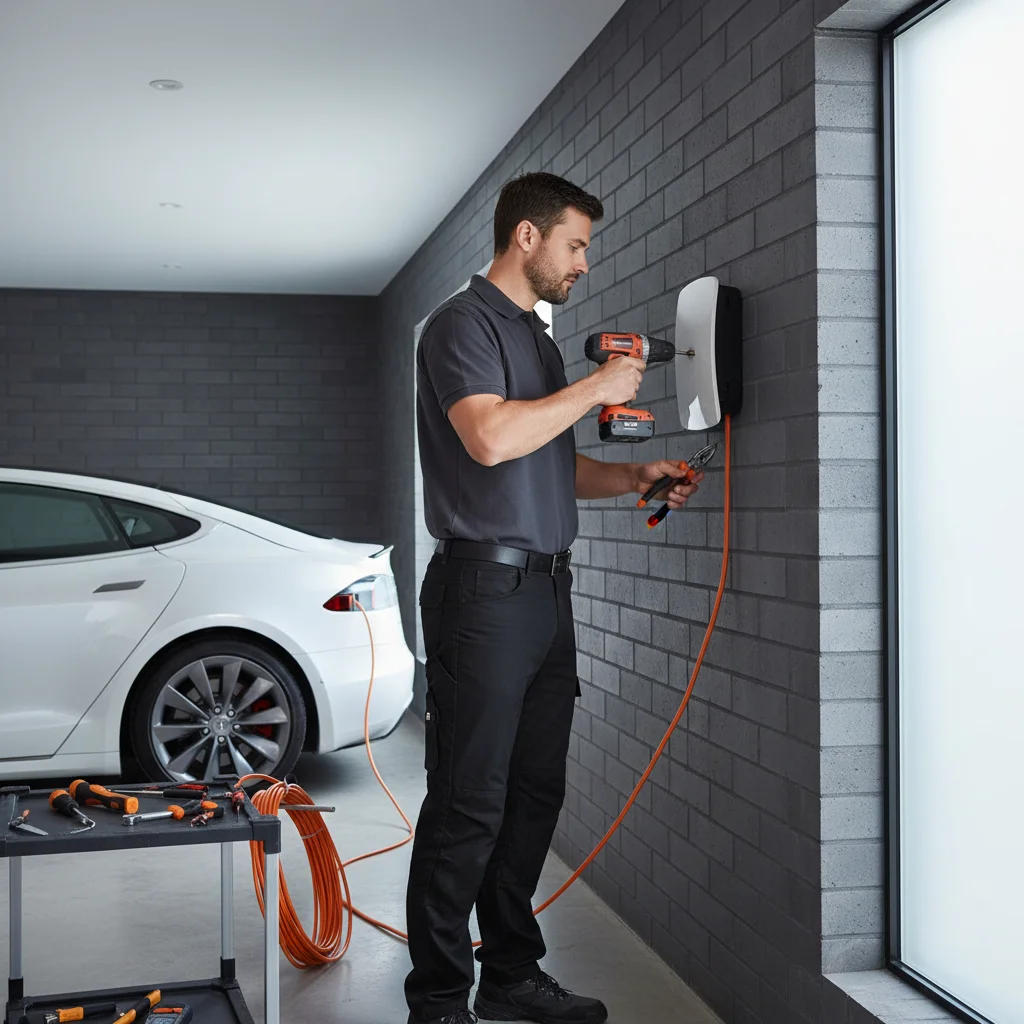
Why the Cybertruck uses 48 volts instead of 12
Most vehicles, gas or electric, use a 12 volt auxiliary system for lights, locks, displays, and computers. The Cybertruck breaks from that with a 48 volt low-voltage architecture. Tesla made this switch because the truck’s accessories, including the air suspension compressors, the power-deployed tailgate, and the steer-by-wire actuators, draw more current than a standard 12 volt system handles cleanly. Running them at 48 volts means thinner wiring, less heat, and more responsive control.
The trade-off is that the 48 volt system is uncommon enough that most tow operators and even some service centers are not yet stocked for it. Standard jumper cables and typical 12 volt jump packs will not help you directly. You need equipment rated for 48 volts or the external power port Tesla built into the truck.
The 48 volt battery is also lithium-ion, not the lead-acid chemistry that has spent decades in most car bays. Lithium 48 volt units do not fade slowly the way a lead-acid cell does. They tend to drop off sharply when they fail, which makes the failure feel sudden even when it was not.
Why this metro hits Cybertrucks harder
Dulles runs colder and snowier than Reagan National. Loudoun, upper Montgomery, and Prince William take harder freezes than the District and the inner Virginia core. Lead-acid and lithium 48 volt packs both lose punch in the cold. A Cybertruck that sat through a freeze in the Dulles Economy Lot or a Sterling driveway is a worse wake-up than one that sat through a night in a Bethesda garage.
A typical EV keeps about 80 percent of range at freezing and about 70 percent at 20F. Most lose 20 to 35 percent in real cold. The cold cuts traction range and stresses the low-voltage battery at the same time.
Western suburbs also see more snow events. The January 2022 I-95 shutdown near Fredericksburg stranded hundreds of drivers for over 36 hours after about 14 inches of snow and a multi-truck crash shut roughly a 50-mile stretch of I-95. That kind of extended stationary time drains a 12 volt faster than normal commuting.
A Cybertruck garaged near Ashburn, Sterling, or the I-270 corridor that commutes east toward the District sees a colder overnight than one parked in Pentagon City or Capitol Hill. Cold overnight garage sits are the silent killer for Cybertruck low-voltage batteries in this region.
What a dead Cybertruck looks like
Knowing the symptoms keeps you from chasing the wrong problem.
Completely dark interior, no screen, no ambient light. The 48 volt low-voltage battery is dead.
Door handles retracted, you cannot get in. The handles are electrically deployed. Without 48 volt power, they stay flush.
Frunk and vault will not open. Both use powered actuators that depend on the 48 volt system.
Screen blank, truck beeps or clicks but will not start. The 48 volt is low but not fully dead. Charge it now.
App shows main battery at 20 percent or higher but the truck will not respond. The 48 volt is the issue, not the traction pack.
A “Low 48V battery” warning on the screen before shutdown. Early failure warning. Get service soon.
Truck worked fine, parked overnight, completely dead in the morning. The 48 volt battery failed or a parasitic drain pulled it down.
How to get inside and access power when the truck will not open
The Cybertruck’s exterior door handles are flush and power-deployed. A dead 48 volt battery means no handles to grab. Tesla built in a mechanical override for this scenario.
Driver’s door manual release: look for the small slot at the bottom-left of the driver’s door, just below the window line near the front edge of the door. Insert a thin flathead screwdriver or the emergency key blade from your key card wallet. Pry gently rearward. The mechanical latch releases and the door opens.
Passenger doors: Tesla provides a pull tab inside each door at the base of the window trim. You can only access these once the driver’s door is open.
External 48 volt jump port: Tesla placed an external 48 volt input port accessible without opening any doors. It sits on the driver’s side, near the front wheel well, behind a small cover. The operator feeds 48 volt power here directly to wake the low-voltage system and unlock the truck. This is the port the operator uses on scene.
Do not attempt to jump the Cybertruck from the main traction battery terminals or from a standard 12 volt portable pack. You will get nothing, and you risk confusing the BMS.
What to do when you are stranded in this metro
Freeway shoulders: I-66, I-95, I-270, and the Beltway all have limited safe stopping areas. If you lose power and coast to a stop, activate hazards immediately using the physical button on the overhead console. The hazards run off a capacitor and may still work briefly even with a dead 48 volt system. Call for help before pushing or attempting any jump yourself on the shoulder.
Parking structures: Bethesda Row, Pike & Rose, Ballston Quarter, and Pentagon City garages are multi-story structures where moving a Cybertruck manually is not realistic. If the truck is blocking a lane or ramp, contact the facility first so they can hold traffic while you wait.
Residential driveways: The easiest scenario. The truck is safe, not blocking traffic, and a mobile rescue unit can arrive without the complications of a public roadway. Sterling, Ashburn, and Leesburg driveways are regular territory for operators.
For Loudoun-area drivers, our mobile Tesla charging page for Dulles Economy covers the airport long-stay pattern. For more on how the climate affects batteries here, our EV battery care in heat and ice on the Beltway post walks through the regional pattern.
When the call is for a real fault, not a 12 volt
If the Cybertruck shows a fault code beyond a dead low-voltage battery, a BMS error, a collision event, water intrusion into the pack, or an unknown fault, do not try to charge or jump anything. Get it to Tesla Service. Operators are not a substitute for a service center in those cases.
Charges for the work itself come from the matched operator. Our Tesla 12 volt battery jump service page covers the dispatch step for a Tesla 12 volt. Cybertruck owners calling about a 48 volt issue should reference our Tesla roadside rescue service so the matched operator brings the right 48 volt gear.
Charge Pro DC covers the District, Maryland, and Virginia. We connect you with independent operators. For a quote before work starts, call (202) 629-0844.
Frequently asked questions
Can I jump start a Cybertruck with standard jumper cables?
No. The Cybertruck uses a 48 volt low-voltage system, not the 12 volt found on older Teslas and most other vehicles. Standard jumper cables and a 12 volt jump pack will not wake it. The right approach is to connect a 48 volt compatible supply to the external 48 volt input port on the driver’s side, near the front wheel well. Operators carry that equipment.
Will the Cybertruck still drive if the main battery is fully charged but the 48 volt is dead?
No. The traction pack powers the drive motors only. Everything else, including the screen, locks, door handles, air suspension, frunk, and the computer that authorizes driving, runs off the 48 volt low-voltage battery. A dead 48 volt leaves the truck completely unresponsive regardless of traction pack charge level. This surprises many Cybertruck owners who check the app and see a high state of charge.
Why does the western side of the metro kill Cybertruck 12 volts faster than the inner suburbs?
Dulles, Sterling, Ashburn, and the I-270 corridor run colder and snowier than Reagan National and the inner District. Cold overnight sits in driveways and Economy parking drain the 48 volt battery faster, especially if the truck is older or has a weak 48 volt cell. The January 2022 I-95 shutdown near Fredericksburg is the region’s clearest example of how a winter storm can leave cars sitting for over 36 hours.
Is the Cybertruck 48 volt battery covered under warranty?
Tesla’s published warranty covers the 48 volt low-voltage battery as part of the vehicle’s general components. Coverage terms change, so confirm your specific window through Tesla’s account or app, tied to your VIN. Battery replacement after the warranty window is a service center job, not a roadside repair. Mobile rescue gets the truck mobile if the traction pack is charged and gives you a clear picture of what Tesla Service needs to do.