A CCS or J1772 car in Silver Spring often never plugs in at home. About 69 percent of housing here predates 1980. Street parking and older apartments rarely have a 240-volt outlet. You wake up to a low pack, or a car that won’t start. Public charging was the plan, and you already missed the window.
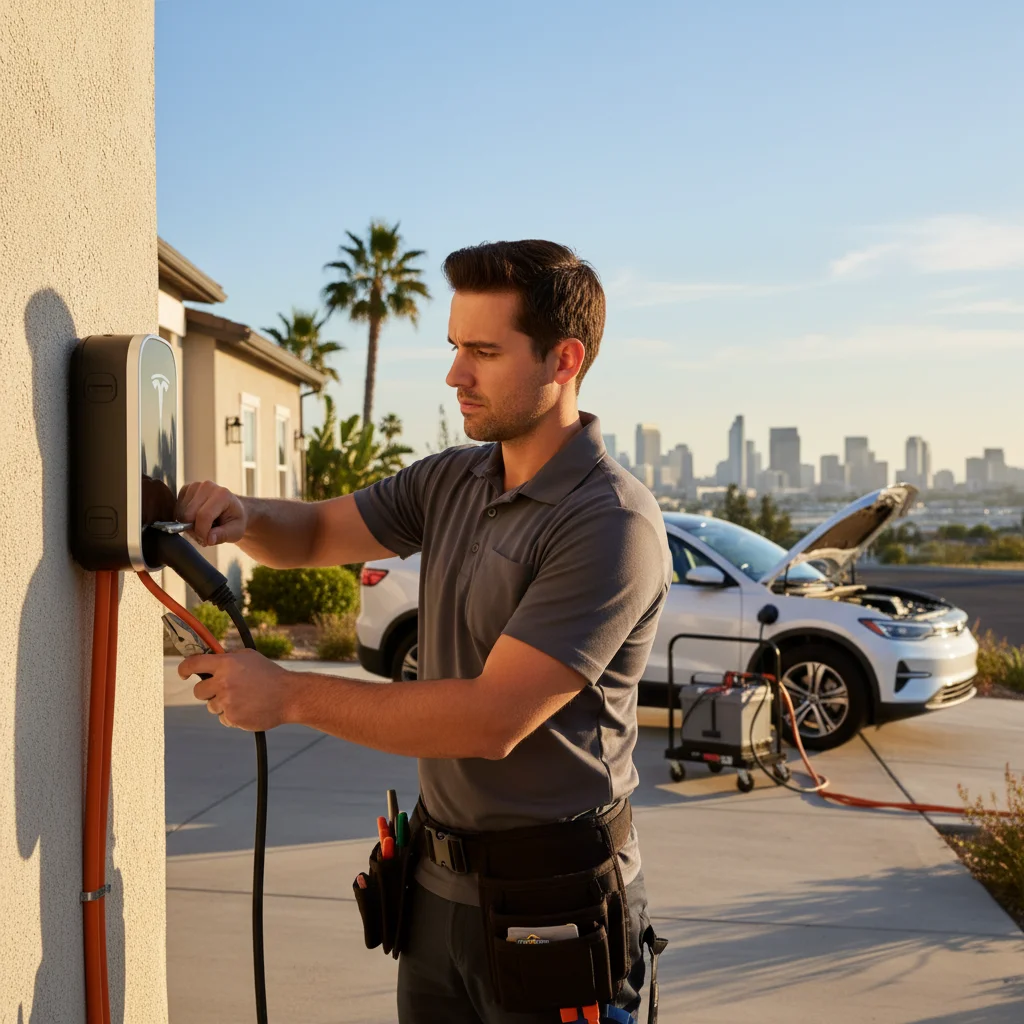
Older blocks, downtown garages, and public power
Silver Spring sits in lower Montgomery County, Maryland. It’s not an incorporated city. Census figures put the population at 82,129. About 25 percent of residents are Hispanic or Latino. The core is dense and apartment-heavy. It follows Georgia Avenue, Colesville Road, and the Capital Beltway.
That housing stock is the story. A renter in an older building doesn’t get an assigned charger. Pre-1980 homes were wired for lamps and window units. A Bolt, Ioniq 5, EV6, Mach-E, or Rivian sits in that lot. It lives on public charging by default.
Downtown Silver Spring garages keep cars through a full shift. So do decks at Holy Cross Hospital. The FDA White Oak campus does the same. Montgomery College’s Takoma Park/Silver Spring campus does too. Long sits kill weak 12-volt batteries. The traction pack can still show range. The car still won’t wake or unlatch the port.
Pepco is the electric utility here. Pepco EVsmart is a home and multifamily charger program, not a stranded-car service. Confirm current terms on Pepco’s own pages. No utility EV page we reviewed will charge a car that’s already stuck.
That’s why non-Tesla EV rescue is on this line. Independent operators bring CCS, J1772, and NACS to the car. Charge Pro DC is a referral line. We match you with a local operator. We don’t own trucks, and we don’t do the work.
The plug on your car is the whole dispatch
Tesla owners get a closed system. The car, the app, and Superchargers share a family of connectors. Ford, Hyundai, Kia, Rivian, GM, Polestar, and Volkswagen don’t. They charge on CCS1, J1772, or NACS. A general tow truck may show up with a jumper pack. That’s a different job.
CCS1
CCS1 is the usual DC fast-charge inlet on non-Tesla EVs in the United States. You’ll see the J1772 face with two extra DC pins below it. Rivian, Hyundai, Kia, Volkswagen, and Polestar use it. Earlier Fords and many GM models do too.
A mobile rescue is still a 240-volt Level 2 visit. With the right adapter, a CCS car can take that AC feed. You’re buying enough range to reach a station. You’re not filling the pack.
J1772
J1772 is the North American AC Level 2 plug. Almost every non-Tesla EV here accepts it. Some cars have J1772 only. CCS inlets take J1772 for AC as well. It’s slower than DC fast charging. For a rescue, that’s enough. Operators typically add 10 to 20 miles of range in 15 to 30 minutes of charging time.
NACS
NACS is Tesla’s connector. Ford, GM, Rivian, and others put it on newer model years. Some 2024 vehicles already shipped with it. Older CCS cars may need an adapter. The operator should confirm your port before they quote.
Look at the door if you’re unsure. CCS1 is taller because of the lower pins. NACS is the smaller rectangular plug. J1772 alone has no DC pins. The mobile EV charging operators in this network carry all three. The visit shouldn’t be a guess.
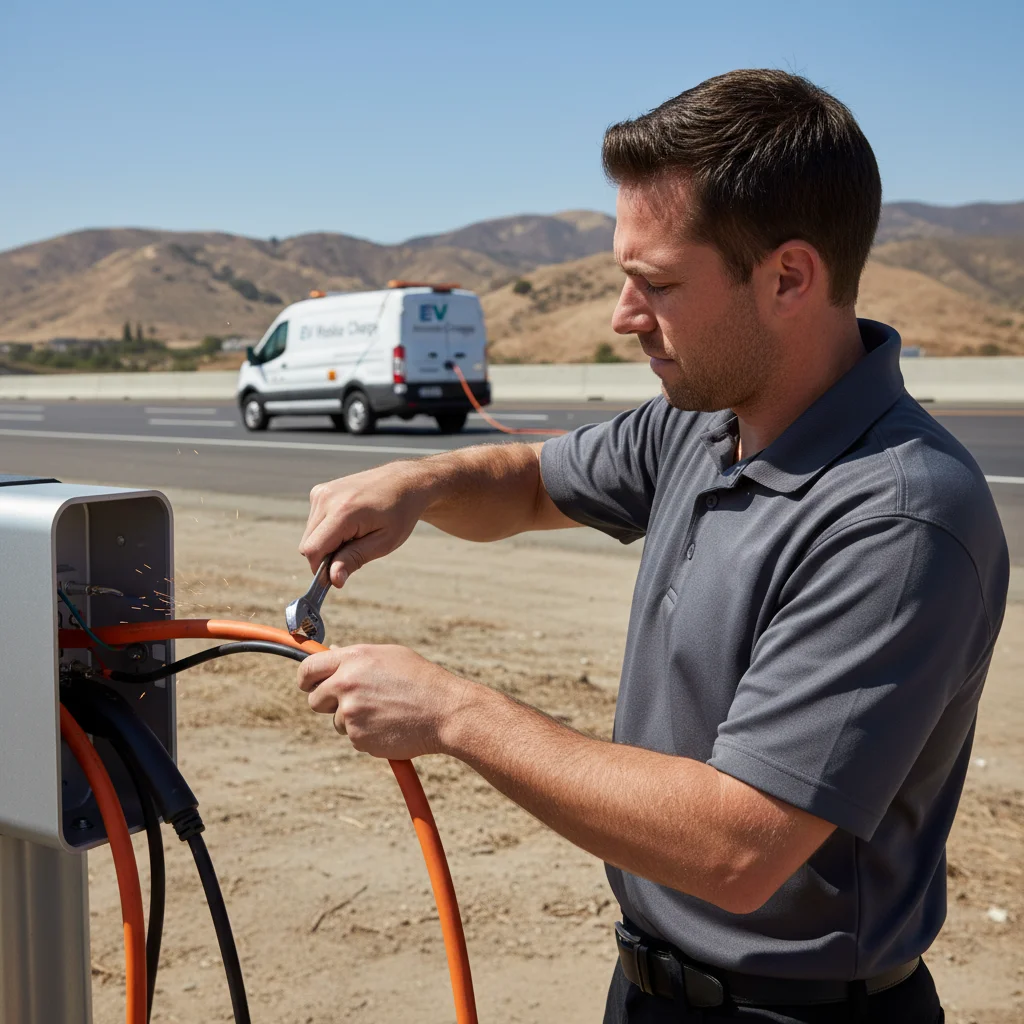
Empty pack or a 12-volt that died in the garage
From the sidewalk, both look like a dead EV. They aren’t the same problem.
The traction pack turns the wheels. When it hits zero on Georgia Avenue, you need energy in the pack. The same is true in a downtown garage. That’s a mobile 240-volt top-up from an operator in the network.
The 12-volt runs the computers, locks, lights, and charge-port latch. Downtown garages and campus decks are long-dwell parking. Cars sit through humid afternoons and cold nights. A weak 12-volt gives up. The dash stays dark. The port stays shut. A jump or an on-site 12-volt replacement is the first move.
Tell the dispatcher what you’re seeing. Range at zero is one job. A car that won’t unlock is another. Operators who handle EV roadside assistance in Silver Spring work both, on Tesla and every major EV brand.
What the operator actually brings
You call the referral line. An independent operator quotes before any work starts. They bill you directly. Charge Pro DC doesn’t set the price. We don’t promise when someone will arrive.
The operator brings a 240-volt Level 2 source. Native NACS for Teslas and newer NACS cars. CCS or J1772 adapters for everyone else. The typical add is 10 to 20 miles during 15 to 30 minutes of charging. That clock is charging time only.
If the 12-volt is the failure, they can jump it on site. They can replace it when the car allows. If the port won’t open, most brands hide a manual release. Find it in the manual while you wait. Don’t push the car. A Rivian R1T weighs well over 7,000 pounds. Wait for the operator vehicle.
Club plans and automaker roadside lines often send a tow. Confirm what your own policy actually covers. A tow still leaves you hunting for a compatible charger at the other end. A Level 2 top-up is meant to get you rolling on your own power.
Port quirks that stop the charge before it starts
The connector is only half the stop. Several non-Tesla brands lock the port when the 12-volt is down.
Rivian mounts the port on the driver’s side rear. The truck often needs accessory power before the door opens. If it won’t, there’s a manual release behind the rear driver’s-side trim. 2024 and newer Rivians are moving to NACS. Earlier trucks are CCS1, so check the model year. We walk through what charger a Rivian uses on a rescue in a separate piece.
A Mustang Mach-E uses an electronic latch. A dead 12-volt can freeze it closed. Ford hid a pull tab in the front trunk. It releases the port by hand. The F-150 Lightning has a similar path. 2024 Lightning trucks came with NACS. Earlier ones are CCS1.
Hyundai Ioniq 5, Ioniq 6, and Kia EV6 still use CCS1. The packs are large. A roadside Level 2 visit adds commuting range, not a full charge. Plan the next plug. Read Ioniq 5 pack size and how far a roadside charge goes if you want the numbers.
GM’s newer trucks and SUVs committed to NACS for 2025. That includes the Silverado EV and the GMC Sierra EV. Older Bolts stay on CCS1. They’re still common around this metro. Polestar 2 and 3 use CCS1, with the port on the driver’s side rear. If a Polestar refuses to start a charge, try a console reset. That sometimes clears a fault.
That isn’t a Silver Spring-only quirk. It matters here because so many of these cars never plug in at home.
Georgia Avenue, Colesville Road, and the Beltway
Range in this part of Montgomery County dies from sitting. Silver Spring shares the District’s humid summers and sudden icy snaps. Cabin heat and AC come out of the pack. Stop-and-go on Georgia Avenue (MD-97) burns charge in place. So does Colesville Road (US-29), 16th Street, and University Boulevard (MD-193). The Capital Beltway (I-495) does the same in gridlock.
Street-parked cars sit outside through cold nights. Recurrent Auto studied more than 30,000 EVs in winter. A typical car keeps about 80 percent of range at freezing. It keeps about 70 percent at 20F. Cabin heat is the main drain. Cars with a heat pump hold more, around 83 percent versus about 75 percent without. That’s climate, not a brand talking point.
If you stall on a Maryland state primary road, CHART can still help. MDOT SHA’s patrol can change a tire or jump a 12-volt. They can add about a gallon of gas or bring radiator water. Dial #77 on I-495 and I-270. Published CHART material doesn’t describe charging an EV. A jump may wake electronics. It won’t refill a traction pack.
On the Beltway, pull as far from travel lanes as you can. Turn on the hazards and stay belted. If you must step out, use the side away from traffic. Maryland’s Transportation Article treats a disabled EV like any other car. None of the DC, Maryland, or Virginia codes we reviewed writes a special empty-pack rule.
A home charger later doesn’t help in the garage tonight
Pepco EVsmart is the local path if you ever get a dedicated circuit. Montgomery County addresses can apply for a residential Level 2 smart-charger rebate. There’s a separate multifamily program. Amounts change with the budget. Read Pepco’s current application. Don’t budget from memory.
A rebate doesn’t help at night in a downtown garage. It doesn’t help if you rent and the lot was never wired. Until a plug exists at home, the car lives on public charging. A mobile Level 2 visit is the backup when that plan fails.
The Silver Spring EV charging page maps the local pattern. Wheaton, just north, has the same older-housing mix. Wheaton EV roadside assistance is the same call when public charging is all you have. Takoma Park next door has even older housing. Hyattsville and the District sit south and west. Operators in this network cover those places too.
Call while you can still describe the car
Call when the range warning is already wrong. Call if the port won’t open. Call if the car won’t wake in a garage. Don’t wait for hazards on Georgia Avenue.
Stay with the car. Note the remaining percent and any 12-volt warning. Note which port you have. If you’re in a garage, tell the dispatcher the level. Name the nearest stair or elevator. If you’re on I-495, say so clearly. Maryland CHART is a separate #77 call for a tire or a jump. It isn’t a 240-volt top-up.
Charge Pro DC refers you to an independent local operator. They quote first. They bill you. They bring CCS, J1772, and NACS. They don’t guess the plug when they arrive.
Call (202) 629-0844 when you need that match.