When your EV dies in Potomac, who you call first depends on the road. Clara Barton Parkway has narrow or missing shoulders, so US Park Police come first. On I-495, Maryland’s CHART patrol is the traffic call. On a private drive or River Road, skip to a quoted operator. Mobile EV charging is the job once you’re clear of traffic.
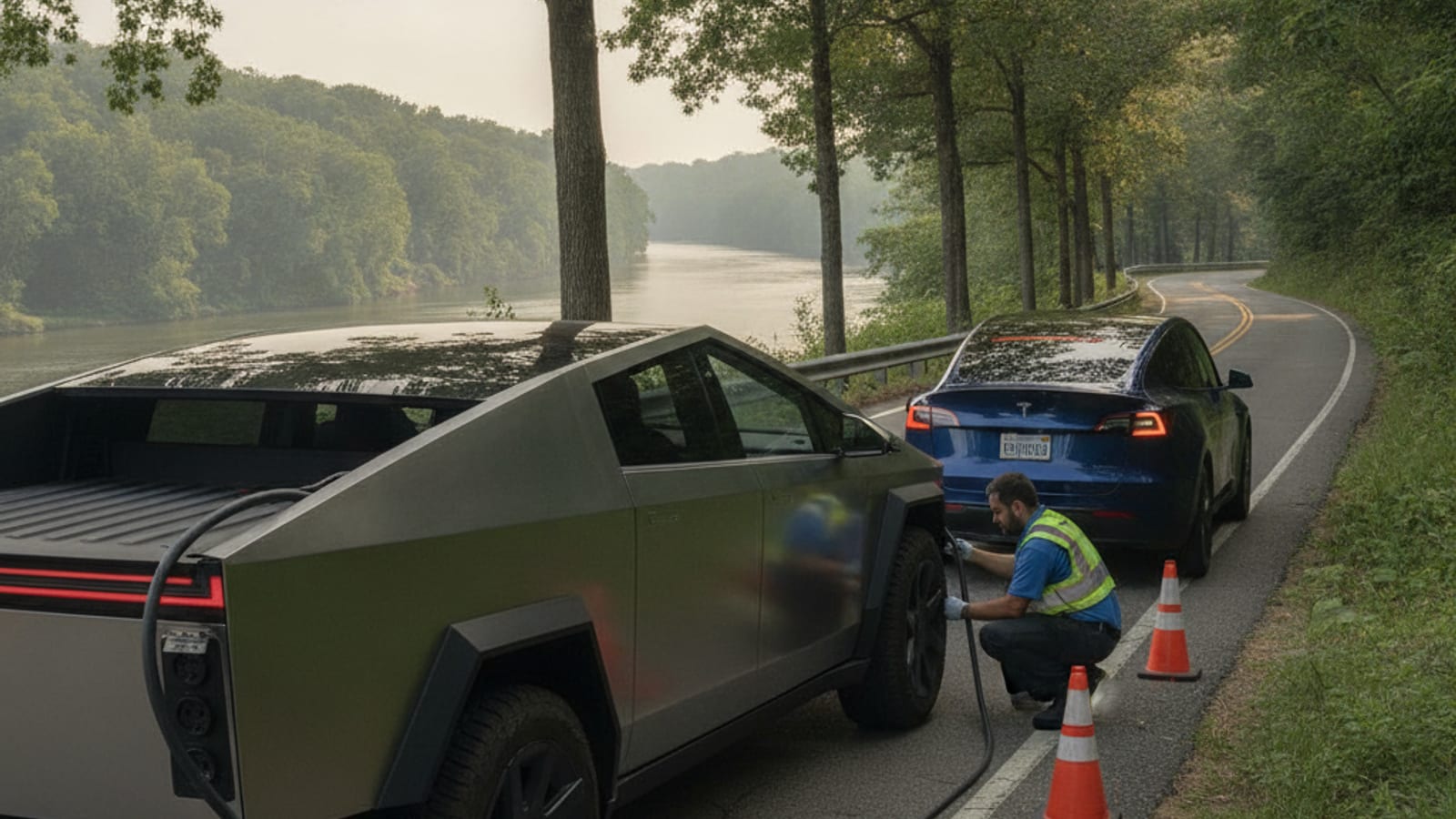
Clara Barton Parkway is a Park Police call
Clara Barton Parkway runs along the Potomac with little room to pull off. It’s a National Park Service road. Commercial vehicles and trucks over 10,000 lb are banned. A stalled EV is a disabled vehicle on a limited-access parkway. That’s a US Park Police matter before it’s a charging matter.
Keep the hazards on and stay with the car if it’s safe. Don’t walk the parkway looking for a plug. Park Police manage the lane and decide if the car can stay. A mobile rescue van is a commercial vehicle. It may not be allowed onto Clara Barton at all. Plan on getting the car off the parkway before anyone can add range.
The same shoulder problem shows up on the George Washington Memorial Parkway across the river. McLean sits just over the American Legion Bridge. That span is high, wind-exposed, and short on shoulder. If you stall there, you’re in two states at once.
On the Beltway, dial #77 first
Potomac sits on the I-495 edge of lower Montgomery County. River Road (MD-190), Falls Road (MD-189), and Democracy Boulevard all feed that Beltway edge. For a breakdown on I-495, dial #77 for MDOT SHA’s CHART patrol. CHART can handle a jump start and short-term traffic control. It doesn’t charge an EV.
Pepco serves Montgomery County and doesn’t send a truck to charge a stranded car. An independent operator brings a 240-volt Level 2 source to the car. Tesla takes a native NACS plug. Other EVs use a CCS or J1772 adapter. You typically add 10 to 20 miles in 15 to 30 minutes. That’s charging time, not an arrival time. The operator quotes you before work starts and bills you directly. What’s on the truck is a 240-volt top-up, not a tow.
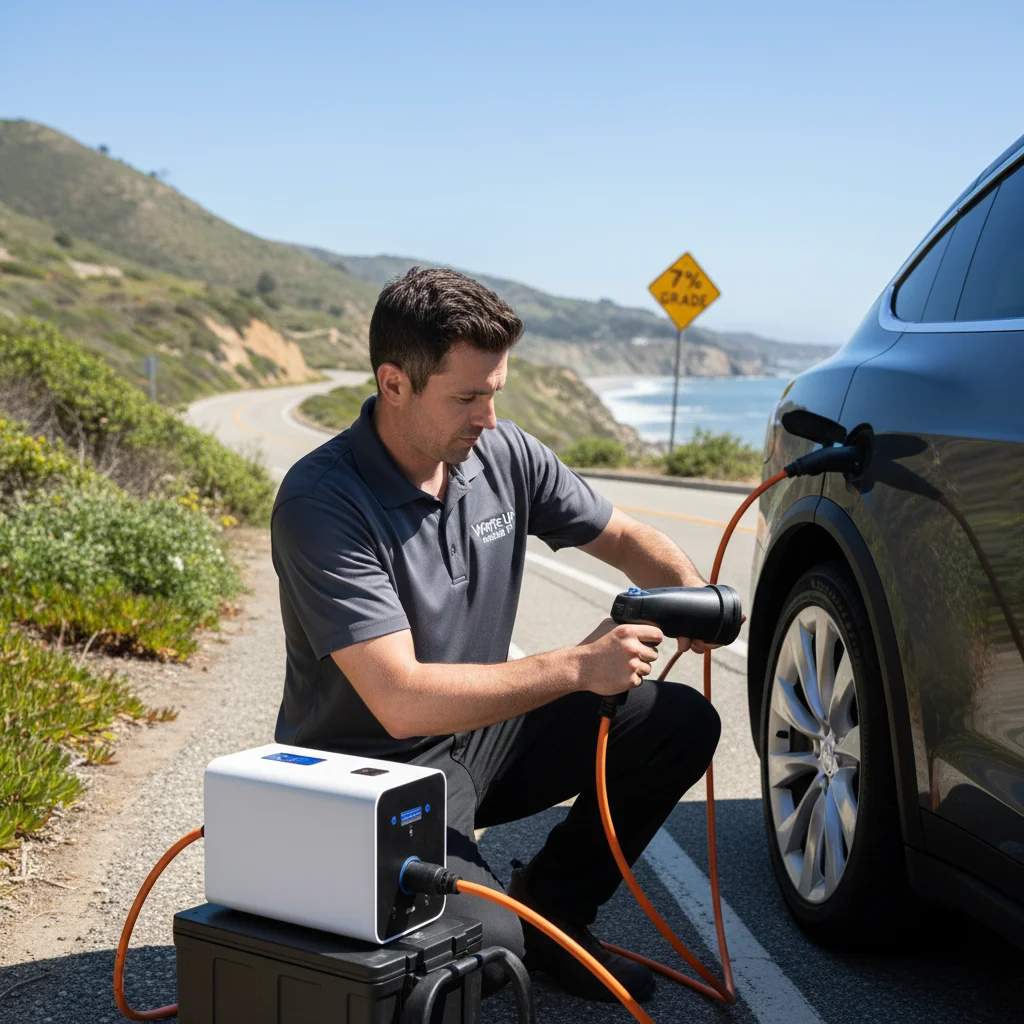
River Road, Great Falls, and the long driveway
Potomac is an unincorporated community, not a city. About 46,230 people live on about 25 square miles of estate lots. Home charging is the norm on these drives. The usual stall isn’t a renter with no plug. It’s a driver who left the house low. Then they got stretched on an errand toward Great Falls Park.
River Road narrows as it twists toward the gorge. There are few places to stop. Cabin heat and A/C both draw from the pack while you sit still. Recurrent Auto’s winter study put typical range at about 80 percent at freezing. It falls to about 70 percent at 20F. Sitting in climate control burns charge without covering miles.
Congressional Country Club and Potomac Village are where cars sit for hours. So is the Maryland side of Great Falls Park. Cabin John is next door. More than half of local housing was built before 1980. Some older houses still use a 120-volt outlet. Pepco’s EVsmart program publishes a residential Level 2 rebate for Montgomery County addresses. Confirm the current amount on Pepco’s site.
Empty pack or a dead 12-volt
Tell the operator the road, a landmark, and the make. Tesla and every major EV brand can take a roadside top-up. That’s if the port opens. If the car won’t wake, start with the 12-volt, not the traction pack. Operators can jump or replace a dead 12-volt on site. Our Potomac EV roadside page covers that split. So does the Potomac charging hub.
Don’t start with a flatbed if the pack is only empty. A tow off a parkway with no shoulder is still a Park Police problem. You’d still need a charge at the far end. Bethesda, North Bethesda, Rockville, and McLean sit next door. A 10 to 20 mile boost is usually enough to roll.
For the rest of the metro, read EV roadside assistance in DC, Maryland, and Virginia. Charge Pro DC is a referral line. We don’t own trucks or employ technicians. Call (202) 629-0844 when you want a quoted operator. Say if you’re on Clara Barton, I-495, or River Road. They quote before they start.