If your EV dies on the Woodrow Wilson Bridge, you’re on a three-jurisdiction span. The bridge carries the Capital Beltway across the Potomac between Alexandria, Oxon Hill, and the District. Stay in the car with the belt on. Hit the hazards. Call 911 if you’re in a live lane. Patrols here manage traffic. They don’t fill a traction pack.
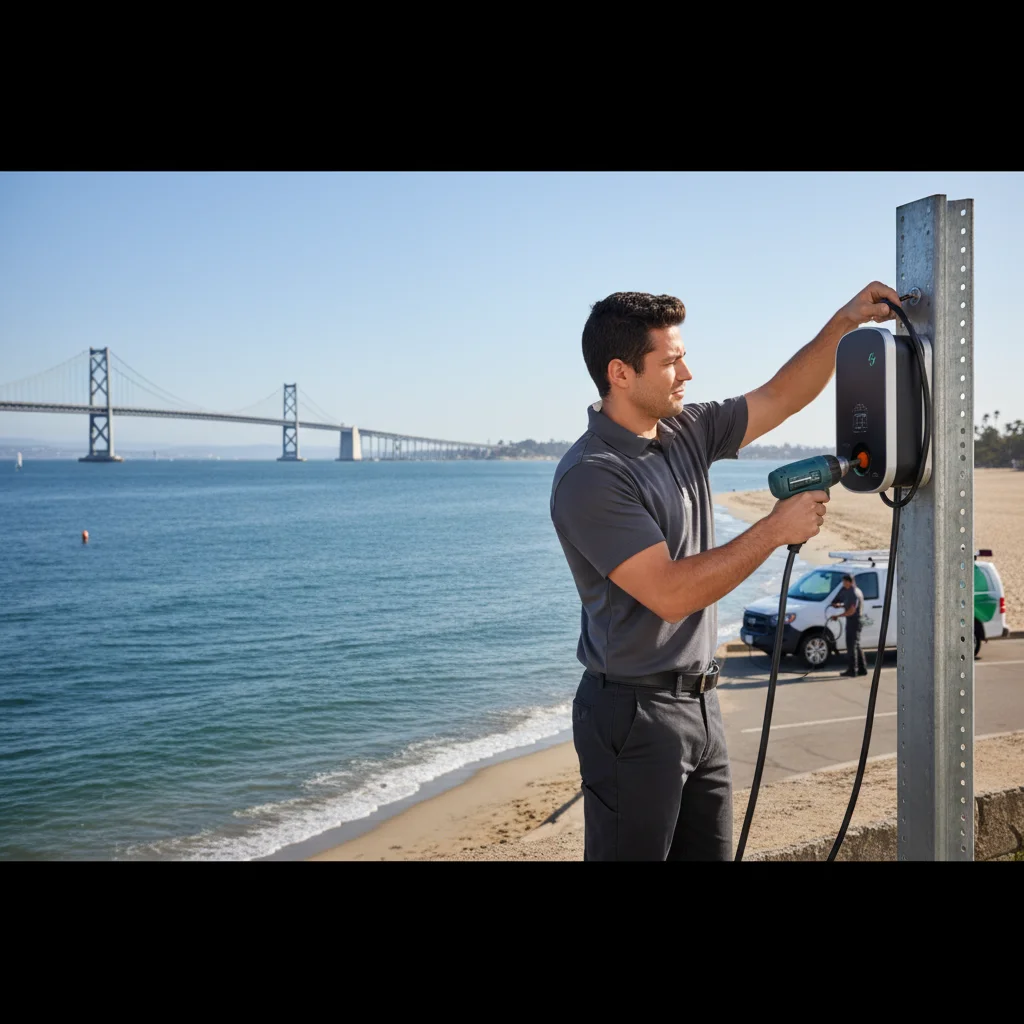
A stall here is Virginia, Maryland, and DC at once
The Woodrow Wilson Bridge is the southern Beltway crossing of the Potomac. Alexandria is an independent city on the Virginia landing. Oxon Hill is the Maryland landing. National Harbor is a development in Oxon Hill, not a separate town. The District meets the same span. Your car didn’t choose a county line. The agencies still do.
The American Legion Bridge is the other Beltway crossing of the Potomac, between McLean and Montgomery County. Both spans are high and wind-exposed, with limited shoulder. That’s the local fact that should change how you act. You don’t get out and walk the deck. You wait for traffic control, then you sort the rescue.
The Beltway’s general lanes on I-495 aren’t a toll road. The 495 Express Lanes are a separate facility. Disabled-vehicle rules in Virginia, Maryland, and DC treat an EV like any other car. None of the three codes we reviewed has a provision just for running out of charge. You’re a disabled vehicle on a river span. Act like one.
Who responds on each side
Call 911 first if you’re blocking a lane. That’s the safety call, not the charging call.
Virginia’s named freeway help is VDOT’s Safety Service Patrol. It covers Virginia interstates, and drivers reach it through Virginia 511. VDOT’s published pages describe incident work, debris, and short-term traffic control. They don’t describe charging an EV.
Maryland’s named help on I-495 is MDOT SHA’s CHART Emergency Traffic Patrol. Dial #77 for a breakdown on state primary roadways, including I-495. CHART techs change tires, provide jump starts, add about a gallon of gas, and bring radiator water. A gallon of gas doesn’t help an empty pack. That list still isn’t a 240-volt charge.
In the District, no DDOT motorist-assistance patrol showed up in District materials. That’s an observed absence, not a guess. DC drivers lean on MPD, a private roadside plan, and US Park Police on the parkways. The Wilson Bridge is a Beltway span, not an NPS parkway. Don’t call parkway dispatch and expect a Wilson Bridge response.
If you stopped in the 495 Express Lanes, Transurban runs those lanes with VDOT. Express Assist is the free patrol on the lanes. On the 495 Express Lanes, pull to the left shoulder, because those lanes sit in the median. Stay in the car until that unit arrives. Express Assist helps with minor mechanical issues and will call a tow. It doesn’t tow. It doesn’t charge an EV. The left-shoulder version of this problem is in our 495 Express Lanes note.
Pepco serves the District, Montgomery County, and Prince George’s County. The Oxon Hill landing sits on the Pepco side. Dominion Energy Virginia serves most of Northern Virginia. Alexandria usually sits on Dominion. Confirm the serving utility by address if you’re asking about a home charger later. No utility EV page we reviewed offers a stranded-car charge. Pepco EVsmart and Dominion’s EV rates don’t roll a truck to the bridge.
What you do while you wait
Keep the seatbelt on. Limited shoulder plus a wind-exposed deck isn’t a place to stand.
Turn the hazards on and leave them on. If people behind you can see you, you’ve done the first useful thing.
If the screens are black and the car won’t wake, don’t assume the big pack is empty. Most EVs still use a small 12-volt battery. It boots the computers, unlocks, and closes the high-voltage contactors. A healthy pack can sit there looking dead. An empty pack looks similar from the driver’s seat. The Beltway out-of-charge guide is the place to sort that split once you’re stable.
Cabin heat and AC draw from the traction pack while you’re parked. You cover no miles and still lose range. That’s the Beltway-in-gridlock problem. It gets worse if you sit on this span with climate control running. Cut what you don’t need. Keep yourself safe. Don’t try to save the pack by standing outside on the deck.
Don’t flag down a passerby for a jump. You need to know it’s a 12-volt job, and you need a safe setup. A wrong jump on an EV can make a bad day worse.
Once you’re off the span
The independent operators we connect you with don’t work in live lanes on the deck. They meet you after traffic control moves you to a staging spot, a lot, or a real shoulder. That’s when mobile EV charging is actually possible.
Those operators bring a 240-volt Level 2 source to the car. Teslas take a native NACS plug. Most other EVs use a CCS or J1772 adapter. A typical stop adds about 10 to 20 miles of range in 15 to 30 minutes of charging. That’s charging time. It isn’t an arrival window, and we don’t publish one.
The operator quotes you before any work starts. They bill you directly. Charge Pro DC is a referral line. We don’t own the truck, employ the technician, or hold a trade license. The pros we send handle Tesla and every major EV brand they carry adapters for.
If you roll off toward Alexandria, you’re in that independent city, not Fairfax County. EV roadside assistance in Alexandria covers the landing on that side. If you roll off toward Oxon Hill or National Harbor, use EV roadside assistance in Oxon Hill. Don’t call National Harbor a town. It isn’t one.
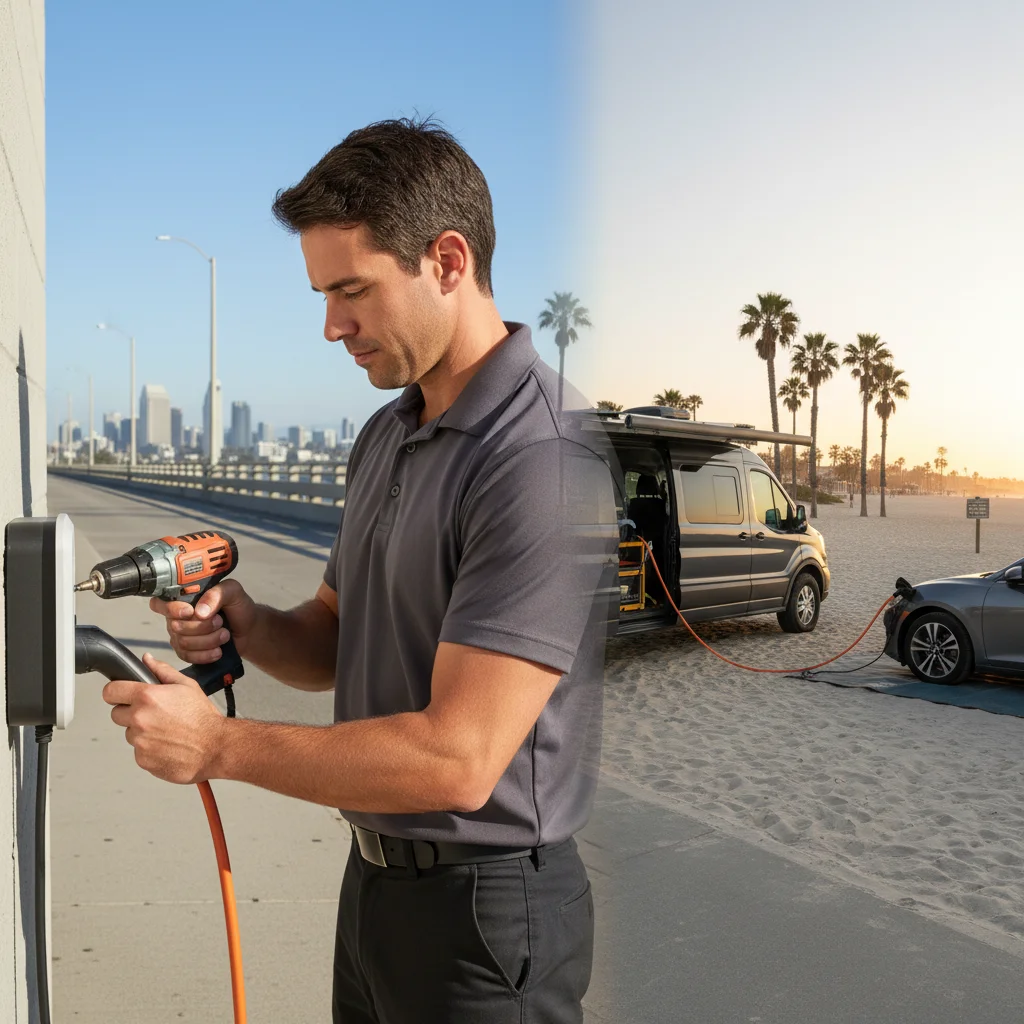
Charge, jump, or tow
An empty traction pack wants electrons on site. That’s out-of-charge recovery. The goal is enough range to drive, not a full pack.
A 12-volt failure wants a jump or a replacement at the car. Waking the car doesn’t fill the pack. If you were already low, you may still need the 240-volt visit after the screens come back.
A tow is the call when the car won’t take a charge. It’s also the call when a fault won’t clear, or the patrol already ordered a hook. Virginia sets private-property towing rules in statute, and localities can add ordinances. Maryland’s Transportation Article Title 21 covers stopping and disabled vehicles, and counties set their own tow ordinances. DC towing and impound sit under Title 50 and the DC Municipal Regulations. DC DPW’s impound facility is Blue Plains, 5001 Shepherd Parkway SW. There’s a second lot at 2115 Bryant St NE. Reach DPW at (202) 541-6083. Confirm which jurisdiction has the car before you authorize anything.
We don’t quote tow fees. Charge Pro DC doesn’t tow, and the caps change by locality. Confirm the current rule with the agency on scene.
If you’re choosing between electrons and a hook, read mobile EV charging or a tow. It lays out the split without the panic.
The call-recording rule that actually matters here
DC is one-party consent (DC Code § 23-542). Virginia is one-party consent (Va. Code § 19.2-62). Maryland is all-party consent (Md. Courts and Judicial Proceedings § 10-402), and a violation is a felony. A stall on this span can sit in Maryland. Treat every call as all-party. You should hear a recording-consent notice. If you don’t, ask before you keep talking.
When to use the referral line
Use it when you’re stable. You need a quoted local operator for range or a 12-volt rescue. That’s the job. It’s not a patrol, and it’s not a utility.
Charge Pro DC matches stranded EV drivers with independent operators across the District, Maryland, and Virginia. We don’t promise a clock. The operator on the other end quotes the work, then does it.
If you’re still on the Woodrow Wilson Bridge, stay in the car until traffic control moves you. Then call (202) 629-0844 for a quoted rescue once you have a safe place to wait.