A long sit in a National Harbor garage is the usual EV charging problem here. You parked in Oxon Hill for the Capital Wheel, MGM National Harbor, or Tanger Outlets. The car sat for hours. When you come back, the 12-volt may be dead. The traction pack can still hold miles. If the pack is actually low, you still need energy. A 240-volt top-up at the car can add 10 to 20 miles. That’s 15 to 30 minutes of charging time. It isn’t a promise about when an operator arrives. Charge Pro DC is a referral line. We match stranded drivers with independent local operators.
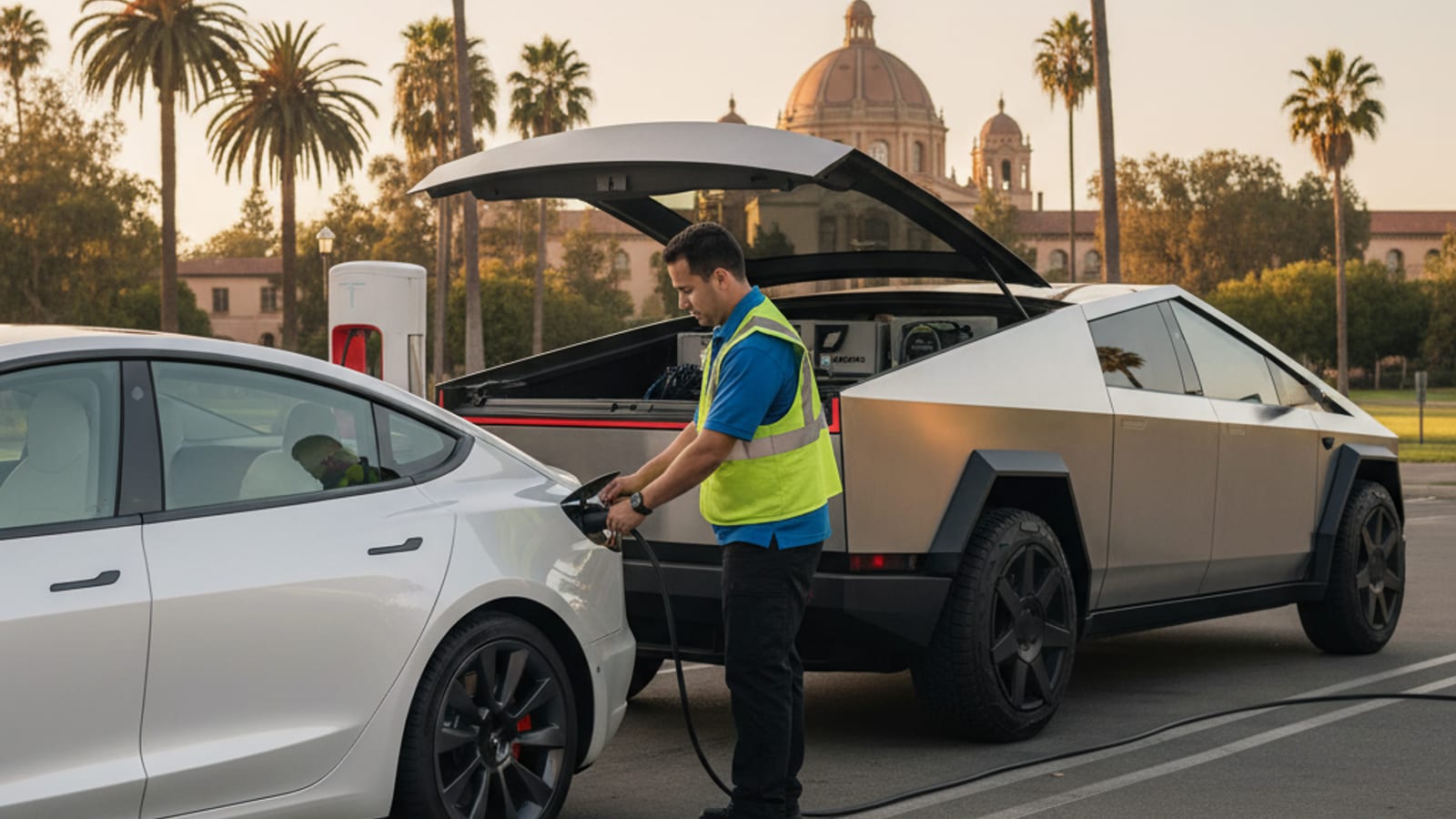
National Harbor parking is a long sit, not a quick errand
National Harbor is a waterfront development in Oxon Hill. It isn’t a separate town. It sits in Prince George’s County, Maryland, down by the Potomac. People don’t duck in for five minutes. They stay for dinner or a show. They stay for the Capital Wheel or a night at MGM National Harbor. The car waits in a big garage while you walk the waterfront.
That dwell is the whole problem. Destination parking here is built for hours. It’s often built for a weekend. Visitors leave cars in those decks overnight. That’s the classic dead-12-volt-after-dwell setup. The traction pack can still have range. The small battery that runs computers and latches may not.
Oxon Hill isn’t an incorporated city. It’s a community in Prince George’s County. ACS 2019-2023 puts the population at 18,491. About 67.9% of housing here was built before 1980. Older houses often never got a 240-volt EV circuit. Locals and visitors still share the same garages at National Harbor.
Corridors into the development are I-95 and I-495, the Capital Beltway. Indian Head Highway, MD-210, comes in from the south. Oxon Hill Road and National Harbor Boulevard handle the last turns. The Woodrow Wilson Bridge approach sits right there. You feel that geography when you try to leave on a low pack.
Summer traffic is heavy and humid. The land drops to the river at National Harbor. Heat sits on the garages and the lots. You walk farther than you planned. The car keeps sitting.
Clinton and Suitland are nearby on the Maryland side. Alexandria sits across the Wilson Bridge. Washington sits north of that span. None of those trips change how long the car was parked.
See the Oxon Hill EV charging page for the local overlay. For a stall that will not move, read EV roadside assistance in Oxon Hill and National Harbor.
MGM overnight versus a Tanger day trip
MGM National Harbor is a night-and-weekend sit. The car can sit from check-in to checkout. That’s a long-dwell 12-volt case. The 12-volt is the battery that fails first.
Tanger Outlets National Harbor is a shopping sit. You tell yourself you’ll be an hour. You stay three. The pack may still look fine. The 12-volt still sat the whole time.
The Capital Wheel is a walking sit. You leave the garage and come back after dark. Summer heat and humidity make that walk slower. Electronics keep sipping the 12-volt while you’re gone.
All three are National Harbor. Tell the operator how long the car sat.
Two different failures when you get back to the stall
A dark car in a National Harbor garage can be two jobs. Mixing them up wastes time. You can also request a jump when you needed a charge.
The 12-volt that won’t wake the car
The 12-volt battery runs computers, contactors, and door latches. It isn’t the big pack under the floor. After a long sit, that small battery can drop too low to wake the car. The dash stays dark. The app may not connect. Doors may not unlatch the usual way. The charge port may ignore the handle.
That pattern matches other long-dwell lots in this metro. Travelers return to Reagan National and Dulles after a week. They find a car that won’t wake. MWAA publishes charging in some airport garages. This page couldn’t confirm a station list for National Harbor. A weekend in a deck is hard on a weak 12-volt. A long day at MGM can be enough if the battery was already tired.
Don’t treat a dark dash as an empty traction pack. Read the owner’s manual for your year before you attach anything. Tesla’s current Model Y manual describes a lithium-ion low-voltage battery. It identifies jump posts after the hood is open. It also says a Model Y can’t jump-start another vehicle. Charge Pro DC doesn’t publish a universal clamp map. Operators in this network jump or replace a dead 12-volt on site. They handle Tesla and every major EV brand.
Tesla directs owners to request roadside through the Tesla app. Tesla says out-of-range help may be available. It isn’t financially covered. If Tesla can’t provide the service you need, a local operator is the backup. What happens when an EV 12-volt dies in a garage covers that split.
The traction pack that’s actually low
Sometimes the 12-volt is fine and the pack is low. You used range getting here. AC ran in Beltway traffic. You idled in a garage ramp. The estimate on the dash dropped while the car wasn’t covering miles.
A public DC fast stall, including a Tesla Supercharger, is equipment you drive to. It doesn’t come into the garage stall with you. The Department of Energy lists DC fast gear that can reach up to 500 kW. Some cars add about 100 to more than 200 miles in 30 minutes at a stall. Those are equipment ceilings. They aren’t a promise to your pack. They also aren’t a mobile rescue.
If the car will wake and take a plug, use mobile EV charging. That’s a 240-volt Level 2 visit at the car. Tesla owners get a native NACS plug. Other EVs use a CCS or J1772 adapter. A typical session adds about 10 to 20 miles. Charging time is usually 15 to 30 minutes. That’s charging time, never an arrival time.
The operator quotes before work starts. The operator bills you directly. Charge Pro DC doesn’t set that price. A mobile top-up is usually enough miles to leave, not a full charge. Decide the destination before work starts. Home in Oxon Hill, Clinton, or Suitland may be a short hop. Home in Alexandria crosses the Wilson Bridge. Home in Washington uses the Beltway. Don’t aim at a stall you haven’t confirmed live.
How you got here: Beltway, MD-210, and the Wilson Bridge
Range into National Harbor depends on the road you used. It isn’t one flat commute.
From the north and west, most visitors ride I-495. That’s the Capital Beltway. General Beltway lanes are free. The 495 Express Lanes sit in the median. Transurban operates those lanes with VDOT. If you stall in the 495 Express Lanes, pull to the left shoulder. Stay in the car until help arrives. Express Assist handles minor mechanical issues and can call a tow. Published FAQs don’t describe charging an EV. On the 95 and 395 Express Lanes, pull to the nearest shoulder.
The Woodrow Wilson Bridge carries the Beltway across the Potomac. It meets Alexandria, Oxon Hill, and the District on one span. The bridge is high and wind-exposed. The shoulder is limited. A car that dies there sits at three jurisdictions. Don’t walk the span looking for a plug. Stay with the car. Read dead EV on the Woodrow Wilson Bridge for that stop.
From the south, Indian Head Highway is MD-210. It’s a fast road into Oxon Hill. It’s notoriously dangerous, with long gaps between stops. It isn’t a map of chargers. If you stall on MD-210, get out of live lanes if you can do it safely. Then stay with the car.
Oxon Hill Road and National Harbor Boulevard are the last local pieces. Garage ramps, valet loops, and outlet parking add idle time. Idle with AC on burns charge without adding miles. That’s true in a queue for MGM. It’s true on the Beltway too.
Tell the operator the development name and the pin. Give the garage level if you can see it. National Harbor alone is a big district. Oxon Hill is the place name that belongs on a Maryland call.
Heat, humidity, and a car that sits still
Oxon Hill drops to the Potomac at National Harbor. Summers are humid and hot. Visitor traffic stacks up. Cabin AC comes out of the traction pack. Sitting still with climate control on is an energy burn.
Winter still matters. Recurrent Auto studied more than 30,000 EVs. Typical cars keep about 80% of range at 32F. They keep about 70% at 20F. Cabin heat is the cause. Dulles runs colder and snowier than Reagan National. National Harbor sits on the inner river, milder than Loudoun. A January garage sit can still flatten a weak 12-volt.
Don’t plan the return trip on the estimate you had at breakfast. Recheck the dash before you leave the stall. Include the ramp. Include the Beltway merge. Include the bridge if that’s your way home.
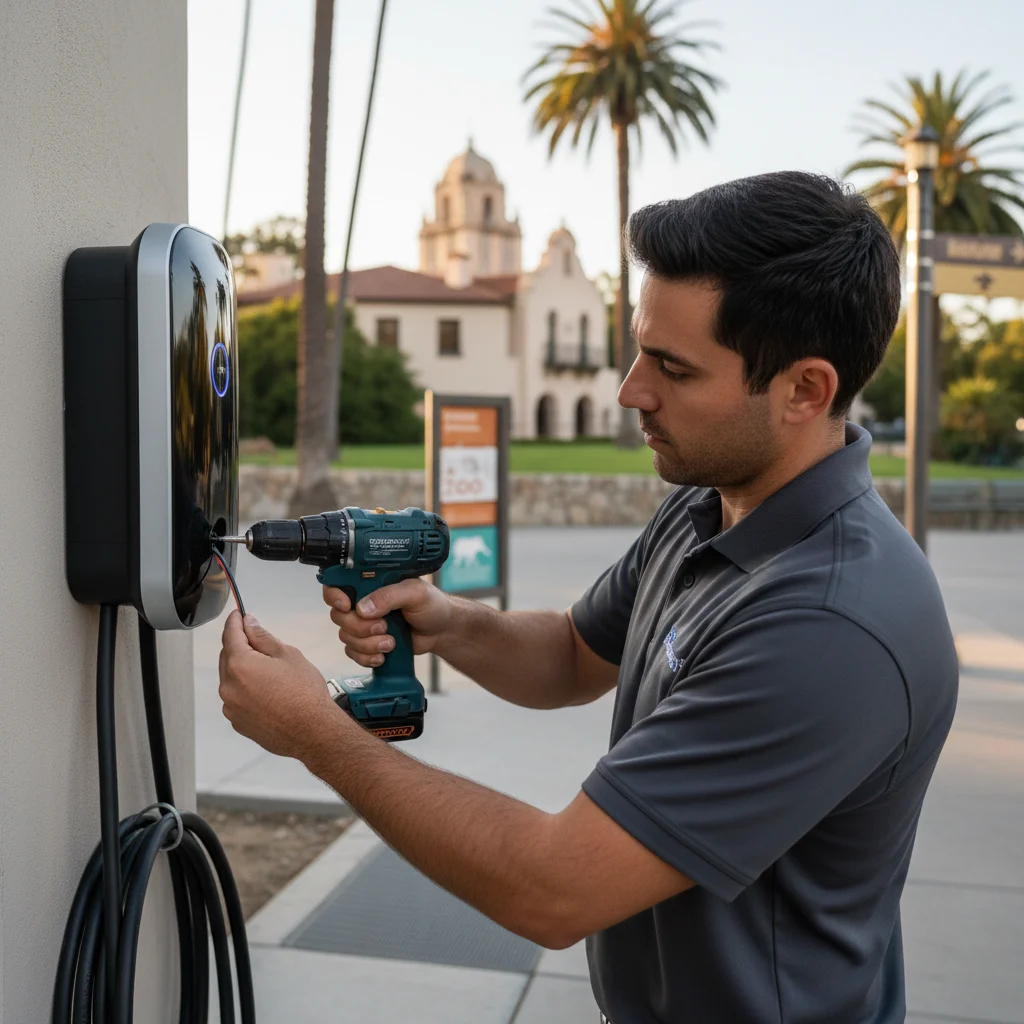
What a top-up at the car actually is
A roadside top-up isn’t a Supercharger session. Independent operators in this network bring a 240-volt Level 2 source to the car. DOE puts typical residential Level 2 near 7.2 kW. Operators in this network typically add 10 to 20 miles in 15 to 30 minutes of charging.
J1772 and J3400, which is NACS, are the common AC plugs. CCS adds DC pins for fast stalls. Connector type alone doesn’t prove a public cabinet matches the voltage you need. Tell the operator the make, model, and what you see on the port.
The car has to wake, open the port, and accept power. A dead 12-volt blocks that. Ask for a jump or a 12-volt replacement when the car is dark. Ask for a 240-volt charge when the pack is empty. The car also has to take a plug. The operator confirms what that equipment can do for your model.
Access matters in a destination garage. Height bars, gates, and valet control can block a rescue vehicle. Describe what you see. An operator may say the job has to happen outside the deck. This page couldn’t confirm a published access rule for every National Harbor garage. Ask the operator and the attendant on site. Don’t guess. That’s part of the quote.
Pepco, Dominion Energy Virginia, and NOVEC don’t send a truck to charge a stranded car. Utility EV pages reviewed for this metro don’t offer that service. Pepco serves Prince George’s County, including Oxon Hill. EVsmart is Pepco’s named EV program. Confirm current rebate details on Pepco’s site before you plan around them. Those programs are for equipment at home or at a building. They aren’t a rescue.
Public charging at the waterfront: check, don’t guess
No Supercharger, Electrify America, or ChargePoint inventory for National Harbor was confirmed for this page. No distance to a stall was verified. Don’t treat this article as a station finder.
Check the garage signs in front of you. Check the network app. Check the map in the car. EV charging apps to open before you’re stranded is the habit. It isn’t a list of pins we can certify.
A listed stall can be occupied, broken, or gated. A pin from last month isn’t live status. Tesla’s app is where Tesla owners should check Tesla stalls. Charge Pro DC doesn’t run those sites. We don’t confirm listings.
If a compatible stall is open and the car will drive to it, that can be the faster fill. If the car won’t wake, a stall on another level doesn’t help yet. If you’re already at a percent that can’t absorb a wrong ramp, stop hunting. Searching until zero makes the roadside job harder.
If you live in Oxon Hill, Pepco is the home utility
Visitors get the garage story. Locals get a housing story too. That 67.9% pre-1980 share means many driveways never had a Level 2 circuit. A day at National Harbor can start from a Level 1 overnight. It can start from no home plug at all.
Pepco serves Prince George’s County. EVsmart is the named EV program. Maryland residential Level 2 rebate details change. Confirm the current offer with Pepco before you count on it. Multifamily charging support is a separate Pepco program. Confirm that on Pepco’s pages too. None of those pages charge a car that’s already stranded in a garage.
If you plug in at home, start the day with enough range for the sit plus the return. Idle and AC will take a cut. Don’t treat the last sliver of range as a plan for the Wilson Bridge.
Patrols on Maryland roads won’t refill an empty pack
MDOT SHA CHART Emergency Traffic Patrol works the Baltimore/Washington area. Technicians change tires, jump-start 12-volt systems, and add about a gallon of gas. For a breakdown on Maryland primary roadways, the published contact is #77. That list includes I-495. CHART’s published pages don’t describe charging an empty EV pack.
A 12-volt jump from a patrol isn’t the same as a 240-volt top-up. Ask what they can actually do for an EV. Don’t assume pack charging.
VDOT Safety Service Patrol covers Virginia interstates. Drivers reach it through Virginia 511. Published material covers incidents, debris, and short-term traffic control. It doesn’t describe EV charging. VDOT doesn’t cover a car sitting in a National Harbor garage in Maryland.
No DDOT motorist-assistance patrol turned up in the District sources used here. DC drivers rely on MPD, private roadside plans, and Park Police on parkways. National Harbor parking isn’t a District parkway.
Disabled-vehicle rules in Maryland, Virginia, and the District treat an empty EV like any other stopped car. None of the three codes reviewed adds a special out-of-charge section. If you’re in a live lane or another dangerous spot, call 911.
NPS parkways such as Suitland Parkway ban commercial vehicles and trucks over 10,000 lb. Shoulders can be narrow or missing. Report a disabled vehicle on the Baltimore-Washington Parkway to the US Park Police at 202-610-7500. National Harbor Boulevard isn’t that parkway. If you left the development onto an NPS road, say so.
If the car dies on the way out
The return is when range gets real. You’ve already spent the sit. The pack may be lower than you think. The 12-volt may fail on the first wake-up.
If you’re still in the garage, stay out of travel lanes inside the deck. Put on hazards if you’re blocking a ramp. Don’t leave the car in a blind corner. Describe the garage level and the nearest landmark you can see.
If you reach National Harbor Boulevard or Oxon Hill Road with almost nothing left, pull into a legal space. Don’t enter the Beltway on a guess. Don’t enter the Wilson Bridge on a dying 12-volt.
If you’re already on the Wilson Bridge, stay in the car. The shoulder is limited. Wind on that span is real. Jurisdiction can change under the wheels. Don’t walk for help.
If you’re on I-495 general lanes, get to a safe shoulder when you can. If you’re in the 495 Express Lanes, pull left. Tell whoever you call the lane type.
Towing an EV is model-specific. Neutral, dollies, and wrecker type matter. A destination garage may want the car moved on their clock. Maryland private-property tow rules sit in county ordinance alongside the Transportation Article. Prince George’s County sets its own tow rules. This page doesn’t publish a hookup fee. Confirm any tow price with the company that will hook the car before you agree.
Transport may be the right tool when the car can’t take a charge. It may also be the tool when the garage won’t allow the equipment. Use out-of-charge recovery when charging at the stall isn’t the fit.
What to tell the operator before they quote
Clear facts help the independent operator quote before any work starts. Charge Pro DC doesn’t set prices. We don’t bill you.
Share a dropped pin, not just National Harbor. Name Oxon Hill if that’s where you are. Add Maryland, because the Wilson Bridge confuses the state. Give the garage level and the nearest named place.
Say whether the car powers on. Say whether it shifts. Say whether the charge port opens. Copy the exact warning text if there’s a screen. Give the remaining percent if the car will show it. Name the make and model. Name the plug if you know it: NACS, CCS, or J1772.
Describe gates, height bars, valet control, and whether you can legally wait with the car. Say if you need a 12-volt jump or a 240-volt top-up. Say if you’re not sure. The operator should tell you which job they can do after they hear that.
Don’t guess miles they’ll add. Don’t guess when they’ll arrive. Confirm the proposed service and the price with the operator before you agree.
Charge Pro DC is a referral line
Charge Pro DC matches stranded EV drivers with independent local mobile rescue operators. We serve the DC area: the District of Columbia, Maryland, and Virginia. We perform no work. We own no trucks or equipment. We employ no technicians. We set no prices. We promise no arrival time. We publish no business hours. We hold no trade license. The operator quotes you before starting and bills you directly.
The pros we connect you with are licensed and insured. They bring a 240-volt Level 2 source to the car when that’s the job. They jump or replace a dead 12-volt on site when that’s the job. They handle Tesla and every major EV brand.
If Tesla roadside, a patrol, or a public stall already failed, say what you already tried. That keeps the quote honest.
Frequently asked questions
Does National Harbor parking kill an EV’s 12-volt?
A long sit in a destination garage can flatten a weak 12-volt. That’s the pattern this waterfront is known for. The traction pack can still hold miles. A dark dash after MGM, the Capital Wheel, or Tanger Outlets is often that small battery. It isn’t proof the pack is empty. Check the owner’s manual. Tell the operator the car won’t wake.
Can a mobile operator charge an EV in a National Harbor garage?
Sometimes. The car has to wake and accept a 240-volt Level 2 plug. The operator has to reach a legal, accessible stop. Gates and height bars can block the truck. Ask the operator about access before you assume the work happens at your stall. A typical charge adds about 10 to 20 miles in 15 to 30 minutes of charging. Public stall inventory for National Harbor wasn’t confirmed here. Check signs and apps on site.
What should I do if my EV won’t start after a day at National Harbor?
Stay with the car if you can wait legally. Note the garage level and a landmark. Decide whether the car is dark or just low on the pack. Don’t hunt Beltway miles on a dying 12-volt. Call for a local operator if you need a jump or a top-up. Charge Pro DC will connect you. Confirm the quote before work starts.
A day at National Harbor should end with the car waking. If it doesn’t, stay put and describe the stall. We’ll connect you with a local operator at (202) 629-0844.