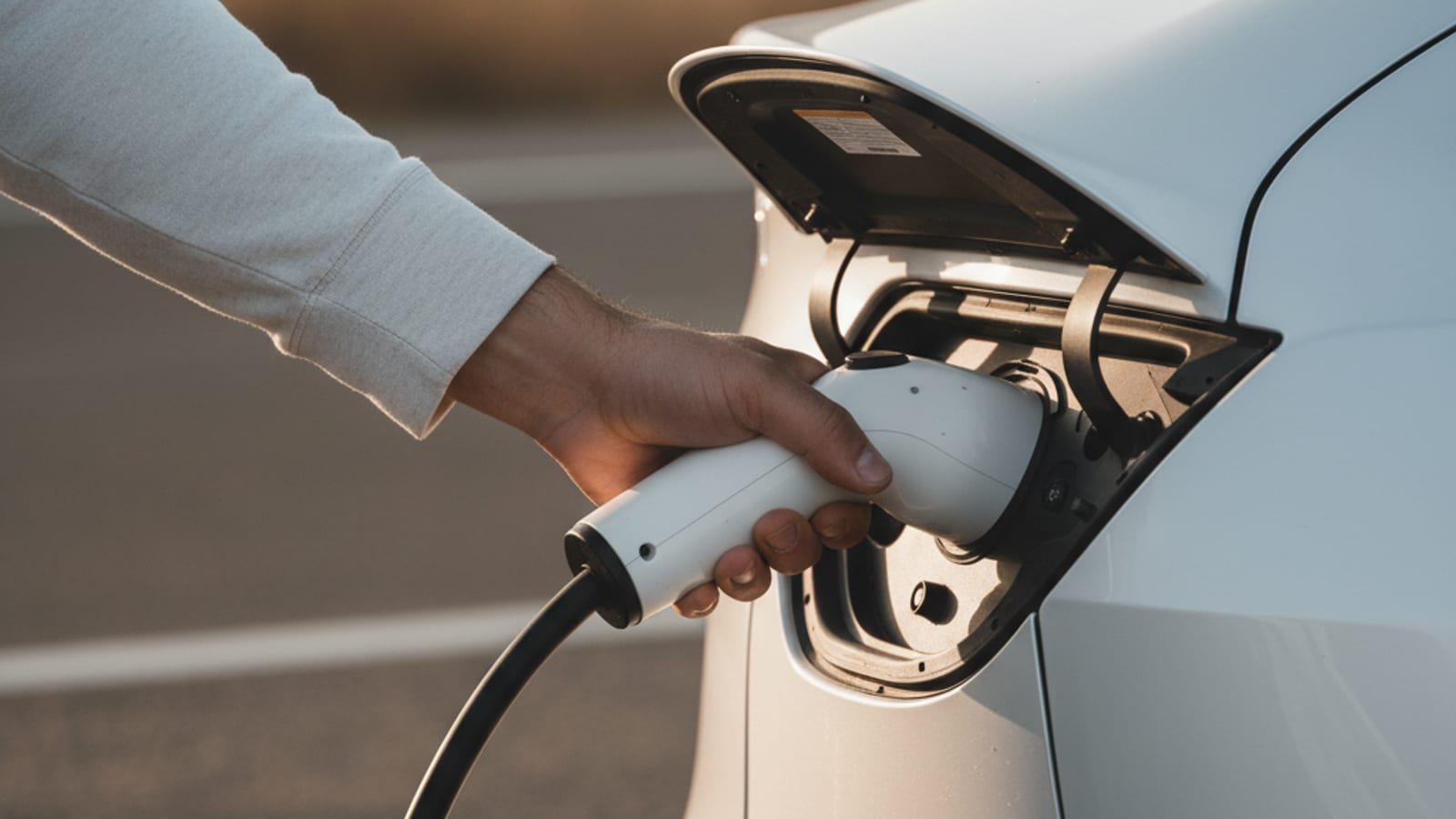
Water in an EV charge port stops the session before it starts. The car throws a charging fault. The connector won’t latch. Humid summers and freeze-thaw swings at the fall line put moisture into ports across this metro. A driver who parks outside through a storm, or rolls into a heated garage from a cold rain, often finds a wet port and a refused plug.
The fix is usually simple and dry. Don’t push through it. Don’t spray anything into the port. Get the moisture out and try the plug again.
Why ports get wet here
The DC area sits at the fall line where the coastal plain meets the Piedmont. That geography drives the weather pattern. Humid summer air pushes dew points into the 70s for weeks. Morning condensation forms on anything metal. Cold rain on a warm car creates instant fog inside the port. A car that sat outside overnight in Silver Spring, Bethesda, or Reston collects dew on the port pins by sunrise.
Fall and spring bring freeze-thaw swings. A port that dries in the afternoon sun refreezes overnight. A driver who plugs in at dawn gets an iced connector. The latch won’t seat. The car throws a charging fault.
Long-stay parking is the worst case. Dulles Economy Lot, Reagan National garages, and commuter garages across the region hold cars for days. A driver who parks in a thunderstorm comes back to a port full of standing water. The same port, capped and unheated, stays wet for the full stay.
What the car tells you when the port is wet
The signs are consistent.
The connector won’t latch. You push the plug in and the latch clicks, but the car throws an error and the session doesn’t start.
The dash shows a charging fault. Many cars display a message like “Charging unable to start, check port” or “Remove foreign object from charge port.”
The port light blinks red instead of green. Tesla and several other cars change the port ring color when moisture or a foreign object is detected.
The schedule never starts. You plug in at 11 p.m. for an overnight session, and the morning brings a pack that didn’t gain a mile. The session aborted in the night without a clear error.
What to do first
Get the car to a dry spot if you can. A garage, a covered parking deck, or even a sheltered driveway helps. Warm dry air speeds the moisture out.
Open the port door and look. Use a flashlight. Standing water is the worst case. A thin film of condensation on the pins is more common.
Wipe the outside of the port with a clean dry cloth. Don’t shove the cloth into the port. Don’t use paper towels that leave lint.
Let it air dry. Most cars include a small heater in the charge port to manage condensation. Time plus warmth clears most thin films.
If the port has standing water, tilt the car so gravity helps. Pull forward into a slope. Don’t blow into the port with compressed air. Don’t use a hair dryer on high heat. Either can push water deeper or melt a seal.
What NOT to do
Don’t use a hair dryer on high heat. The seal around the port pins is rated for normal warmth. A hair dryer on high can soften the plastic and let moisture in deeper.
Don’t use compressed air. Cans of compressed air can push water further into the port and drive it into the contact pins.
Don’t shove paper towels into the port. Paper leaves lint and fibers that block the contact pins.
Don’t try to force the connector in. If the latch won’t seat because of ice or standing water, forcing it bends the latch and the pins.
Don’t spray any chemical or cleaner into the port. Brakes cleaner, contact cleaner, and household sprays leave residue that interferes with the connection.
When a quoted local operator can help
If the car throws a charging fault that won’t clear, or the port latch is stuck because of ice, the operator brings the right tools. They can dry the port with controlled low heat. They can free a stuck latch without bending it. They can confirm the port is ready before the cable goes in.
If the port is clear and the pack is just low, the operator brings 240-volt Level 2 to the car. A native NACS plug covers Tesla, and CCS or J1772 adapters cover other EVs. Typical charging time adds 10 to 20 miles of range in 15 to 30 minutes. That’s charging time, never an arrival time.
Charge Pro DC matches the stranded driver with an independent local operator. We don’t perform the work, own trucks, or employ technicians. The operator quotes you before starting and bills you directly.
The freeze-thaw trap in spring and fall
Spring and fall in the metro are the worst for iced ports. Mornings start below freezing. Afternoons climb into the 50s. A car parked outside through that swing goes from frozen to wet to dry and back to frozen in a single day. The port holds water in any small pocket. By dawn, that pocket is ice.
Garage dwellers get the same pattern in reverse. A cold car rolls into a heated garage. Warm humid air contacts cold metal. The port fogs and beads with water. The first plug-in of the morning fails.
The fix is the same in both cases. Get the car to a stable temperature. Let the port air dry with the heater on. Try the plug again. Don’t force it.
Where the wet-port calls come up in this region
Apartment and condo owners lead the list. Bethesda, Silver Spring, Arlington, and Alexandria all have older buildings where the assigned parking spot is outside or in an open deck. The car sits through every storm.
Travelers are a close second. Dulles and Reagan National both produce wet-port calls when a car returns from a week in the Economy lot. The storm that started on day two is still in the port on day seven.
Hospital and campus lots produce the slow overnight version. A car parked at NIH or the FDA White Oak campus sits through a humid night. Morning condensation forms on the port pins. The morning plug-in fails.
Frequently asked questions
Is it safe to plug in if the port looks dry?
Yes, a dry port is fine to use. A visual check with a flashlight is enough to confirm. If the port looks dry and the connector seats with a normal click, start the session.
How long does it take for the port to dry out?
A thin film of condensation clears in 15 to 30 minutes in a warm dry spot. Standing water takes longer. If the car has its port heater, that helps. If not, gentle warm airflow and time are the answer.
Can I use a hair dryer?
A hair dryer on low heat held at a distance is okay for a few minutes. Don’t use high heat and don’t put the nozzle close to the port. The seal is rated for normal warmth, not direct high heat.
What if the port still won’t latch after drying?
Stop. Forcing the connector bends the latch and the pins. Call (202) 629-0844 and describe what the port is doing. An operator can free a stuck latch with the right tools and dry the port safely.
If the port is wet anywhere we serve, from Bethesda to Dulles, call Charge Pro DC at (202) 629-0844. Tell the operator what the dash is doing and what the port looks like.