A VW ID.Buzz that won’t start is almost always a dead 12-volt, not a problem with the high-voltage pack. The big battery is fine. The small battery gave up after a long sit. Around DC, Maryland, and Virginia, the usual culprit is a family road-trip car that parked at Dulles Economy for a week.
The ID.Buzz is the electric rebirth of the VW bus, and people use it like one. Long trips to grandparents in Richmond, weekends at the Outer Banks, and school breaks. They sit in long-stay lots through those trips. The 12-volt sips power in the background, the modules stay awake, and eventually the small battery drops below threshold.
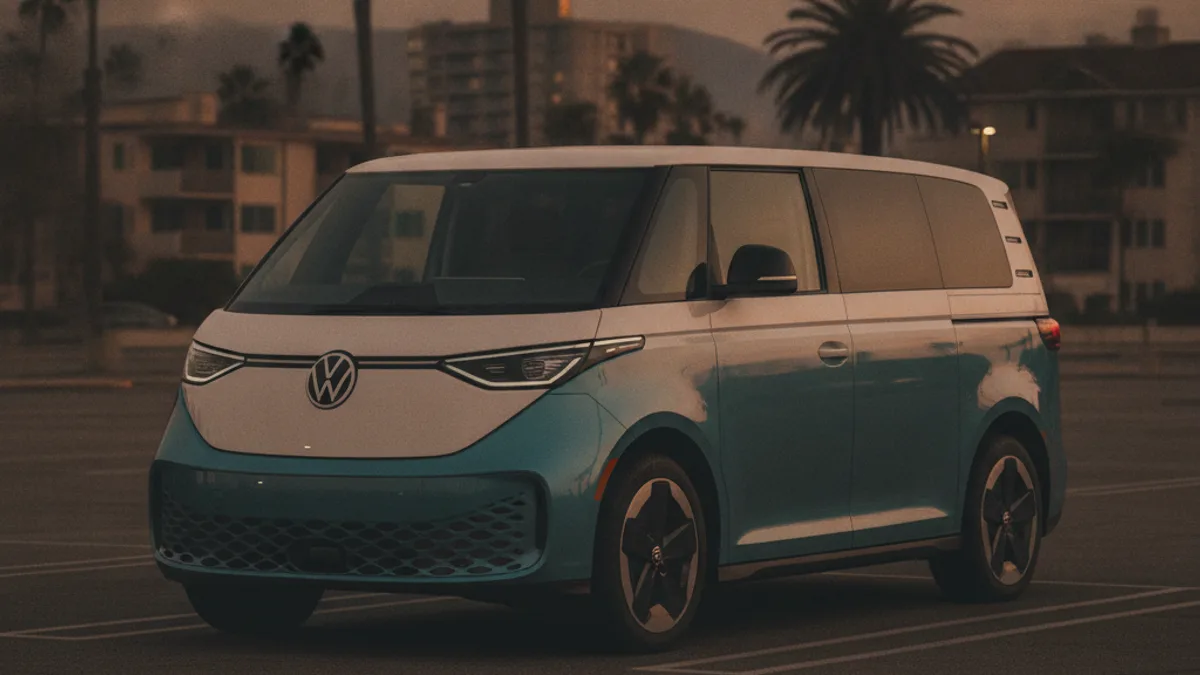
Why the 12-volt dies on an ID.Buzz
The traction pack drives the wheels. It does not boot the car by itself. The 12-volt runs the modules that close the contactors and light up the cabin. When that battery is flat, the contactors never close. The ID.Buzz never reaches Ready. The pack shows range if you can read it, but the cabin stays dark.
The ID.Buzz keeps the same telematics, security, and battery conditioning modules awake while parked as every other modern EV. That idle draw is small in absolute terms but steady over a week. In Dulles’ Economy Lot, where MWAA does not install EV chargers, an ID.Buzz sits untouched through a vacation. The pack holds its charge for weeks. The 12-volt does not. The same pattern shows up in the National garages and at any long-stay parking you leave the family van in.
Around here, the Buzz is also a commuter car. People drive it down I-95 from Columbia, across the Chesapeake in summer, and through the District to work. It sits in office garages downtown and in hospital decks in Bethesda and Silver Spring. A long sit in any of those lots can flatten the 12-volt the same way.
How to tell it’s a 12-volt problem
The signs are consistent once you know them.
The cabin is fully dark. The screen, the dash, the dome lights, the door handles. None of them respond. Press the brake and there’s no click from the relays. The fob does nothing from a few steps away. This isn’t a software glitch. A frozen infotainment screen still lights the dash and the dome lights. A dead 12-volt leaves the whole low-voltage side down.
A warning showed up earlier. Many ID.Buzz owners see a low 12-volt or 12-volt service message in the days before a full shutdown. If that warning is showing now, treat it as a countdown.
You can still open the door manually with the mechanical key blade tucked inside the fob. Once inside, the cabin is dark and the brake pedal brings no click. That’s the giveaway.
What to check before you call anyone
A few quick checks separate the 12-volt problem from anything else.
Cabin lights and dome light. If they come on dimly or not at all, the 12-volt is the suspect.
Fob response. Stand a few feet from the car and try the fob. If the locks don’t react and the car doesn’t chirp, the 12-volt isn’t waking the receiver.
Brake pedal feel. Press the brake. If there’s no click from the relay and no Ready light on the dash, the contactors aren’t closing.
Charge port behavior. Try to open the charge port. If the port doesn’t respond, the 12-volt isn’t powering the release.
If any of those match, this is a 12-volt no-start. The traction pack may still have hundreds of miles of range. You just can’t reach it.
Jump the labeled 12-volt posts
The ID.Buzz puts the 12-volt under the hood, with marked jump terminals nearby. Use a lithium jump pack or a careful donor-vehicle jump. Connect positive to the labeled positive post, and negative to a marked ground point, not the battery post itself.
Give the modules a minute or two to come alive. The screen should boot. The Ready light should appear. If it doesn’t, the accessory battery may be too far gone to hold the modules on. A replacement on site is the next step.
Never touch the orange high-voltage cables. Those run at hundreds of volts and stay live even when the car looks dead. Stick to the labeled posts.
If the hood won’t release because the cabin is fully dark, use the emergency hood release in the manual. Don’t pry on covers you can’t identify.
What a quoted operator visit looks like
Tell the operator what the cabin is doing. If it’s dark, they come to jump or replace the 12-volt on site. If the dash is up and range is gone, they bring 240-volt Level 2. The ID.Buzz uses a CCS plug on that visit. Typical charging time adds 10 to 20 miles in 15 to 30 minutes. That’s charging time, never an arrival time.
Charge Pro DC matches the stranded driver with an independent local operator. We don’t perform the work, own trucks, or employ technicians. The operator quotes you before starting and bills you directly. They handle Tesla and every major EV brand, including VW.
If a correct 12-volt jump still leaves the ID.Buzz dead, stop. A module or high-voltage fault needs a dealer scan. Once you’re moving, a tired 12-volt is a replacement conversation.
Where ID.Buzz calls come up in this region
Dulles (IAD) Economy Lot is the loudest example. MWAA does not install EV charging in the Economy Lot, the Terminal Lot, or Valet. An ID.Buzz parked there for a week comes back to a flat 12-volt. The pack is fine. The cabin won’t wake.
Reagan National puts Level 1 charging on Level 1 of Parking Garages 1 and 2, complimentary and first-come. Plenty of travelers leave the car on another level or in the Economy lot. The same long-sit 12-volt story.
Around the District, the ID.Buzz is also a curbside car. Older townhouse blocks in Capitol Hill and Cleveland Park rarely have a home charger. Cars sit at the curb through cold nights, and a weak 12-volt quits by morning. Apartment decks in Arlington, Silver Spring, and Bethesda add the same sit-still pattern.
Frequently asked questions
Why won’t my VW ID.Buzz start even though it’s charged?
The traction pack doesn’t close its own contactors. The 12-volt runs the modules that authorize that handshake. When the accessory battery is dead, the ID.Buzz stays dark even with a full pack. A jump on the labeled under-hood posts is the first fix.
How do I get into an ID.Buzz with a dead 12-volt?
Pull the mechanical key blade out of the fob and use the hidden keyhole on the driver’s door. Once inside, the cabin will be dark and the brake pedal will bring no click. Use the manual hood release and the labeled 12-volt jump points under the hood.
Will a jump fix the ID.Buzz for good?
A jump gets you moving, but it’s not a repair. The 12-volt that fell below threshold once will likely do it again. Get the battery tested and replaced at a VW dealer or an EV-capable shop before the next long sit.
Can I keep the ID.Buzz 12-volt from dying in a long-stay lot?
Some owners add a small lithium trickle charger that plugs into a 12-volt pigtail before parking. That’s the cleanest answer for an extended Dulles or Reagan stay. Otherwise, drive the car every two weeks and keep the main pack above a moderate state of charge so the modules stay awake.
If the ID.Buzz is dark anywhere we serve, from Dulles to the District, call (202) 629-0844. Tell the operator what the lights are doing and where the car sat.