Your R1T or R1S is sitting dark in a Bethesda Row garage. You left it there after a long day at NIH. Or it’s on the I-495 shoulder with the pack at zero. Most owners open the Rivian app first. The other path is a quoted local operator. They quote the job before they plug in. Those two calls are not the same. Bethesda’s older housing and all-day Metro parking are why this stall keeps happening.
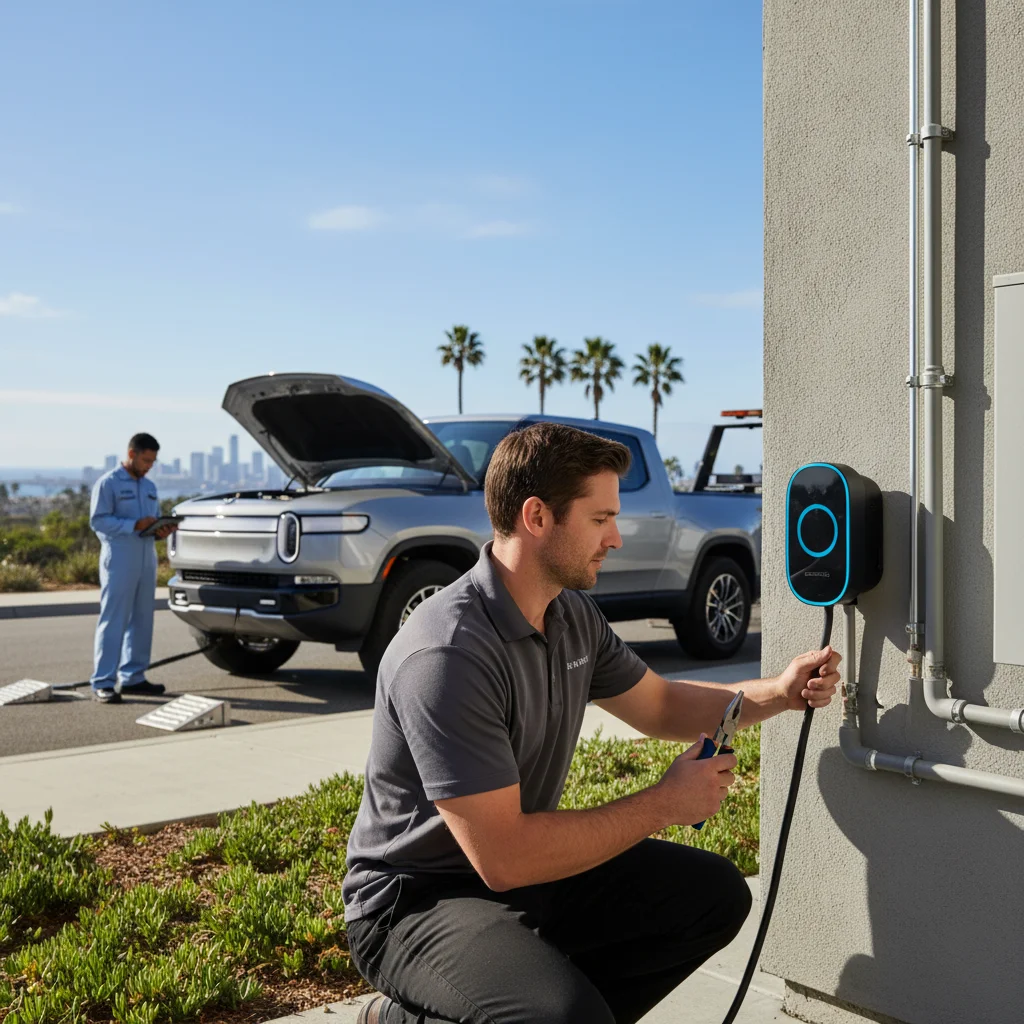
Why a Bethesda Rivian is often sitting unplugged
Bethesda isn’t a city. It’s a dense Lower Montgomery community of 67,403 people. Just over 61 percent of the housing here was built before 1980. That age shows up in small panels and shared garages. Many of those garages never got a Level 2 circuit. Pepco serves the address. Pepco’s EVsmart program is about home and multifamily chargers. It’s not a stranded-car rescue. No utility EV page reviewed for this metro offers a stranded-car charge.
This pocket holds one of the densest EV concentrations in Montgomery County. The cars still sit unplugged overnight. They sit all day in the Bethesda Row garages and the Metro garage. They sit at Walter Reed National Military Medical Center and the NIH campus. They sit at Suburban Hospital and Westfield Montgomery. A Rivian that skipped the overnight plug has no cushion on a cold morning.
Bethesda runs a few degrees cooler than the District. Snow hangs on the tree-lined side streets longer than it does downtown. The Beltway frontage adds another drain. You idle in rush hour with cabin heat on. The local layout is on the Bethesda EV charging page. North Bethesda next door repeats the same garage pattern. Pike & Rose and the North Bethesda Metro garage hold cars all day.
A typical weekday here is not a long highway trip. It’s NIH, Walter Reed, or a Metro garage, then a crawl on Wisconsin Avenue. The commute looks short on the map. The 12-volt and the accessory load don’t care. A truck that sat from 8 to 6 can refuse to wake. Miles can still show on the pack. That’s the Bethesda pattern. The stall comes from sitting still.
What Rivian’s in-app roadside actually covers
Rivian includes roadside help with a new vehicle for a set term. That term is four years or 50,000 miles from the original purchase, whichever comes first. A used R1S still carries whatever time is left. Confirm the date in the app under Account, then Vehicle, then Coverage. Don’t assume it’s still live.
The program, as Rivian describes it, typically includes towing toward the nearest Rivian service location. It includes emergency charging help, sent through a partner so you can reach a station. It includes flat tire service, or a tow if there’s no spare. Lockout help is in there. So is winching when the truck is stuck off pavement.
Check the nearest authorized drop in your own app. A local service address for this metro could not be confirmed here. Don’t plan the tow distance from memory.
What the program skips matters as much. It doesn’t repay a charging session you booked on your own. It doesn’t send a Rivian-branded truck. It hands the call to a third-party roadside network. That contractor may spend most of the day on gas cars.
Once the term lapses, in-app help isn’t the included path. That changes only if you’ve bought an extension. Read the coverage screen first. You may now be paying for a queue you don’t need.
When the app is the right first call
Start with Rivian when you need a lockout, a spare, or a winch. Those jobs sit inside the factory program. A tow to an authorized service stop is also their lane. Use it when that’s what the truck actually needs.
Stay with the car if you’re on I-495. The Beltway climb through this stretch has a narrow shoulder. Maryland’s CHART patrol is reached by dialing #77 on a state primary road. That includes I-495 and I-270. CHART techs help with tire changes, 12-volt jumps, a little gas, and radiator water. Published CHART material doesn’t describe charging an EV. Treat #77 as traffic safety, not a pack top-up.
Maryland’s disabled-vehicle rules apply to an EV like any other car. The Transportation Article has no separate out-of-charge statute. That was the finding in the codes reviewed for this metro.
When a quoted local operator is the better path
A low pack or a car that won’t wake is a different job. Mobile EV charging brings a 240-volt Level 2 source to the bumper. Operators typically add about 10 to 20 miles of range. That takes 15 to 30 minutes of charging time. That’s charging time, not a promise of when someone arrives. The operator quotes you before they start and bills you directly.
Call that path when the truck is already stopped at zero. In-app dispatch goes to a national contractor. A local operator with CCS gear comes to the car you’re sitting in.
Call it when you’re in a garage or private lot. Bethesda Row, the Metro garage, NIH, and Walter Reed are tight on tow access. A mobile charger can pull in and plug in. You get enough range to leave.
Call it when you still have a little charge and you’re rolling. Don’t wait for a full stall on Wisconsin Avenue. Old Georgetown Road, River Road, and Bradley Boulevard have the same trap. Arrange a meetup while you can still move.
Call it when the four-year window is closed. You’re paying someone either way. Get the quote first. See what you pay for mobile EV charging, and who bills you.
Tesla owners stall in the same garages. Read EV roadside assistance in Bethesda when Tesla Roadside is booked for that overlap. Charge Pro DC is a referral line. It matches you with independent local mobile rescue operators. It doesn’t own trucks, employ technicians, or set prices.
Connector, 12-volt, and what actually gets plugged in
US Rivians still use CCS1 as the primary DC fast-charge port on current trucks. Rivian has said future vehicles will move to NACS, the Tesla-style plug. Existing owners can order a DC adapter. Adapter rollouts have been gradual. Not every R1T or R1S in this metro has one yet.
Without that adapter, Tesla Superchargers aren’t a fallback. CCS stations are the ones your port will take. Confirm live plugs on PlugShare if you still have range to drive. The US Department of Energy AFDC map is the other check. A mobile crew that carries CCS equipment charges the truck at the bumper.
What charger a Rivian uses when a mobile rescue rolls up covers the plug question in more detail.
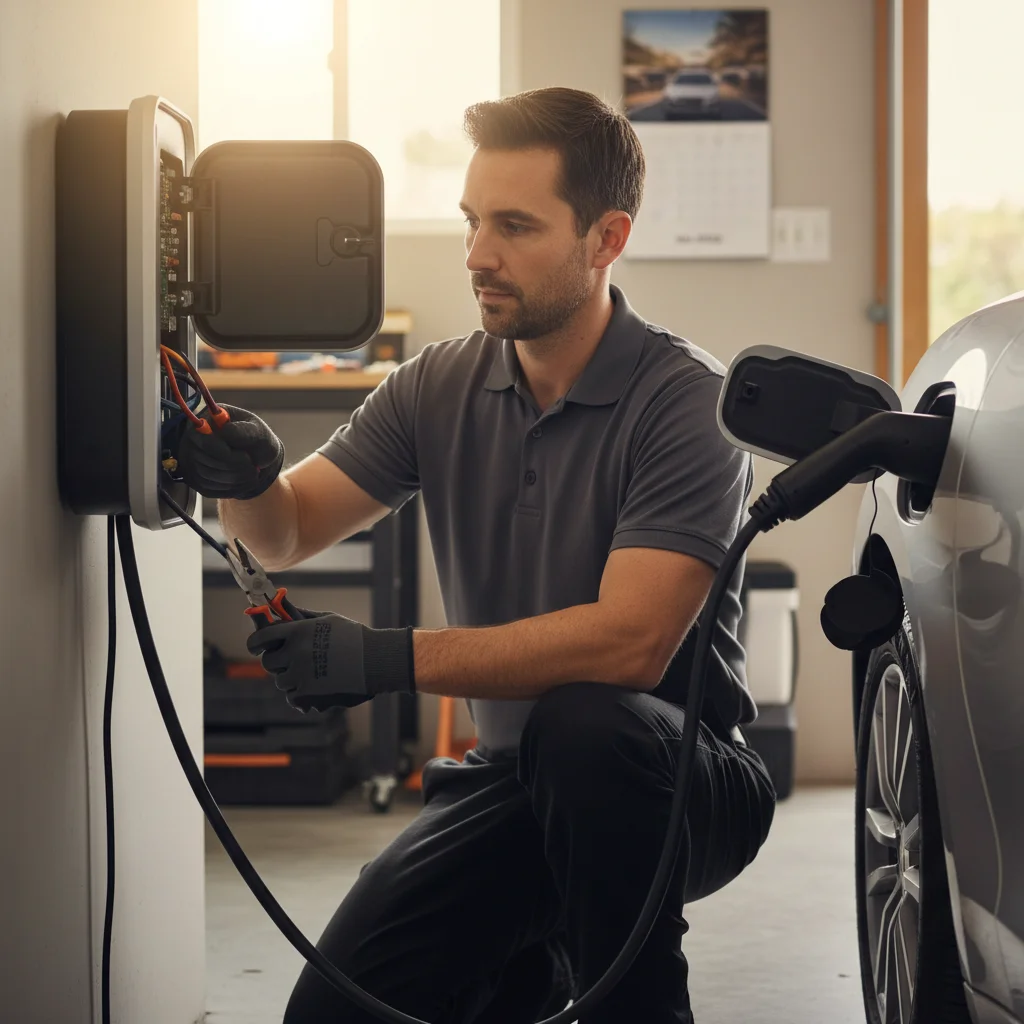
A dead 12-volt can look exactly like an empty pack. Lights stay dark. The app won’t talk. Doors may not cooperate. Don’t assume the traction battery is empty. Run the 12-volt checks in Rivian R1T or R1S won’t start: check the 12 volt first. Operators in this network can jump or replace a 12-volt on site. They also handle Tesla and every major EV brand, including Rivian.
Cold mornings, Beltway idle, and a pack that looks empty
Cabin heat comes from the traction battery. A Recurrent Auto study of more than 30,000 EVs set a climate baseline. A typical pack keeps about 80 percent of range at freezing. It keeps about 70 percent at 20F. Cars with a heat pump held more than cars without. Don’t treat those as Rivian-published numbers.
Bethesda’s problem is often idle, not miles. You sit on the Beltway with heat on. You sit in a garage after NIH or Suburban Hospital. Older homes here often can’t take a fast home charger. Many drivers already lean on public plugs. They have less cushion when a cold morning cuts range. Pepco doesn’t roll a truck to charge a stranded car. That absence is on every utility EV page reviewed for this metro.
If you’re still moving, turn off extra cabin load. Aim for a safe lot, not a Beltway lane. Then decide: in-app tow, or a quoted 240-volt visit.
What to save from the stall
Owners skip this step. They wish they had it when a pack claim appears later.
If you hit zero in a way that wasn’t a normal commute, keep a record. Screenshot the Rivian app with percent and any codes. Save a timestamp and a pin from your phone map. Photograph warning screens. Keep the Rivian dispatch number if you used the app. If a third-party operator charges you, ask for a short written summary. Note the energy delivered, the connector used, and time on site.
Park those files in a folder with the VIN. A dated roadside record is clearer than a vague complaint about range. If the operator we connect you with does the boost, ask for that summary.
Get a quoted operator on the line
If the R1T or R1S is dead in Bethesda, call for a local operator. Same for North Bethesda or the Beltway frontage. Don’t wait on a contractor you can’t quote. The pros we send bring a 240-volt Level 2 source. They carry a CCS adapter for non-Tesla EVs. They quote before they start. They bill you directly.
For the non-Tesla side of this work, use non-Tesla EV rescue. Call (202) 629-0844 when you want that match.